Feared Venezuelan prison was supposed to close, but detainees remain inside
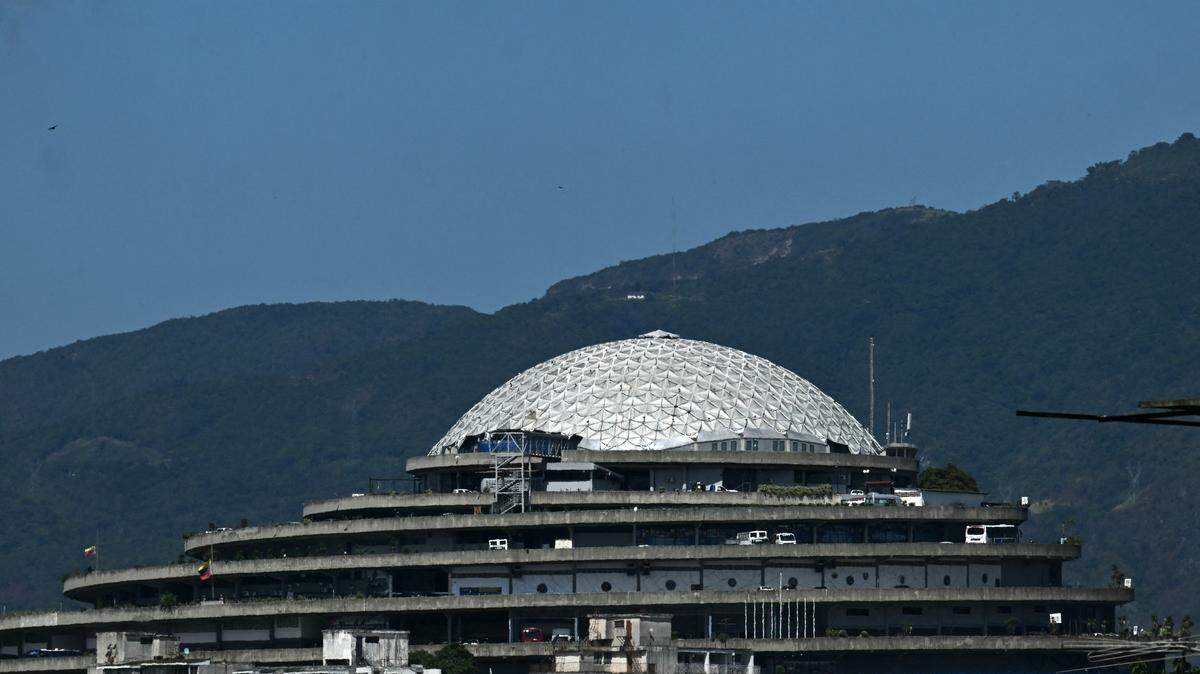
A Venezuelan human-rights organization is challenging claims that the notorious El Helicoide detention center in Caracas has been shut down, saying at least 25 political prisoners remain inside despite government promises to close the facility and convert it into a social center.
The statement by Justicia, Encuentro y Perdón casts doubt on one of the most visible reforms announced by Venezuela’s interim government under acting President Delcy Rodríguez following the capture of former strongman Nicolás Maduro in a pre-dawn U.S. operation in Caracas in January.
“While there was an official announcement by the authorities following the events of Jan. 3, 2026, our updated records confirm that at least 25 political prisoners remain detained in these facilities,” the organization said in a statement posted on social media.
The group urged international organizations and foreign governments to verify conditions on the ground rather than rely solely on official announcements, arguing that “it is not possible to consider a space closed while citizens remain deprived of liberty inside it.”
The dispute surfaced on Tuesday, the same day U.S. Secretary of State Marco Rubio cited the closure of El Helicoide as evidence that Venezuela’s interim authorities were dismantling elements of the authoritarian system that governed the country for more than two decades.
Testifying before the Senate Foreign Relations Committee, Rubio pointed to the release of political prisoners and the closure of the detention center as signs of progress.
“They have seen reforms,” Rubio told senators. “They have seen systemic reform in individuals involved in the government, replaced by new people.”
Rubio also said hundreds of political prisoners had been released since Maduro’s removal from power, though he acknowledged that roughly 400 people whom Washington still considers political prisoners remain behind bars.
El Helicoide occupies an unfinished futuristic structure built in the 1950s and originally conceived as a commercial complex. Over time it became the headquarters of Venezuela’s Bolivarian Intelligence Service and one of the country’s most feared detention centers.
Human-rights groups, former detainees and opposition leaders have long described the facility as a site of torture and abuse. Those allegations have been documented by United Nations investigators but consistently denied by Venezuelan authorities.
In January, Rodríguez announced plans to transform El Helicoide into a social and sports center as part of a broader political opening that included an amnesty initiative later approved by the National Assembly. Authorities said renovation work began in February.
The announcement was widely interpreted as a symbolic break with Venezuela’s recent history of political repression. It coincided with the release of hundreds of detainees, including several prominent opposition figures, in a process rights organizations described as significant but incomplete.
Justicia, Encuentro y Perdón said the continued presence of prisoners inside the facility shows that the transition remains unfinished and called on authorities to clarify El Helicoide’s legal and operational status.
“Behind every figure there are families still waiting for answers,” the organization said.