New Miami case casts Alex Saab as architect of Venezuela’s shadow oil trade
A newly unsealed federal indictment against Colombian businessman Alex Saab is shedding new light on how figures tied to Venezuela’s former ruling elite allegedly transformed a corruption scheme built around subsidized food imports into a sprawling sanctions-era oil network that prosecutors say moved illicit proceeds through the U.S. financial system.
The indictment, filed in the Southern District of Florida, alleges that Saab and his associates initially enriched themselves through Venezuela’s controversial CLAP food distribution program before leveraging their political access inside Caracas to broker billions of dollars in oil transactions for state-owned Petróleos de Venezuela S.A., PDVSA, after U.S. sanctions crippled the country’s traditional export channels.
The Justice Department said Saab faces a charge of conspiracy to launder monetary instruments, which carries a maximum sentence of 20 years in prison.
The case outlines what prosecutors describe as a broader financial structure that helped Venezuela continue generating revenue as international sanctions deepened the country’s economic isolation.
According to the indictment, the conspiracy began around October 2015, when Saab and unnamed co-conspirators secured lucrative contracts through Venezuela’s Comité Local de Abastecimiento y Producción, or CLAP, a state-run food program created to distribute subsidized food boxes during the country’s economic collapse.
Prosecutors say the network bribed Venezuelan officials to obtain contracts and then used shell companies, fake invoices and fraudulent shipping records to siphon off hundreds of millions of dollars intended to purchase food for poor Venezuelans. Federal investigators say portions of those proceeds were routed through American bank accounts, giving U.S. authorities jurisdiction over the case.
But the indictment’s most consequential allegations center on what happened after Washington intensified sanctions pressure on Venezuela’s oil industry beginning in 2019.
“As the conspiracy progressed,” prosecutors wrote, sanctions “crippled Venezuelan exports, especially oil,” leaving Caracas struggling to pay foreign debts and suppliers connected to the CLAP program.
According to the filing, Saab and his associates then used their “direct access and corrupt influence” with Venezuelan officials to gain access to billions of dollars worth of PDVSA crude and market it “under false pretenses.” Prosecutors claim that proceeds from those transactions were transferred through U.S. financial institutions to promote and conceal the broader scheme.
The allegations offer rare insight into how U.S. investigators believe politically connected intermediaries helped Venezuela navigate the economic pressure created by sanctions, relying on opaque trading structures and international financial networks to keep oil flowing even as traditional buyers and banking channels disappeared.
The case also marks the second time Saab has appeared before a federal court in Miami.
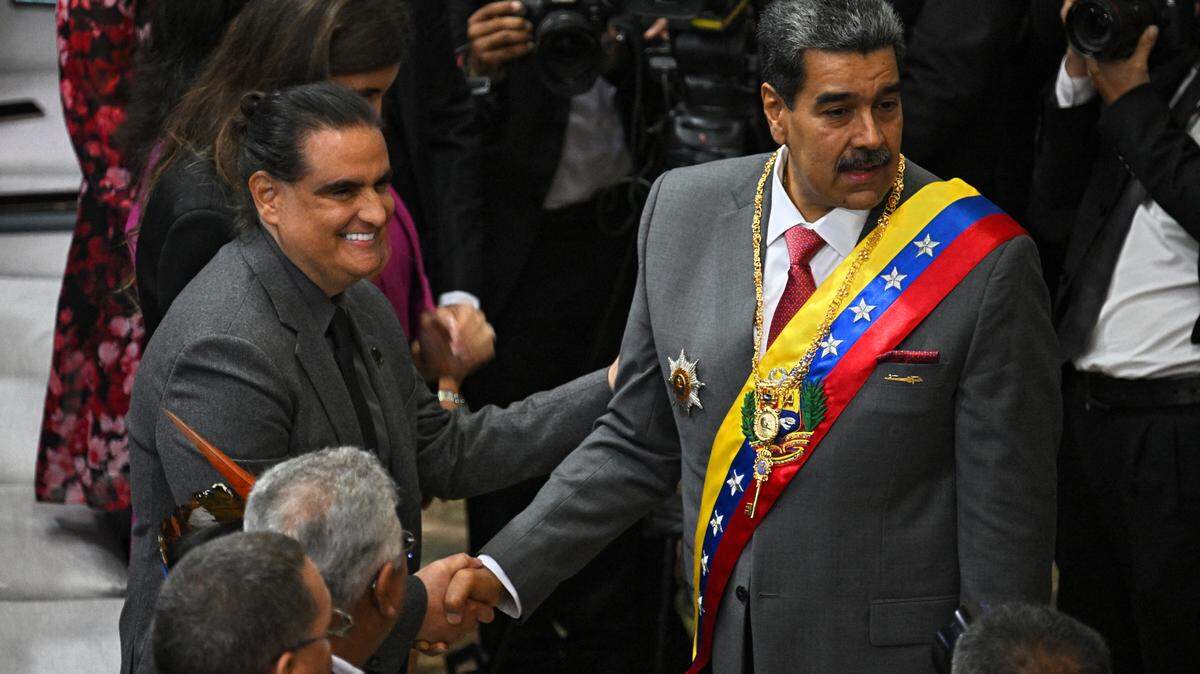
Saab was previously extradited to the United States from Cape Verde in 2021 to face separate money-laundering charges tied to an alleged bribery scheme involving Venezuelan government contracts. But in December 2023, President Joe Biden granted him clemency as part of a prisoner exchange agreement with Caracas, and Saab was flown back to Venezuela, where he was publicly welcomed by Nicolás Maduro’s regime as a diplomatic victory.
His return to Miami this week to face a separate set of charges follows his deportation from Venezuela on Saturday, a move analysts view as another sign of the evolving relationship between Caracas and Washington after years of hostility, sanctions and diplomatic rupture.
The deportation is particularly notable because Saab had become one of the most politically sensitive figures within Venezuela’s ruling structure, frequently portrayed by the Maduro regime as proof that Washington criminalized those helping the country circumvent sanctions.
For years, Saab occupied a central role in Washington’s efforts to target Venezuela’s financial infrastructure. U.S. officials have long accused him of serving as a key operator for the Maduro regime, helping Caracas evade sanctions through complex international trading arrangements involving food, fuel, commodities and gold.
Caracas, meanwhile, portrayed Saab as a diplomat and businessman unfairly persecuted for helping the country withstand what it described as a U.S.-led economic blockade.
The CLAP program itself became one of the most controversial symbols of Venezuela’s economic collapse. Originally presented as an emergency food assistance initiative, it evolved into a politically sensitive distribution system that critics said allowed the regime to reward loyalists while deepening dependence among struggling Venezuelans.
Opposition lawmakers, investigative journalists and anti-corruption groups spent years documenting allegations that imported food was frequently overpriced, poor in quality or only partially delivered while politically connected contractors amassed enormous fortunes.
The new indictment effectively ties that system to the parallel oil economy that emerged after Venezuela lost access to much of the formal global market.
“Alex Saab allegedly used American banks to launder hundreds of millions of dollars stolen from a Venezuelan food program meant for the poor and proceeds from the illegal sale of Venezuelan oil,” Assistant Attorney General A. Tysen Duva said in a Justice Department statement announcing the charges.
The prosecution is being handled jointly by the U.S. Attorney’s Office for the Southern District of Florida and the Justice Department’s Money Laundering and Asset Recovery Section, with participation from the DEA, FBI and Homeland Security Investigations.
“This indictment alleges that a humanitarian food program intended to support vulnerable Venezuelans was instead manipulated for massive personal enrichment,” U.S. Attorney Jason A. Reding Quiñones said.
The prosecution was announced as part of the Homeland Security Task Force initiative, an interagency effort targeting cartels, organized crime groups and international money laundering structures.
DEA Administrator Terrance Cole said investigators had spent years examining financial networks tied to Saab and Venezuela’s former ruling structure.
“These charges are a direct result of DEA’s continued commitment to dismantle the corrupt networks operating throughout Venezuela,” Cole said.
The indictment also includes forfeiture allegations, signaling prosecutors intend to seek seizure of assets tied to the alleged scheme if Saab is convicted.
An indictment is merely an allegation, and Saab is presumed innocent unless proven guilty in court.