Alex Saab back in U.S. custody after dramatic Venezuela deportation
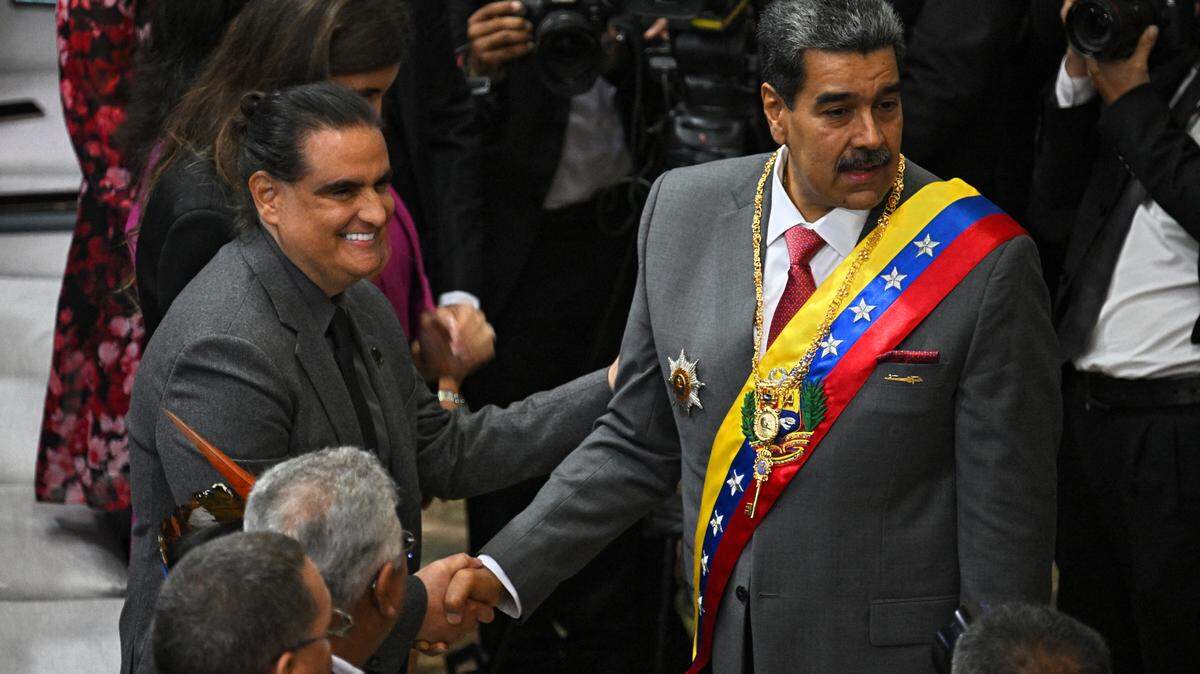
Venezuelan authorities on Saturday deported Colombian businessman Alex Saab to the United States, handing over one of several powerful figures tied to Venezuela’s socialist regime who are sought by the U.S. justice system on corruption, drug trafficking and money-laundering allegations.
In a statement issued Saturday, Venezuela’s Administrative Service of Identification, Migration and Foreigners Affairs, known as SAIME, confirmed that Saab had been handed over to U.S. authorities under Venezuelan immigration law.
“The Government of the Bolivarian Republic of Venezuela hereby announces the deportation of Colombian national Alex Naim Saab Morán, carried out this May 16, 2026, in compliance with the regulatory provisions of Venezuelan immigration law,” SAIME said in the communiqué.
The agency added that the decision was made because Saab is allegedly implicated “in the commission of various crimes in the United States of America — a matter that is public, notorious, and widely reported.”
Although Venezuelan officials carefully avoided using the word “extradition,” Saab was effectively transferred into U.S. custody to face mounting criminal scrutiny in Miami federal court and potentially cooperate in broader investigations involving corruption, money laundering and alleged narcoterrorism activities tied to the regime of former Venezuelan president Nicolás Maduro.
Saab, once considered one of Maduro’s most trusted financial operatives, had already spent more than two years in U.S. custody after being extradited from Cape Verde to Miami in 2021. He was later pardoned by President Joe Biden in December 2023 as part of a prisoner exchange agreement negotiated with Maduro’s government.
His sudden return to U.S. custody marks a dramatic reversal for a figure who for years stood at the center of Venezuela’s opaque international financial operations.
According to previous reporting by the Miami Herald, Saab’s status had become a key issue in ongoing negotiations between Washington and Venezuela’s interim government, led by Delcy Rodríguez. Sources familiar with those discussions said the talks extended beyond Saab himself and touched on the broader prosecution strategy against a number of high-ranking regime officials.
People familiar with the negotiations told the Herald that U.S. officials increasingly viewed Saab as a potentially crucial witness capable of providing detailed insight into the financial architecture that sustained Maduro’s inner circle for years.
“The U.S. needs Saab because he has crucial information about Maduro’s financial operations and can provide evidence for narcoterrorism charges,” one source familiar with the negotiations previously told the Herald. “He managed the money. If investigators want to show how funds moved through the system and how those funds may have supported criminal activities, Saab is a key witness.”
Saab disappeared from public view earlier this year amid reports in Venezuelan media that he had been detained shortly after Rodríguez removed him from his government post as minister of industry and national production.
For years, Saab was viewed as one of the key financial gatekeepers of Maduro’s regime — a man prosecutors believe understood not only where billions of dollars moved, but also how those financial networks operated across Venezuela, Europe, the Middle East and the United States.
Federal prosecutors in Miami have long accused Saab of orchestrating schemes that generated hundreds of millions of dollars through inflated contracts with the Venezuelan government.
One of the central investigations involves Venezuela’s controversial CLAP food subsidy program, which was created to distribute subsidized food to struggling Venezuelans during the country’s economic collapse. Prosecutors allege Saab and his associates used the program to secure overpriced government contracts while routing profits through a sophisticated network of international companies and financial intermediaries.
The U.S. government had previously accused Saab of laundering more than $350 million linked to corrupt Venezuelan housing contracts and of helping senior regime insiders move enormous sums through global banking systems.
Saab was first arrested in June 2020 in Cape Verde after his plane stopped to refuel while en route to Iran. At the time, he claimed he was traveling as a diplomatic envoy for Maduro on a mission related to fuel and gold transactions — an argument later rejected by U.S. courts.
After a lengthy legal battle, Saab was extradited to the United States in October 2021 and jailed in Miami pending trial. Following his presidential pardon, he was flown back to Venezuela, where he was welcomed as a returning hero by the socialist regime and later appointed to Maduro’s cabinet.
His renewed legal exposure now comes at a particularly delicate political moment for Venezuela.
Rodríguez assumed power earlier this year after a dramatic Jan. 3 U.S. military operation that resulted in Maduro’s capture and removal from office. Since then, Rodríguez’s interim government has sought to stabilize the country while navigating intense pressure from the United States and internal resistance from factions within Venezuela’s military and ruling coalition.
Analysts say Saab’s transfer could deepen tensions within Chavista circles, where many officials fear expanding U.S. investigations into corruption networks tied to the former regime.
The move may also place additional scrutiny on several businessmen and former Venezuelan officials already facing charges in South Florida, including media mogul Raúl Gorrín, owner of Globovisión, and Interior Minister Diosdado Cabello, who allegedly is one of the top members of the Los Soles drug cartel.
Federal prosecutors charged Gorrín in 2024 with conspiring to launder $1.2 billion allegedly stolen from Venezuela through corrupt financial schemes tied to the state oil industry and preferential currency exchange systems.