Venezuela boosts income to $240 a month amid soaring inflation
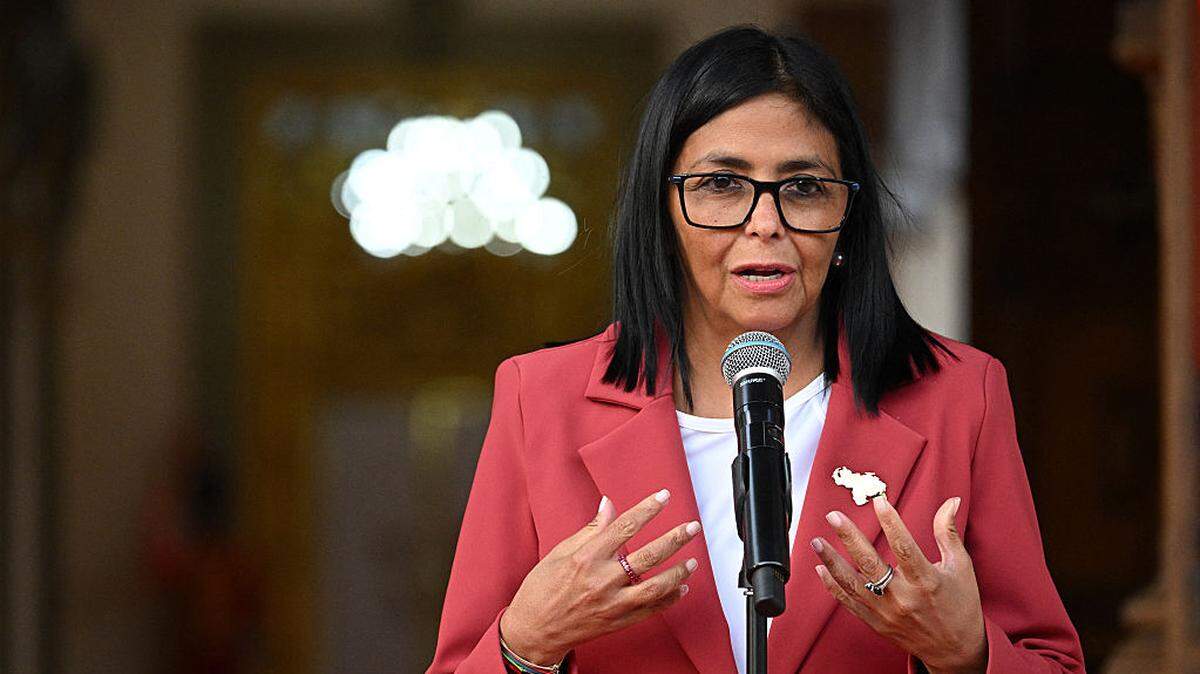
Venezuela’s interim president, Delcy Rodríguez, announced an increase in the country’s “comprehensive minimum income” to $240 a month, a move the government described as the largest in recent years but which critics say does little to offset soaring inflation and the continued erosion of real wages.
Rodríguez, who took office following the January capture of strongman Nicolás Maduro, said the new figure — a combination of salary and state bonuses — would apply to public workers and should be mirrored by private employers whose wages fall below that level.
“The first announcement I want to make is that the comprehensive minimum income will reach the equivalent of $240,” Rodríguez said Thursday during a public event in Caracas ahead of International Workers’ Day.
She described the measure as a milestone, calling it “the most significant increase in recent years,” and linked it to recent economic agreements and oil revenues following a partial reopening of Venezuela’s energy sector.
But the announcement left key questions unanswered. Rodríguez did not specify how much of the $240 corresponds to base salary — which determines pensions, severance and other labor benefits — and how much comes from discretionary bonuses that do not count toward long-term compensation.
That distinction is critical in a country where the official minimum wage has remained frozen at 130 bolívares per month since 2022 — now worth just a few cents at the official exchange rate — forcing workers to rely on government-issued bonuses to meet basic needs.
The increase comes amid renewed inflationary pressure. Venezuela recorded price growth of 71.8% in the first quarter of 2026 alone, according to official figures, while annual inflation is estimated at more than 600%, among the highest in the world.
For many Venezuelans, the gap between income and living costs remains stark. Basic monthly expenses for a family — including food, rent, utilities and healthcare — range from roughly $775 to $1,460, far exceeding the newly announced income level.
The new figure represents an increase of about 26% from the previous $190 monthly package, but analysts say it continues the government’s strategy of boosting income through bonuses rather than formal wage increases.
Critics argue that approach undermines job stability and erodes workers’ rights by limiting access to benefits tied to salaries.
“Refusing to set a national minimum wage is a continued violation of the Constitution,” the Association of Professors of the Central University of Venezuela said in a statement rejecting the measure.
Labor groups say reliance on bonuses — typically labeled as food stipends or “economic war” payments — weakens collective bargaining and leaves workers without meaningful social protections.
Rodríguez also announced that pensions would rise to the equivalent of $70 per month, describing it as a 40% increase from previous levels, though she acknowledged the amount remains insufficient.
“It is not enough, it is not enough; there is still much to be done,” she said, while ordering new programs to assist older adults.
“Three minimum wages don’t even add up to one dollar in real salary,” said one Caracas resident interviewed by local media, reflecting widespread frustration despite government claims of stabilization.
The policy also places pressure on private businesses, which Rodríguez urged to match the $240 threshold without offering tax incentives or other support — a move that has raised concerns among employers already grappling with high operating costs and economic uncertainty.
Business groups warn that forcing companies to adjust payrolls to government-set benchmarks could strain smaller firms and accelerate informal employment, which already dominates Venezuela’s labor market.
The announcement comes amid broader economic changes following Maduro’s removal from power, including efforts by Rodríguez’s administration to open the oil and mining sectors to foreign investment and rebuild ties with the United States.
Officials say increased oil revenues have helped finance recent bonus payments, including a previous rise in monthly income support from $160 to $190 earlier this year.
Still, economists caution that without structural reforms — including restoring a meaningful base wages and stabilizing inflation — incremental increases are unlikely to translate into sustained gains in purchasing power.
Unions and labor organizations have called for nationwide protests on May 1, demanding a “real wage increase” tied to salaries rather than bonuses and greater transparency in government policy.
“Our work must be fairly compensated,” the Federation of University Professors’ Associations said, calling for reforms to restore social security and labor protections.