Rodríguez walks tightrope as January raid death toll in Venezuela continues to rise
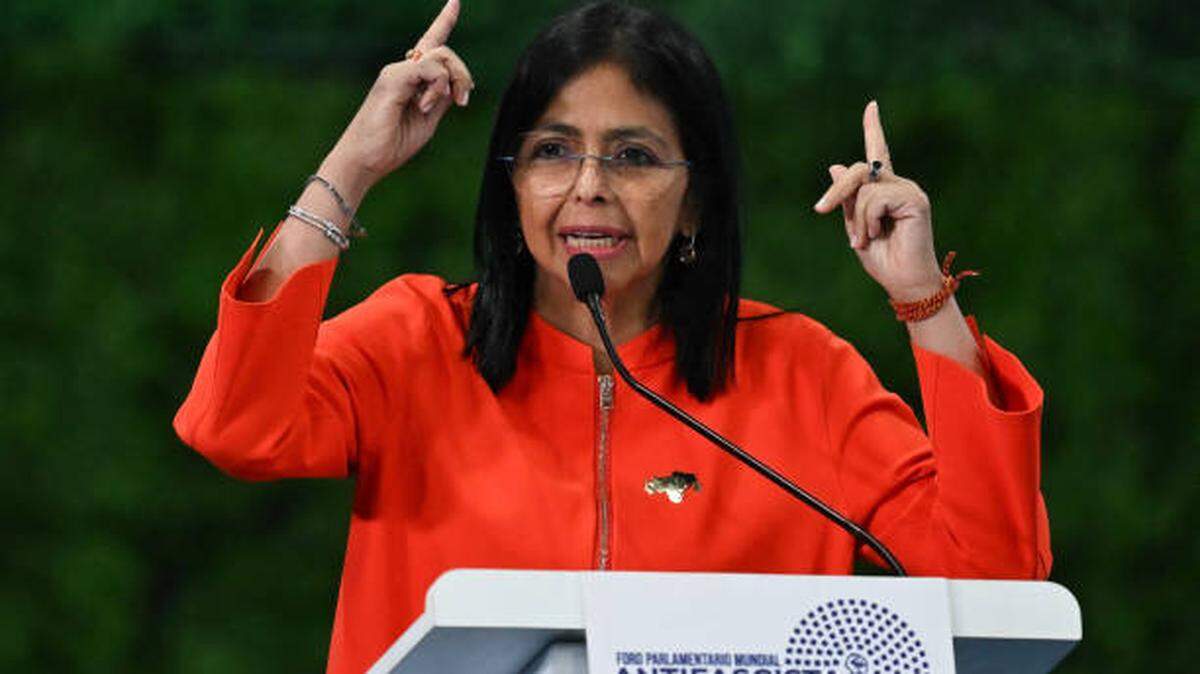
Venezuela’s interim leader, Delcy Rodríguez, has confirmed the death of an army colonel she said had been wounded during the Jan. 3 U.S. military operation that led to the capture of former strongman Nicolás Maduro, as officials continued to frame the episode as both a national trauma and a rallying point.
Speaking at a political gathering in the northwestern state of Falcón on Tuesday, Rodríguez described the officer as one of the “combatants of January 3” and paid tribute to his role during the operation, which she characterized as a foreign aggression against the country.
“We received the sad and regrettable news of the death of a colonel who was in combat on January 3. Honor and glory to our combatants,” Rodríguez said in remarks broadcast on state television.
State media later identified the officer as Army Col. Helmer David Prato Veloz. Authorities did not immediately disclose the cause of death or provide details on whether it was directly linked to injuries sustained during the operation.
The announcement comes more than three months after the pre-dawn U.S. raid that reshaped Venezuela’s political landscape, culminating in the detention of Maduro and his wife, Cilia Flores, who are now facing prosecution in New York. Rodríguez assumed power on Jan. 5, heading an interim government that has since moved to restore ties with Washington and open key sectors of the economy to foreign investment.
Rodríguez has been forced into a delicate balancing act since taking power, aligning publicly with Washington’s push for a democratic transition while also denouncing the Jan. 3 U.S. operation that made her presidency possible.
Her government has moved to restore ties, reopen oil flows and implement reforms encouraged by the Trump administration, even as she continues to condemn the human toll of the raid and invoke it as a symbol of national sovereignty. The dual messaging reflects the constraints of an interim authority dependent on U.S. backing but still rooted in a political movement that cannot afford to appear subordinate to it.
Even as her administration pursues a rapid diplomatic thaw with the United States, Rodríguez has continued to invoke the human cost of the U.S. raid, urging national unity while calling for the lifting of U.S. sanctions imposed over recent years.
“There is no way an aggression from abroad can succeed when the people are united,” she said, describing the aftermath of the attack as a “wound” the country must heal.
Official accounts of the death toll from the operation have varied. Interior Minister Diosdado Cabello said days after the raid that at least 100 people were killed and a similar number injured, including civilians caught in the strikes. He claimed that some victims were non-combatants, struck by what he described as powerful aerial bombardments.
“People who had nothing to do with a conflict died—civilians, women who were in their homes,” Cabello said during his weekly television program, condemning the operation as “terrible.”
Venezuela’s Defense Ministry has separately reported that dozens of members of the Bolivarian National Armed Forces were killed, while Cuba said 32 of its military and security personnel stationed in Venezuela died in what it described as “combat actions” during the U.S. mission.
The Jan. 3 operation marked an unprecedented escalation in U.S. involvement in Venezuela, combining targeted strikes with a ground component that resulted in the capture of Maduro, long accused by Washington of leading a narcotrafficking network and undermining democratic institutions.
Since then, the Trump administration has moved quickly to recalibrate its Venezuela policy, easing some sanctions and signaling support for Rodríguez’s interim government as part of a broader effort to stabilize the country and secure a political transition.
U.S. officials have argued that the operation was narrowly focused on apprehending Maduro and dismantling criminal networks, though they have provided limited public detail about the scope of the military action or the extent of collateral damage.
Rodríguez’s government has also launched a nationwide political campaign aimed at consolidating internal support, portraying the events of Jan. 3 as a moment of national trial that ultimately strengthened cohesion among Venezuelans.
“The people are united after this attack,” Rodríguez said Tuesday. “These are lessons.”