Venezuela grants conditional release to 51 political prisoners amid tensions
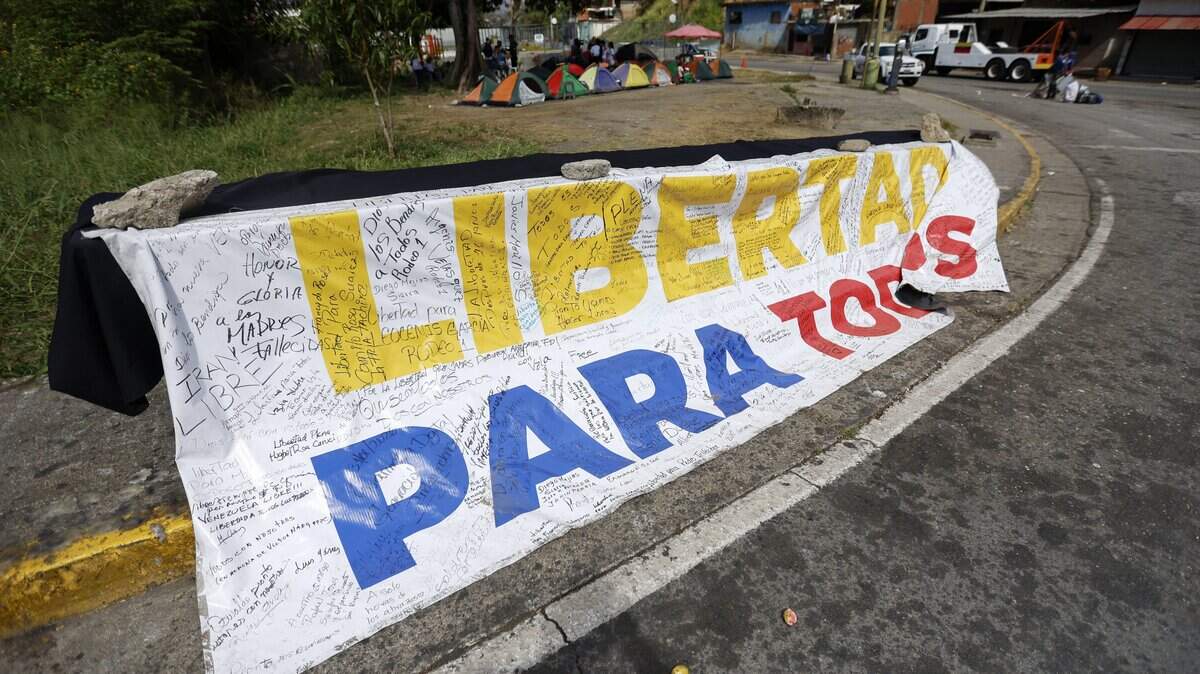
Venezuelan authorities said Monday they have freed 51 people described by human-rights groups as political prisoners, as the interim government continues a broader push to ease political tensions following the January apprehension of former strongman Nicolás Maduro.
In a statement, the government said the Attorney General’s Office requested on April 16 the application of “alternative measures,” granting conditional release to the 51 detainees under a program aimed at promoting “democratic coexistence and peace.” Courts approved the request the same day, allowing their release under unspecified conditions.
Authorities described those released as individuals accused or convicted of crimes linked to attacks against the country’s democratic order, a characterization human-rights groups have frequently disputed in cases they say involve politically motivated detentions.
The government did not specify the nature of the alternative measures, a term that in Venezuela’s legal system can include a range of restrictions short of full imprisonment. These may include house arrest, conditional release, periodic court appearances, travel bans or other limitations imposed by judicial authorities.
In politically sensitive cases, rights groups say such measures often involve strict reporting requirements or confinement to home, though officials have not provided details on the conditions applied to the 51 individuals.
Venezuelan officials framed the move as part of a wider effort to “foster reconciliation among Venezuelans” and strengthen social stability, describing it as essential to consolidating peace and safeguarding national sovereignty.
The announcement comes amid ongoing scrutiny of the government’s handling of political detainees, even after the passage of an amnesty law earlier this year intended to address cases tied to political unrest spanning more than two decades.
According to rights group Foro Penal, there were 477 political prisoners in Venezuela as of this past weekend, including 43 foreign or dual nationals. The group said 432 of the detainees are men and 45 are women, with 290 civilians and 187 members of the military among those held. Of the total, 164 have been convicted while 313 remain without a final sentence.
Foro Penal, which provides legal defense for political detainees, has warned that the amnesty process is increasingly acting as a bottleneck rather than a pathway to release, slowing or blocking freedom for many prisoners.
The current wave of releases follows a series of measures adopted by the interim administration of President Delcy Rodríguez, which took power after the Jan. 3 capture of former leader Nicolás Maduro and his wife, Cilia Flores, in a U.S. military operation in Caracas.
Five days after that operation, Venezuelan authorities began releasing detainees, later formalized through an amnesty law approved by the National Assembly on Feb. 19.
The amnesty law covers a 27-year period dating back to 1999, when the socialist movement first came to power, but applies only to cases linked to 13 specific political events. It excludes crimes such as corruption, homicide, human rights violations and cases tied to military operations.
Government figures say more than 8,000 people have benefited from the amnesty so far, most of whom were already subject to some form of restricted freedom rather than full imprisonment.
However, authorities have not published a list of those released, despite a public request from U.N. High Commissioner for Human Rights Volker Türk.
Last week, a group of former political prisoners raised concerns with the U.N. human rights office in Caracas, alleging delays and denials in the processing of amnesty applications.
The latest decision to grant alternative measures to the 51 detainees is likely to be closely watched by rights groups and international observers as a test of whether the government is accelerating or merely reshaping its approach to politically sensitive cases