New Venezuelan law would lure U.S. firms into ‘blood gold’ trade, critics warn
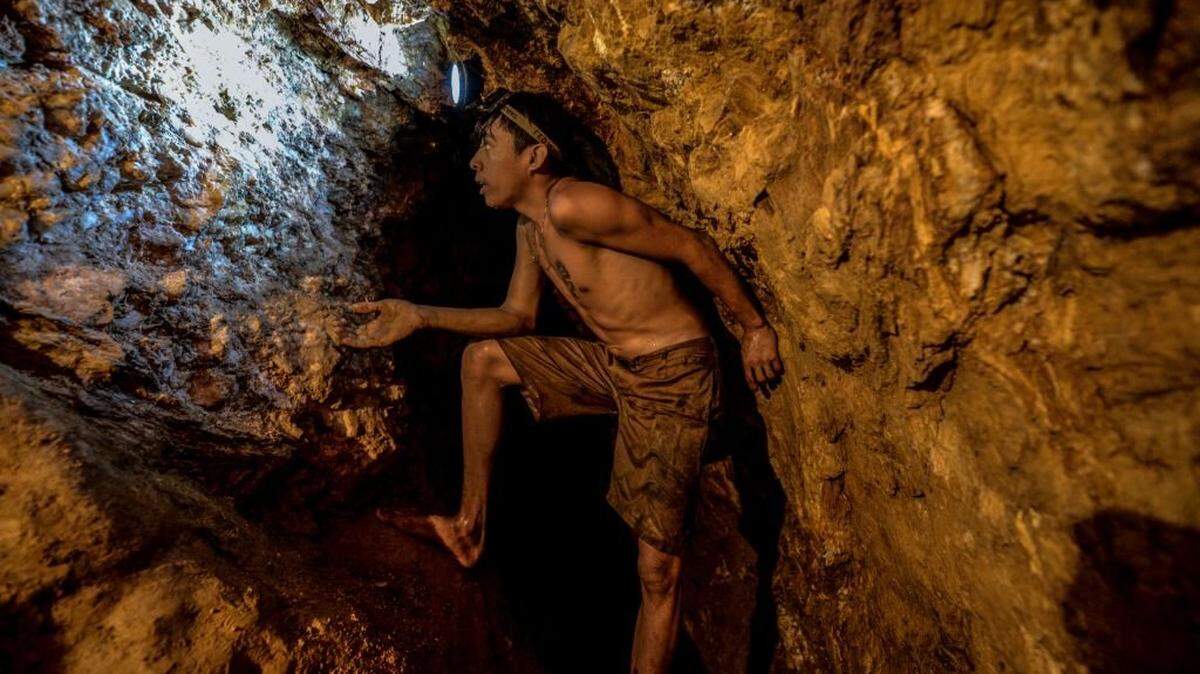
A coalition of Venezuelan civil society groups, human-rights advocates and environmental organizations are warning that a draft Organic Mining Law under debate in the National Assembly would “institutionalize ecocide” and could facilitate the laundering of so-called “blood gold,” as the country’s resource sector opens to foreign investment amid a U.S.-backed political transition.
The bill is being discussed in a dramatically altered political landscape following the Jan. 3 capture of former strongman Nicolás Maduro and his wife, Cilia Flores, in a predawn raid by U.S. forces in Caracas — an operation that triggered a fragile transition now being closely shaped by the Trump administration.
That shift has ushered in a new era of cooperation between Washington and Venezuela’s remaining socialist leadership, with the oil and mining sectors increasingly opening to U.S. companies as part of a broader economic realignment.
In a public statement dated March 23, more than a dozen Venezuelan organizations said the mining bill is advancing amid “systematic violations of social and environmental rights” and a weakening of the country’s constitutional and legal framework.
Rather than strengthening oversight of the mining sector, the proposal would “provide a veneer of legality to the ongoing systematic plundering of the Amazon and the Guiana Shield,” the groups said, warning it could worsen environmental destruction and abuses in mineral-rich regions of southern Venezuela.
The warning comes as environmental groups say the damage to Venezuela’s portion of the Amazon has already reached staggering levels. According to SOS Orinoco, one of the organizations behind the statement, mining and related activities have devastated more than 2.7 million acres between 2000 and 2024, with much of the destruction accelerating in recent years.
The group estimated in early 2025 that more than 3.2 million acres of undisturbed or minimally disturbed rainforest would be lost by the end of that year, with the total devastation projected to surpass 3.7 million acres by 2030.
The surge in mining activity traces back in part to a 2015 government decree creating the Orinoco Mining Arc, a vast mineral exploitation zone that sparked a gold rush reminiscent of California’s in the mid-1800s. Fueled by Venezuela’s prolonged economic collapse, tens of thousands of people have migrated from urban centers to remote southern regions to work in small-scale, often illegal mining operations.
Many of these sites are controlled or taxed by armed groups, according to human-rights organizations, operating with the tolerance of authorities as long as gold production continues to flow through official or semi-official channels.
The organizations behind Monday’s statement argue the new law risks formalizing and expanding that model at a time when international interest in Venezuela’s mineral wealth is resurging.
They took particular aim at the bill’s reference to “Ecological Mining Development,” calling it misleading. Gold mining, they said, is “intrinsically destructive,” and the concept masks damage to biodiversity and watersheds under a promise of sustainability that does not exist in current extractive practices.
Read more: How Miami, a major destination for Venezuelan gold, is helping prop up Maduro’s regime
They also warned that several provisions would grant sweeping discretionary powers to the executive branch over regulation, licensing and oversight, potentially limiting public scrutiny and citizen participation, particularly among communities directly affected by mining operations.
Environmental safeguards are another major concern. The draft law contains “serious gaps,” the statement said, including the absence of mandatory environmental impact assessments as a condition for granting concessions and the lack of mechanisms for independent monitoring, external audits or remediation funds.
The groups also cautioned that the proposal could allow mining in areas with varying levels of environmental protection — such as biosphere reserves and forest reserves — that are not explicitly excluded, increasing pressure on fragile ecosystems in the Amazon basin.
Beyond environmental concerns, rights groups say conditions in mining zones have deteriorated sharply over the past decade.
Reports based on interviews with miners and local residents describe grueling 12-hour shifts with little or no protective equipment, exposing workers to constant risk of injury and disease. Many laborers operate under coercive arrangements resembling indentured servitude, with armed groups enforcing control over mining sites.
Violence is common, and those who resist or attempt to leave operations have, in some cases, been killed, according to advocacy groups.
Particularly alarming, rights organizations say, is the presence of children as young as 10 working in mines, often alongside adults in hazardous conditions, deprived of schooling and exposed to exploitation.
Health risks are compounded by the widespread use of mercury in gold extraction. Although banned in Venezuela, mercury remains prevalent in mining areas, contaminating rivers and exposing workers and nearby communities to toxic effects.
Even small amounts of mercury can cause severe damage to the nervous, digestive and immune systems, as well as to the lungs, kidneys, skin and eyes. Studies conducted in Bolívar state have found high levels of mercury exposure among miners, including women and children. For pregnant women, exposure can lead to fetal malformations or death.
The statement also raises concerns about Indigenous rights, arguing that the bill does not fully guarantee international standards such as free, prior and informed consent, nor does it adequately address the demarcation of ancestral territories.
Another flashpoint is the creation of a “National Mining Guard” under the control of the Bolivarian National Guard. The organizations said the measure would formalize the militarization of mining zones, historically associated with human rights abuses, corruption and the expansion of illicit economies.
The signatories also questioned the classification of the bill as an organic law, warning it could be used to give the legislation higher legal standing while sidestepping other environmental and human rights protections.
The coalition called on lawmakers to pause debate on the bill and incorporate stronger transparency provisions, mandatory environmental and socio-cultural impact studies, independent oversight mechanisms and a more robust framework for protecting human rights and the environment.
“Venezuela’s gold is not worth the life of our rivers, forests and communities,” the statement said.
The statement was signed by organizations including SOSOrinoco, Provea, Fundaredes and the Venezuelan Observatory of Political Ecology.
This story was originally published March 24, 2026 at 12:24 PM.