Poll: Trump’s praise of Delcy Rodriguez dents his popularity in Venezuela
An overwhelming majority of Venezuelans reject Chavismo, oppose the transition led by interim President Delcy Rodríguez and would vote for opposition leader María Corina Machado if elections were held today, according to a nationwide survey released by Caracas-based firm Meganálisis.
Beyond the headline numbers, the poll also reveals shifting perceptions about the United States’ role in Venezuela’s political transition — particularly regarding President Donald Trump.
While 83% of respondents said they remain grateful to Trump, that figure declined by more than nine percentage points from January. At the same time, 61% said they believe Trump prioritizes oil business with Venezuela over the country’s freedom.
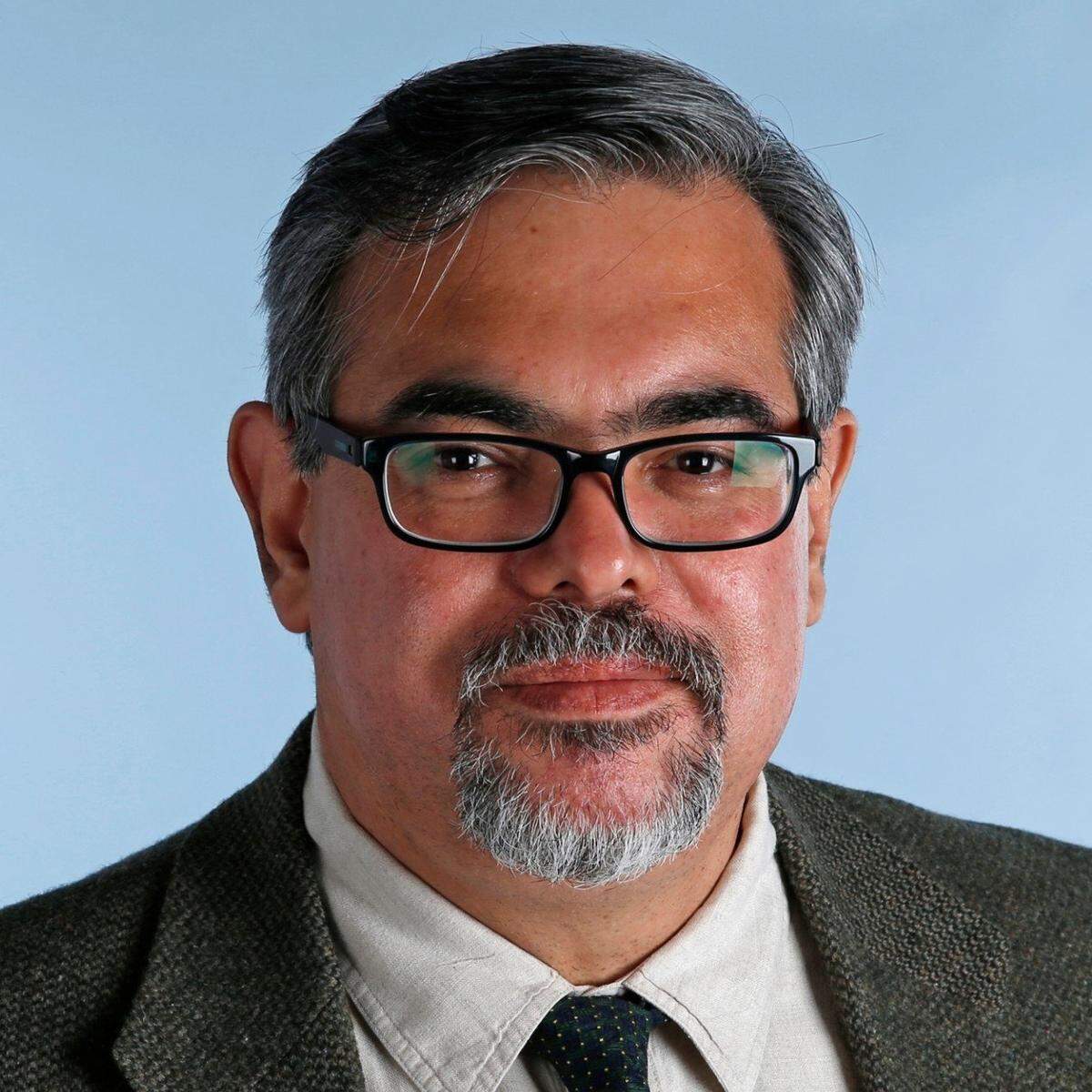
Rubén Chirinos, president of Meganálisis, suggested that visible coordination between Washington and Rodríguez may be generating friction among Venezuelans who had expected a more definitive break with Chavismo following Nicolás Maduro’s removal. Chavismo is the term Venezuelans use to describe the regime first established by deceased strongman Hugo Chavez.
“There has been a lot of focus on oil, on barrels, on business,” Chirinos said in a telephone interview. “But people are still living a very harsh economic reality.”
Rodríguez, 55, assumed leadership of the country after Maduro’s removal on Jan. 3 in a U.S. military operation. Maduro and his wife, Cilia Flores, are jailed and awaiting trial on drug trafficking charges in New York.
As vice president at the time, Rodríguez stepped into the role under constitutional succession mechanisms endorsed by the ruling party. Since then, she has sought to project an image of pragmatic stewardship, overseeing a transition process shaped in part by negotiations with the Trump administration. That process has included the release of some political prisoners and the reopening of Venezuela’s oil sector to U.S. companies.
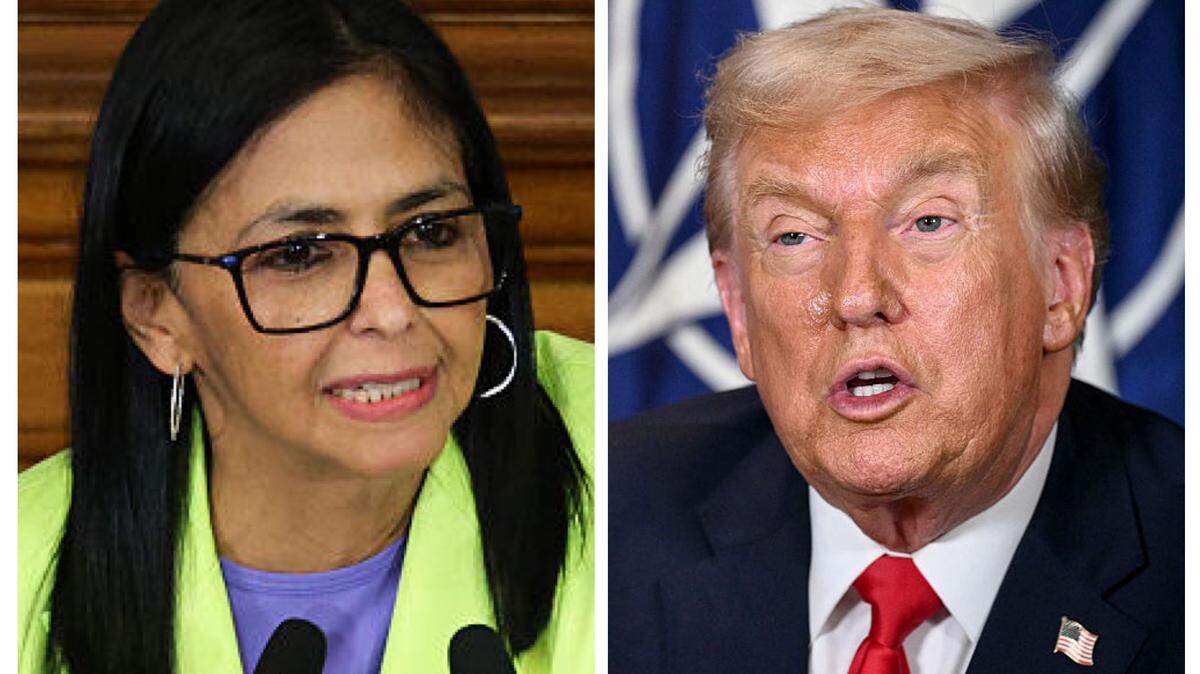
The diplomatic thaw has prompted Trump to publicly praise Rodríguez’s willingness to work with Washington to restore Venezuela’s economy and democratic system. Critics, however, argue that she remains closely associated with the Maduro era’s repressive apparatus and economic collapse — a legacy that continues to shape public perceptions.
Trump reinforced that perception on Tuesday, praising Rodríguez again during remarks at the White House.
“Venezuela was so incredible because we did the attack and we kept the government totally intact and we have Delcy who’s been very good. We have the whole chain of command and the relationship’s been great. We’ve taken out a hundred million barrels of oil already. I think part of that goes to them and a big part goes to us. It’s been great. We paid for the war many times over and we’re gonna be running the oil and Venezuela’s gonna make more money than they ever made and that’s great for the people. The relationship has been great, it’s been seamless,” Trump said.
The Meganálisis survey was conducted between Feb. 18-25, using computer-assisted telephone interviews to landlines and mobile phones nationwide. The poll surveyed 1,021 adults across all 23 Venezuelan states and the Capital District, with the sample distributed proportionally by geographic strata and social class. The poll reports a margin of error of plus or minus 3 percentage points.
The firm has been accurately tracking public opinion in Venezuela for years despite the challenging conditions shaped by constraints and fears of persecution affecting free expression under the Chavista regime.
According to the survey, 85% of respondents do not identify as left-wing and 94% do not consider themselves Chavistas, despite more than 25 years of socialist rule.
While 54% said they had voted for Chavismo at some point in the past, nearly 90% of those voters now say they regret it. Asked what socialism brought to Venezuela, 87% selected “poor living conditions, regression and poverty.”
For Chirinos, those figures reflect structural political damage that cannot be reversed through messaging.
Venezuelans are not buying what he described as a political rebranding effort by Rodríguez and other senior figures of the former Maduro government. “A change in behavior under U.S. pressure does not make Venezuelans forget who they have been,” he said.
The poll found that 90% of respondents do not agree with Rodríguez leading the transition. Nearly 88% want Rodríguez and other senior figures — including National Assembly head Jorge Rodríguez, Interior Minister Diosdado Cabello and Defense Minister Vladimir Padrino López — to leave power as soon as possible.
Machado dominates electoral scenarios in the survey. If elections were held today, 71% said they would vote for her. In a direct matchup between Machado and Rodríguez, support for Machado climbs to 82%, compared with 4.8% for Rodríguez.
Chirinos also questioned other recent polls placing Rodríguez’s support between 25% and 28%, suggesting some may rely on flawed sampling methods.
Beyond methodology, he said public skepticism remains deep. In the Meganálisis poll, 68% of respondents described a recently approved amnesty law as a “scam,” while only 14% said it delivers justice to political prisoners.
“There are still mothers asking for freedom. People are still being released in poor health,” Chirinos said. “That doesn’t erase the past.”
Economic conditions remain central. More than 80% of respondents said their household situation has not improved in early 2026 compared with last year. A majority believe the minimum wage should be between $200 and $400 per month — far above current levels.
For Chirinos, the broader conclusion is clear: political damage accumulated over years cannot be undone quickly.
“Venezuelans carry personal stories — of migration, of suffering, of loss,” he said. “That doesn’t disappear in a month and a half.”
Taken together, the poll results suggest that despite diplomatic shifts and public outreach efforts, Rodríguez faces a deeply skeptical public — and that Chavismo’s ideological brand remains severely weakened in the eyes of most Venezuelans.
Miami Herald reporter Claire Heddles contributed to this story.
This story was originally published March 3, 2026 at 1:10 PM.