Venezuelan cadets jailed over video game are freed under new amnesty law
When Venezuelan authorities arrested a group of military academy cadets last year, prosecutors pointed to an unusual piece of evidence: their use of the popular video game Call of Duty.
Now, after nearly a year behind bars, the young men are free — part of a wave of releases under a new amnesty law that is reigniting debate over the country’s justice system.
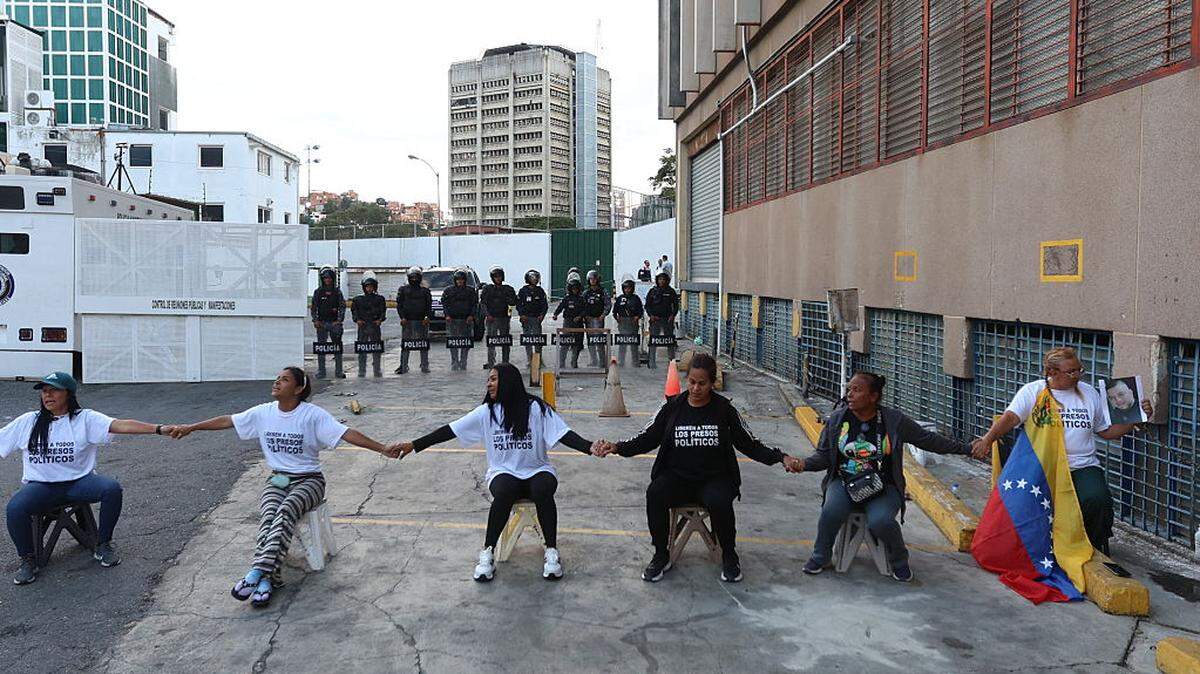
The cadets were among roughly 30 political prisoners released Monday from El Rodeo I prison, one of the country’s most notorious detention centers, following the ratification of the legislation aimed at easing political tensions after years of conflict.
Their case quickly became one of the most controversial to emerge from the government’s crackdown on dissent within the armed forces, drawing criticism from human rights advocates who said the prosecution relied on tenuous evidence and reflected deep suspicion toward perceived disloyalty within military ranks.
The episode has come to symbolize what rights groups describe as the criminalization of perceived dissent within Venezuela’s military, where authorities have increasingly pursued conspiracy allegations based on opaque or weak evidence. Their release underscores both the government’s effort to project reconciliation and the lingering mistrust over how the justice system has been used against critics and suspected internal opponents.
“All those in the case of the cadets have already been released,” said Gonzalo Himiob, vice president of the human rights group Foro Penal, adding that the only evidence presented against them was their use of the game.
A broader wave of releases
Foro Penal said Tuesday it has verified the release of 109 people since the amnesty law entered into force Friday, including seven releases that day, 15 on Saturday, 46 on Sunday and 41 on Monday, while noting that additional cases are still under review.
The organization’s president, Alfredo Romero, said another 545 political prisoners have been freed since Jan. 8, when authorities first announced plans to release what they described as a “significant number” of detainees.
Foro Penal distinguishes between full releases and “excarcerations,” in which detainees leave prison but remain subject to restrictions such as travel bans or mandatory court appearances.
Government officials say more than 2,000 detainees have been released under precautionary measures and at least 177 prisoners have received full amnesty benefits, according to figures provided by ruling party lawmaker Jorge Arreaza, who heads the parliamentary commission overseeing compliance.
A controversial prosecution
The cadets who were freed, fourth- and fifth-year students preparing to join Venezuela’s armed forces, were arrested between February and March 2025, according to relatives.
Authorities provided few details at the time, but Interior Minister Diosdado Cabello alleged the existence of a military plot to kidnap former Supreme Court chief justice Maikel Moreno. President Nicolás Maduro later said security forces had dismantled what he described as a “Nazi cell.”
Lawyers and rights advocates rejected those claims, saying the case relied on weak or fabricated evidence.
According to relatives, investigators accused the cadets of being contacted by foreign agents through the online features of Call of Duty to coordinate an armed conspiracy — allegations their defense teams dismissed as unfounded.
Call of Duty is one of the world’s most popular video game franchises, with millions of players participating daily in online multiplayer matches.
Freedom after a year
Upon leaving prison, several of the freed cadets described their release as bittersweet, noting that many detainees remain behind bars.
“I was a victim of mistreatment and was accused of crimes I did not commit,” Javier Rivas, one of the former cadets, told local reporters.
The young men shouted “Freedom, freedom!” as they embraced relatives outside the facility.
Daiker Carrizález, another former detainee, said about 300 inmates remain at El Rodeo I, adding that several have been on hunger strike for days.
Allegations of abuse
Some of the freed detainees said they were held incommunicado for several days after their arrests and subjected to physical abuse to force confessions.
“I suffered torture, beatings, physical abuse,” Rivas said, adding that he spent four days in a clandestine house during the early stages of his detention.
Human-rights groups have long accused Venezuelan intelligence agencies of operating secret detention sites where political detainees are held without contact with families — allegations authorities deny.
Families said they were not informed of the cadets’ whereabouts for months and only learned details after filing formal requests with government offices earlier this year.
Ana Luisa Hernández, mother of cadet Carlos Fernández, said her son was a teenager at the time of his arrest and suffered injuries during interrogations, according to previous media reports.
Himiob said Foro Penal is documenting testimonies from the released detainees but declined to provide further details.
Luis Manuel Vieira, another former cadet, compared conditions inside the prison to the broader political situation in the country.
“This prison is like a small Venezuela,” he told local reporters. “The guards are the leaders and the prisoners are the people fighting every day for freedom.”
This article was complemented with El Nuevo Herald’s wire services.