
Political prisoners released in Venezuela describe abuses, torture behind bars
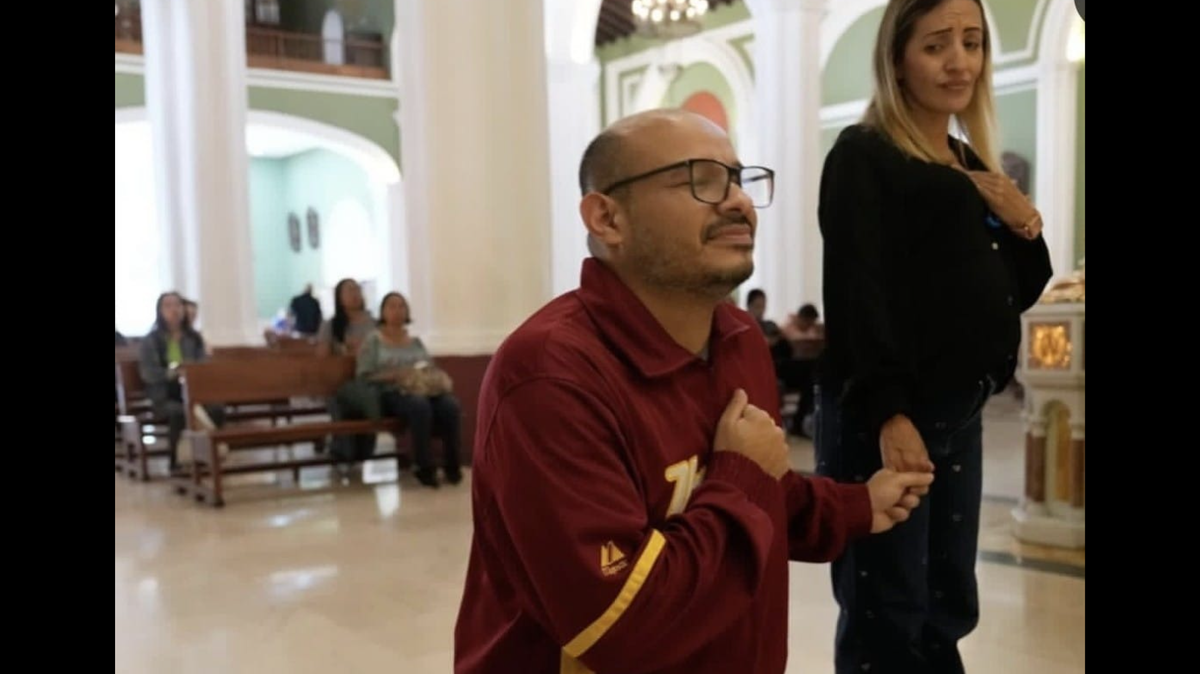
In the aftermath of the capture of Venezuelan strongman Nicolas Maduro by U.S. forces last month hundreds of Venezuelan political prisoners have been released, many of them from detention centers that have become infamous among human-rights advocates for their abuse of inmates.
Along with the releases have come accounts of beatings, prolonged isolation, disappearances, forced intubations and other physical and psychological distress.
Three Venezuelans detained by Maduro’s government and released recently described to the Miami Herald the conditions behind bars. Journalist Carlos Julio Rojas was isolated for more than two months in a tiny cell; sociologist Nicmer Evans described his experience as “disturbing.” Another former prisoner who asked not to be named for fear of the authorities said he had to bribe his guards with food and money to have access to visits or use a phone.
Delcy Rodríguez, who took office in Venezuela a few days after U.S. military forces bombed Caracas and arrested Maduro and his wife, Cilia Flores, announced upon assuming the interim presidency a process to release “numerous” political prisoners as a gesture of national reconciliation.
Civil organizations have said fewer people have been released than the numbers the government claims. Foro Penal, an association that has provided free legal defense to thousands of political prisoners in Venezuela, said Rodríguez’s government has only released 383 detainees since January.
Among those released is Rojas, a journalist, social activist and human rights defender who described painful episodes during his 21 months in prison in Venezuela’s fearsome center for political prisoners, El Helicoide.
For Rojas, imprisonment meant no treatment for his medical problems, weeks inside small solitary confinement cells, bathing without soap and waking up with back pain after being forced to sleep on a table.
Rojas, 40, who was released Jan. 14, has been forbidden by Venezuelan authorities from discussing his case or the conditions of his imprisonment. Instead, his wife, Francy Fernández, a lawyer and human-rights advocate, spoke on his behalf about what happened to her husband since she saw two armed hooded men force him into a truck near their home in Caracas on April 15, 2024.
It was not an arrest, she said, but “a kidnapping.” Rojas spent his first 10 days at El Helicoide in handcuffs. “He ate and went to the bathroom handcuffed,” she said.
When she first saw him in prison after this detention he was swollen all over his body and suffered from severely high blood pressure. “I saw a Carlos Julio that I didn’t recognize,” she said.
Rojas’ detention included confinement three times in punishment isolation cells know as tigritos, little tigers, she said.
“They forced him to sleep on a board, without a mattress. He woke up with back pain; it was difficult for him to walk. It went very badly for him,” she said. At another point, she said, he was held for 70 days without seeing daylight.
Rojas was never treated by a physician while at El Helicoide, where human rights groups have denounced cases of cruel, inhuman treatment and torture.
General amnesty law
The government has denied that there are political prisoners in Venezuela, rejecting the accusations of torture and ill treatment and saying reports on human rights abuses behind bars are false and politically motivated.
Civil associations, such as the Committee for the Liberation of Political Prisoners, as well as the United States and the Secretary General of the Organization of American States, Albert Ramdin, believe that there are still some 1,000 political prisoners imprisoned in Venezuela and have asked that their releases be accelerated.
In reports on conditions inside Venezuelan prisons, the United Nations has reported beatings of inmates with bats, suffocation with plastic bags, electric shocks, rape and forced immersion in water tanks.
Interim president Rodríguez recently announced a General Amnesty Law to benefit political prisoners and asked to leave “hatred and vengeance” behind. Her brother, National Assembly head Jorge Rodríguez, asked for “forgiveness” and said he’s never sought for the regime to hold political prisoners.
Since 2014, a year after Maduro took power, there have been more than 18,000 political prisoners in Venezuela, according to human rights advocates.
One of those recently released, Nicmer Evans, is a sociologist and analyst who is director of the media outlet Punto de Corte. He was detained for 31 days in El Helicoide.
Evans had already been arrested for almost two months by Maduro’s government in 2020. This time, he said, the conditions in prison had markedly improved. “I had access to information, visits with my wife, calls,” he told the Herald.
He said that what he witnessed in El Helicoide during his most recent stay did not align with its infamous reputation.
“There was a need on the part of the people of El Helicoide to show that it was no longer the main torture center in Latin America,” Evans said.
However, he noted that Venezuelan political prisoners share common punishments including being held incommunicado.
“The experience is disturbing. You are deprived of rights for no reason, with the uncertainty about the time you will be inside, without due process, or knowing how your family is,” said the sociologist, who remains under probation and has to appear in court every 15 days.
‘Kidnapped in inhuman conditions’
Most of those released from Venezuelan prisons say they have been warned by the government against talking publicly about their experiences behind bars, but from foreign detainees who were among the first to be released after Maduro’s capture have spoken out.
Alberto Trentini and Mario Burlò, who spent 14 months in El Rodeo I prison, told the press in their native Italy that they felt “kidnapped in inhuman conditions,” incommunicado, often isolated or in overcrowded cells.
“It was worse than Alcatraz,” they told reporters in Rome. Burlò said he had lost more than 60 pounds and was forced to sleep on the floor “among cockroaches.”
Camilo Castro, a Frenchman arrested in June 2025 by Venezuelan security forces, described his five months of imprisonment as “hell on earth”, first in a prison in the city of Maracaibo and then in El Rodeo I. He was released last November.
He told French media inmates lived in small cells with overflowing sewage, surroundd by rats and roaches. Accused of being a spy, he said, he was drugged, sexually abused and force-fed through tubes.
Peruvian former prisoner Marco Antonio Madrid, who was detained for almost a year, said they had known of prisoners being intubated through “all the openings in their body,” as punishment.
Bribing jailers
A political activist from a region near Greater Caracas, who asked not to be identified, was detained in 2024 when he was driving to the home of a group of friends. Three hooded men in black forced him out of his car, he said.
In prison, he depended on the charity of other inmates for access to food and clean clothes, he said. When his family finally found where he was being held they began food and clothes, not just for his own use but to use a bribes for his jailers.
He was held for several months with few visits, sometimes for prolonged periods with no communication, he said. At one point, he said, he was transferred to another prison where inmates who favored the government took the political prisoners’ food and beat them.
Rojas, the journalist and activist held for 21 months at El Helicoide, still finds it hard to believe he’s finally back home.
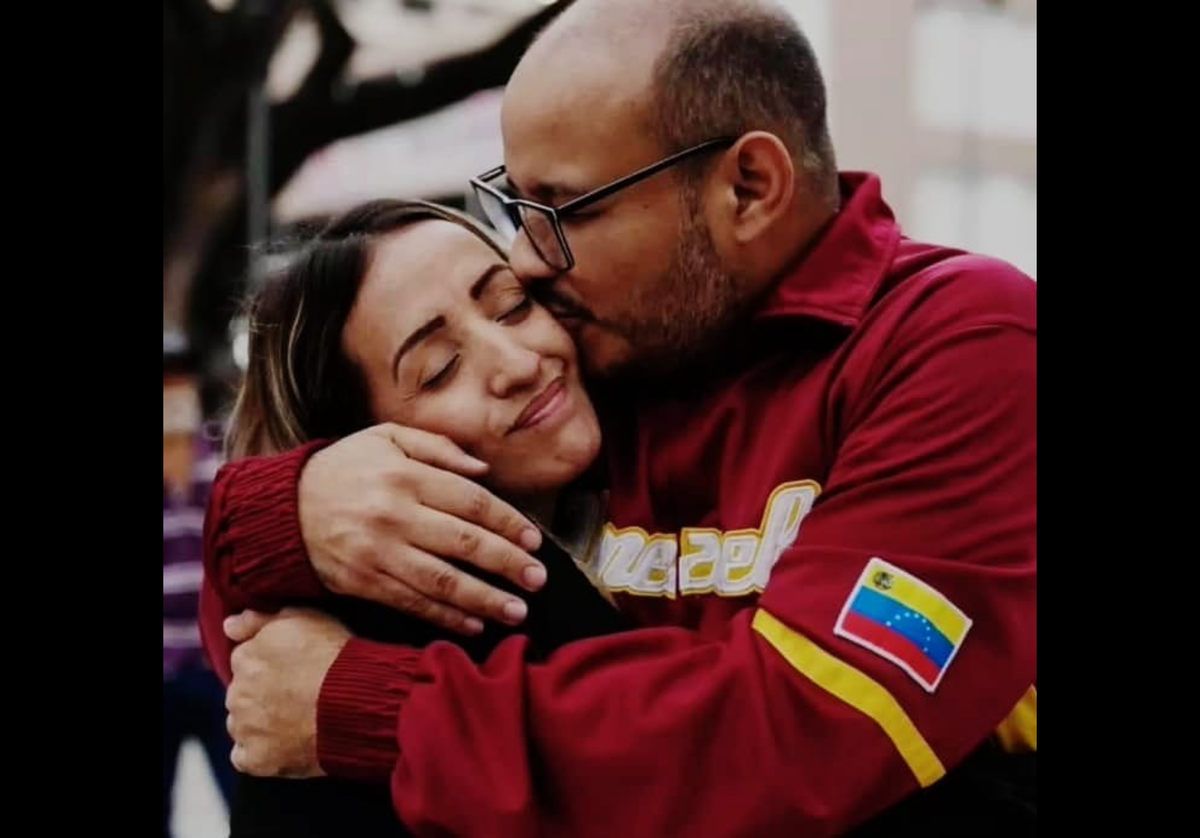
Sometimes, his wife says, Francy, she can’t believe it either.
On a recent afternoon, she said, her husband spoke to her from the kitchen. She didn’t see him, and her mind wandered for a moment to the possibility that she was dreaming.
It took her a moment to grasp the truth that he’s back home.
“It’s a miracle,” she said.