A historic shift in Venezuela’s oil industry — and a test for foreign investors
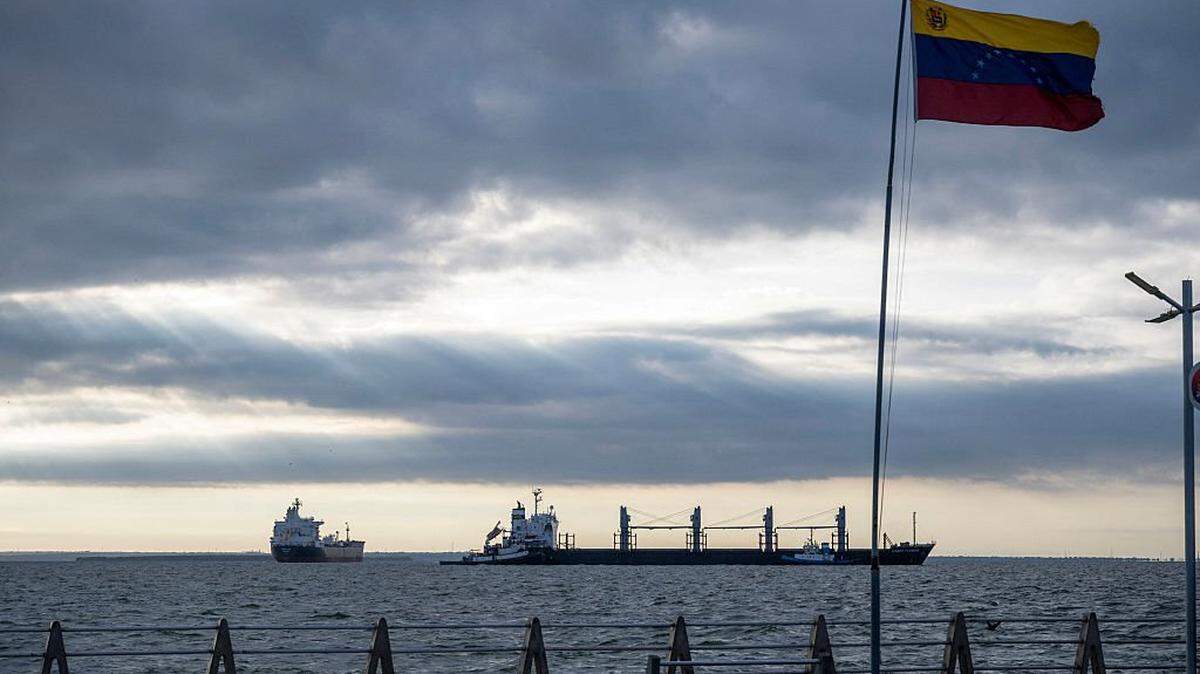
Venezuela’s newly approved overhaul of its hydrocarbons law marks the most sweeping transformation of the country’s oil framework since the 1976 nationalization of the industry, dismantling key pillars of the socialist model and replacing them with a hybrid system that analysts say could help boost production.
The changes, however, may still fall short of what U.S. companies need to justify a large-scale return. Deep-seated structural, fiscal and political risks persist, meaning the immediate beneficiaries are likely to be oil companies already operating in Venezuela — and regime insiders positioned to capitalize as investment flows back into the sector.
Experts who have followed the reform closely agree the new law largely formalizes changes that have been unfolding quietly for years allowing regime partners to secretly sell Venezuela oil despite the sanctions adopted by Washington.
Where they differ sharply is on what those changes ultimately represent, whether a pragmatic path toward recovery, an incomplete liberalization constrained by the institutional decay of the state oil company PDVSA, or a historic surrender of oil sovereignty under U.S. oversight.
Together, their assessments portray a sector moving away from ideological control toward operational pragmatism — but doing so through opaque mechanisms, discretionary fiscal rules and extraordinary foreign supervision.
Venezuela’s acting president, Delcy Rodríguez, enacted the landmark law Thursday, reversing one of the core tenets of the socialist movement that has dominated the country for more than two decades: state control over oil production and exports.
A break with the past
The reform is poised to become the signature policy of Rodríguez’s interim government as it seeks to attract foreign investment to revive a long-stagnant oil industry that remains the backbone of Venezuela’s economy. She signed the law less than a month after a dramatic U.S. military operation in Caracas that resulted in the capture of former president Nicolás Maduro.
At the heart of the reform is a break with one of the Venezuelan oil industry’s longest-standing rules: PDVSA’s exclusive right to export crude.
Antonio De La Cruz, a senior associate at the Washington-based Center for Strategic and International Studies, said the new law explicitly allows private companies to produce and export oil directly, ending a monopoly that had survived even during earlier openings to foreign capital.
“This is a structural change,” De La Cruz said. “For decades, even when private companies were producing oil, PDVSA was the sole exporter. That rule is now gone.”
The shift builds on the so-called Chevron model, developed under former oil minister Tareck El Aissami using Venezuela’s law to counter U.S. sanctions. That framework allowed Chevron, as a minority partner, to export Venezuelan crude directly — a practice that contradicted former leader Hugo Chávez’s 2006 hydrocarbons law but was tolerated through confidential contracts.
The reform effectively legalizes what had already become standard practice under sanctions. “The law is catching up with reality,” said Venezuelan economist Orlando Ochoa, noting that similar arrangements were later extended to Spain’s Repsol and France’s Maurel & Prom.
A central feature of the reform is the formal introduction of what are called “Productive Participation Contracts,” or CPPs in Spanish, which previously operated in secrecy under the anti-blockade framework.
Under CPPs, private companies can take over oil fields, invest capital, recover costs and market production without PDVSA holding a mandatory majority stake. While PDVSA remains the contracting authority, the new law eliminates the requirement that it own at least 60% of upstream projects — a cornerstone of Chávez-era policy.
More flexibility
De La Cruz said the CPP model is more flexible than anything Venezuela has seen before, even compared with the pre-nationalization period. “It allows companies to operate fields, pay royalties and taxes and deliver the state its share without PDVSA controlling everything,” he said.
Juan Fernández, former executive director of planning at PDVSA, acknowledged that CPPs move Venezuelan contracts closer to international norms but stressed that production activities must still be conducted through the state oil company or its subsidiaries.
“PDVSA remains the gatekeeper,” Fernández said. “Companies cannot choose freely how to operate; the contract must still go through PDVSA.”
Several experts warned that CPPs introduce new transparency risks. While existing joint ventures will be evaluated and reported to the country’s National Assembly, CPPs will retain “full validity and legal effectiveness” without comparable oversight.
“This is the darkest part of the reform,” said a Venezuela-based expert who requested anonymity. “They legalize opaque arrangements without scrutiny.”
Most analysts expect oil production to rise under the new rules, but caution that growth will be gradual. Venezuela currently produces about 850,000 barrels per day.
De La Cruz said output could reach 1.3 to 1.4 million barrels per day within 18 months by exploiting “deferred production” in mature fields — capacity that had been lost to mismanagement, sanctions and lack of maintenance rather than depleted reserves.
“These are fields that don’t require massive new investment,” he said. “They require operational control, spare parts and the ability to sell the oil.”
Fernández estimated that companies already operating under U.S. licenses — particularly Chevron, Repsol and Maurel & Prom — could add 250,000 to 300,000 barrels per day in the near term. PDVSA expects CPPs to add another 700,000 barrels per day over the medium term, though Fernández questioned whether sufficient capital is available.
Ochoa agreed that gains will be front-loaded and largely limited to firms already operating in the country. “This law benefits companies already inside Venezuela,” he said. “It does very little to attract new, large-scale investors.”
The reform lowers royalties from 30% to 20% and eliminates several government charges, including taxes tied to extraordinary prices and contributions to sports, science and pension funds. On paper, this reduces the government take.
In practice, Fernández said, Venezuela remains among the most heavily taxed oil jurisdictions in the world. The law introduces an integrated hydrocarbons tax that includes a new levy of up to 15% on operators’ revenues, regardless of profitability.
“At current prices, the government take is about 83%,” Fernández said. “Even after removing some charges, it would still be around 77% to 80%. That is not competitive.”
De La Cruz illustrated the split using a $100 barrel of oil: roughly $80 goes to the state, leaving about $20 for the private partner. During the height of U.S. sanctions, he said, companies were entitled to their share but were not paid, resulting in massive arrears.
Debt resolution
One immediate effect of the reform is the resolution of those debts. De La Cruz said Chevron alone accumulated more than $3.2 billion in unpaid obligations from PDVSA. Under the new framework, Chevron can collect directly through exports.
Under earlier U.S. licenses, Chevron exported up to 220,000 barrels per day to U.S. Gulf Coast refineries. Under the current regime, exports are capped at about 120,000 barrels per day tied to debt repayment and equity participation, with the remainder marketed separately by Venezuela.
Gulf Coast refineries — configured to process Venezuela’s heavy crude — could ultimately receive 700,000 to 800,000 barrels per day, De La Cruz said. Venezuelan domestic consumption, by contrast, remains around 200,000 to 220,000 barrels per day. He added that Citgo, Venezuela’s U.S.-based refiner, is buying Venezuelan crude for the first time in years.
The law allows disputes to be resolved through courts or alternative mechanisms, including arbitration, but analysts remain divided over whether this offers meaningful protection.
Ochoa said international arbitration is implicitly permitted and already included in revised Chevron contracts. Fernández disagreed, arguing that the absence of explicit language leaves excessive discretion to Venezuelan authorities.
Venezuela “has no effective bilateral investment treaties with the United States,” Fernández said. “Without explicit arbitration, legal certainty remains weak.”
Concerns also persist over the concentration of CPP production among a small network of firms. Reporting by investigative outlet Armando.info shows that four companies linked to the same group account for nearly 60% of CPP output — roughly 150,000 to 160,000 barrels per day — despite limited capital investment.
“It’s obscene,” said the Venezuela-based expert. “This is the most blatant corruption risk in the entire reform.”
Analysts consulted criticized the law for failing to address gas production, refining and petrochemicals, which remain tightly controlled by the state. Despite nominal refining capacity of 1.3 million barrels per day, Venezuela continues to face gasoline and cooking gas shortages, while gas export potential is constrained by domestic pricing rules.
“These are structural bottlenecks,” Fernández said. “Oil alone cannot fix Venezuela’s energy crisis.”
While the reform may temporarily stabilize the sector, critics inside Venezuela argue it concedes excessive control to Washington — particularly because the U.S. Treasury effectively determines which companies can export oil.
The law rolls back key elements of Chávez’s hydrocarbons framework, allowing private marketing, reducing mandatory state ownership and acknowledging past expropriations as a mistake. But analysts agree it stops short of full liberalization.
This story was originally published February 2, 2026 at 11:54 AM.