
‘We’re joyful, but we can’t say it’: Maduro’s gone, but Venezuelans remain fearful
The two sons of the 63-year-old Venezuelan woman were dying to celebrate the capture of strongman Nicolás Maduro by the American military.
But even though she shares their joy, she says, she did not let them celebrate: She does not want to see them carted off to prison.
“This government has instilled so much fear and terror in us,” she says, sitting outside the entrance of her home in a northern slum of the Venezuelan city of Maracaibo, a day after U.S. military forces moved into Caracas with missiles, jets and helicopters to snatch Maduro. “We have a lot of joy, but how sad it is not to be able to bring it to the surface, not to be able to go out to the streets to celebrate and say that we have a free Venezuela.”
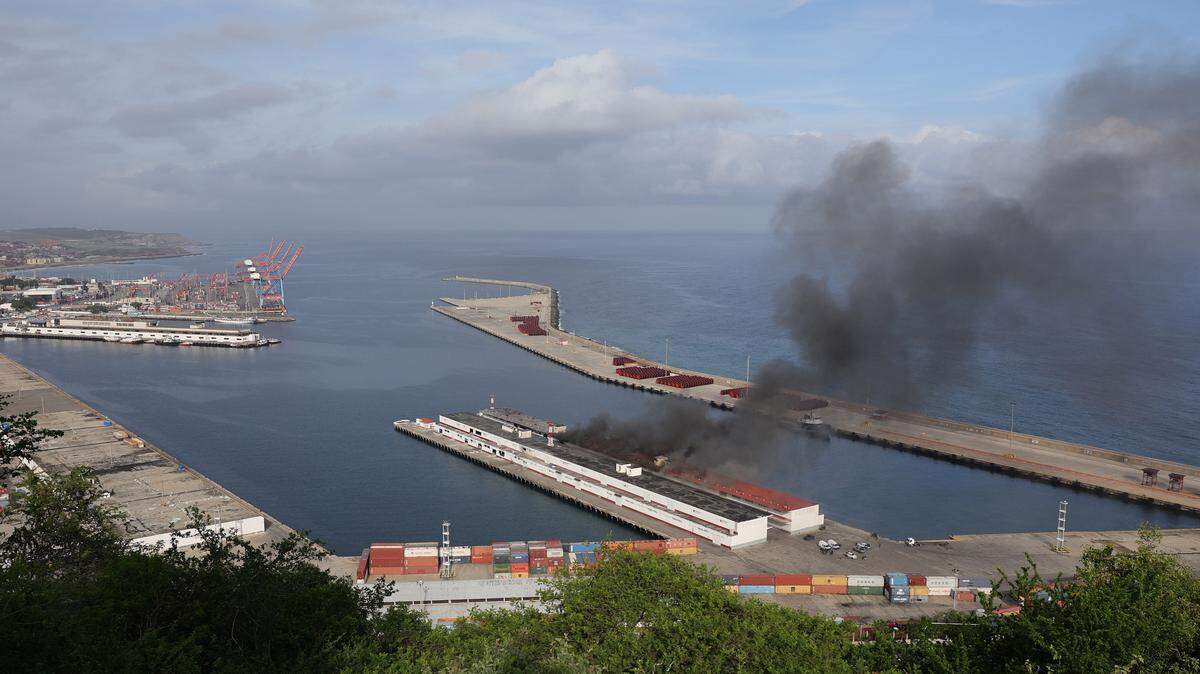
The United States launched an unprecedented operation in Caracas early Saturday, dubbed “Operation Resolve,” which led to bombings of military bases and other key targets, as special forces captured Maduro and his wife, Cilia Flores, in a facility described by President Donald Trump as “a fortress.”
The Venezuelan government was left in the hands of a close associate of Maduro, his vice president and oil business minister Delcy Rodríguez.
President Donald Trump said Saturday that the U.S. will “run” the South American country towards a “safe” democratic transition.
But the news about Maduro’s downfall was celebrated with greater enthusiasm by exiles in dozens of other countries than by Venezuelans at home, who on Sunday mostly remained sheltered in their houses.
“We’re joyful, but we can’t say it” for fear of a new wave of repression and political persecution against dissidents, the Maracaibo woman said. “It is the greatest feeling that they took out that son of a b--tch.”
Opponents in Venezuela blame Maduro for serious human-rights violations, jailing and torturing hundreds of dissidents, and stealing the 2024 presidential election. Maduro’s critics also blame him for the dismal performance of the country’s economy, as prices for basic goods have skyrocketed.
“Yesterday I went out quickly and bought four potatoes and three tomatoes,” she said. “That’s as far as the money would go.”
On Saturday morning, Venezuelans made long lines outside shops and supermarkets in cities like Caracas and Maracaibo to buy food and groceries, fearful that the conflict might drag on for days.
But on Sunday the streets remained quiet, free of demonstrations, violence or clashes, despite Maduro’s promise that a foreign armed attack on his government would be met with a fierce response from loyal military, police and civilians.
Most Venezuelans have learned to react cautiously to violent political upheavals in their history, such as the coups and attempted coups in 1992 and 2019, political scientist Ricardo Ríos told the Miami Herald.
That, he believes, is also happening in the aftermath of the U.S. military attack and Maduro’s capture to be tried on charges of drug trafficking in the United States.
“When people wake up to acts of violence, they won’t go out even if the political objective is achieved. Further, there is repression — and the opposition lacks political strength” due to arrests and persecution, he added.
Venezuelans say they still have fresh in their collective memory the severe crackdown on protests by the Maduro government after the presidential elections of July 2024, as well as in public demonstrations in 2019, 2017 and 2014.
Although Maduro no longer leads the government, many Venezuelans fear his authoritarian, repressive practices will continue in the administration headed by Rodríguez, although, at least for the moment, there was no visible repression.
“People have been left alone,” said a resident of another impoverished community in western Venezuela, noting the quiet in the streets. “On other occasions, we had national guardsmen and police who wouldn’t even let us sit outside” during times of political crisis, he recalled. Now, “I don’t see officials on the street.”
There was little traffic on streets. On some corners of major thoroughfares, such as Delicias Avenue in Maracaibo, the national police maintained a checkpoint with an anti-riot truck and just few officers.
Oswaldo, an activist who belongs to one Venezuela’s main opposition political parties and asked the Herald not to use his last name for fear of reprisals, said people in his neighborhood “are quiet” out of fear.
Some of his neighbors said they have not come out to express their joy at the fall of Maduro because the Nobel Peace Prize winner and opposition leader María Corina Machado would have called “for calm and to stay” in their homes.
They do not want to be victims of paramilitary groups that support the government.
But two friends who live not far from military and intelligence installations in Maracaibo at least dared to crack a joke about Maduro’s fate in the U.S. justice system: “They’re going to give him 40 years.”
His friend said demonstrations like the ones called by Machado in other cities around the world to celebrate Maduro’s departure are fine — overseas.
“They’ll celebrate over there,” he said. “Here, we’ll be lucky if we can even eat a plain arepa.”
This story was originally published January 4, 2026 at 3:29 PM.