
A look at how Venezuela’s ‘phantom fleet’ smuggles oil aboard black-market ships
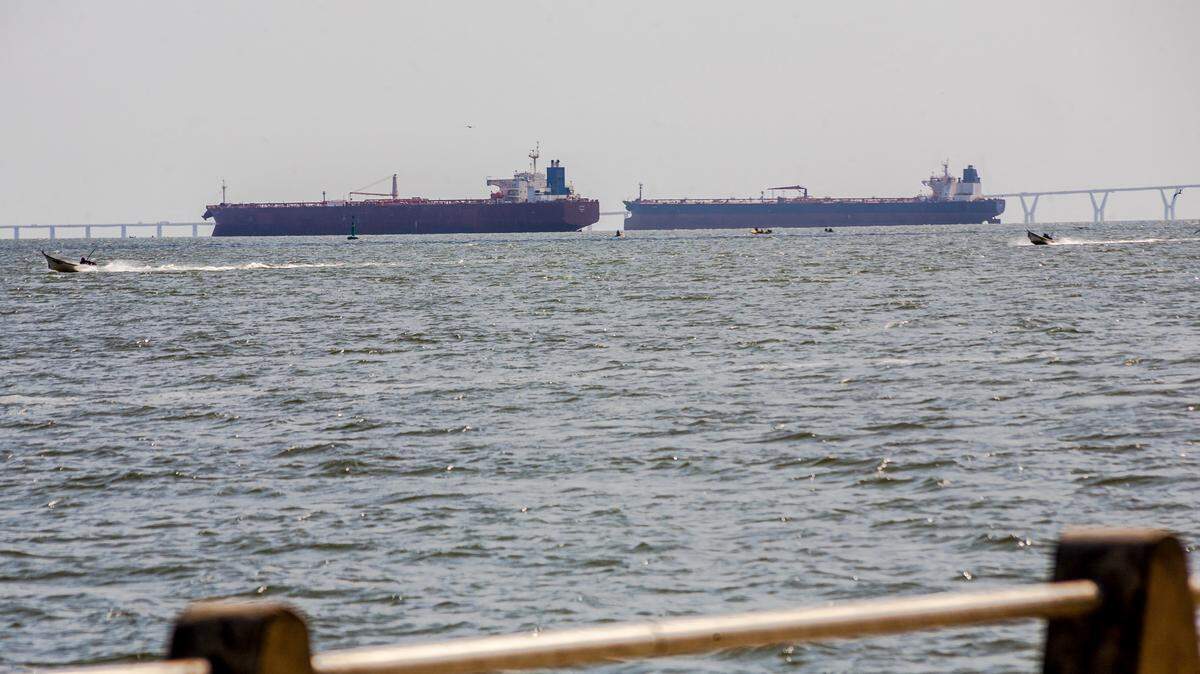
The fleet of ghost ships Venezuela uses to smuggle part of its oil to black markets, which President Donald Trump vowed this week to stop with a military blockade, is made up of dozens of old tankers and operates following the example of other nations under sanctions such as Russia and Iran, according to sources familiar with the South American country’s petroleum industry.
Trump announced on Tuesday “a total and complete blockade of all sanctioned oil tankers entering and leaving Venezuela,” just days after U.S. special military forces and the U.S. Coast Guard seized a tanker loaded with 1.9 million barrels of Venezuelan crude.
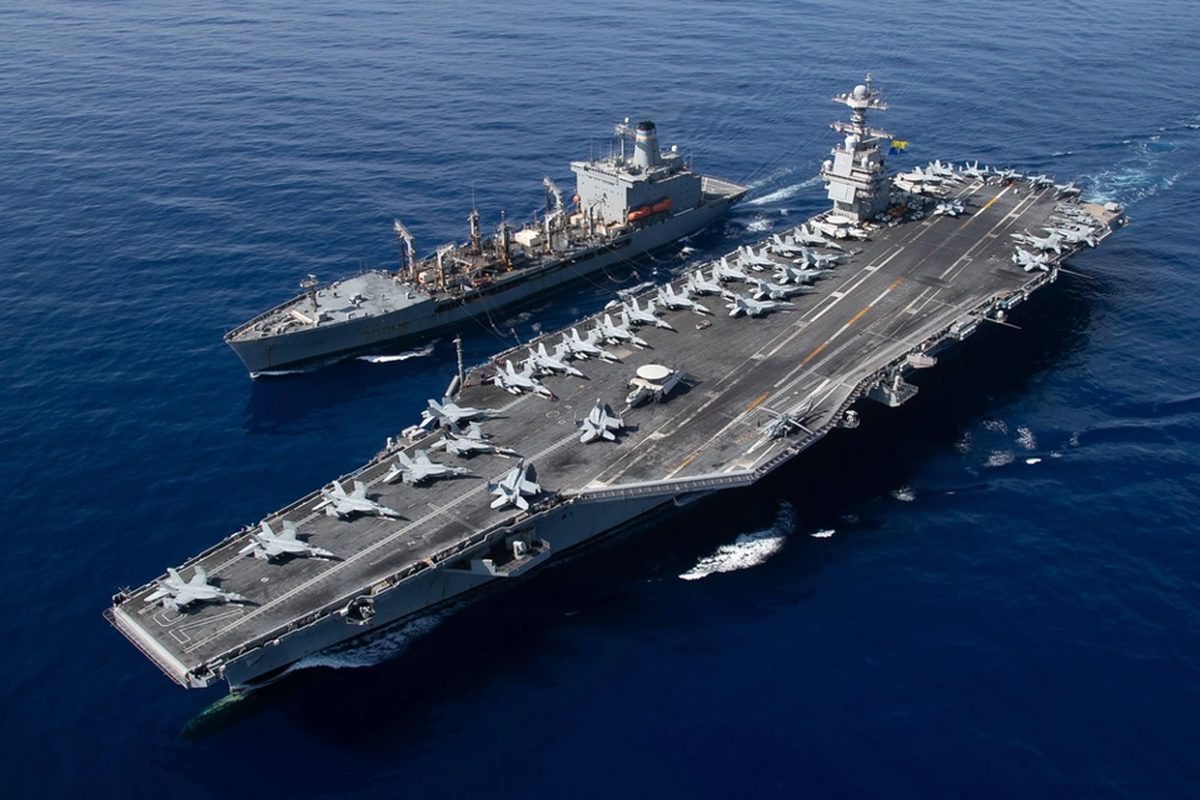
A large U.S. military buildup in the southern Caribbean, which includes guided-missile destroyers, dozens of fighter jets, thousands of troops and the world’s largest aircraft carrier, the USS Gerald R. Ford, “will only continue to grow” until Venezuela returns oil and land that the South American nation allegedly “stole” from the United States, Trump posted on the Truth Social website.
Read more: U.S. warplanes patrol near Venezuela as Caracas warns of regional war
The seized oil tanker, the Skipper, has a history of falsifying or concealing its location and has in the past transferred its oil cargo at sea to other vessels, according to an investigation by the BBC.
U.S. Attorney General Pam Bondi described the Skipper as an “oil tanker used to transport sanctioned crude from Venezuela and Iran.”
The Venezuelan government has been subject to dozens of U.S. economic sanctions that have affected its oil and energy businesses since 2017. Nicolás Maduro’s regime has described the seizure as “an act of piracy.”
Read more: U.S. ‘blockade’ of oil tankers likely not enough to push Maduro out, experts warn
Old tankers
Venezuela currently has at its disposal as many as 54 so-called ghost ships — the moniker is due to their turning off their location-emitting transponders — that use false flags and carry out irregular transfers of their cargo to carry sanctioned, discounted crude oil to markets in the Americas and Asia, according to firms in the energy sector.
S&P Global Oil and Gas said in a report from September that Russia, Iran and Venezuela partnered in recent years with “opaque” shipping players to buy or lease tankers that allow them to operate while evading foreign sanctions.
The network is “always evolving,” S&P Global said.
Venezuela, once considered the Saudi Arabia of the Americas because it has the largest proven crude oil reserves in the world, produces an average of 1.2 million barrels a day.
Read more: Trump seems to be trying to collect on old bill of U.S. assets expropriated in Venezuela
Tanker Trackers, an independent digital service that tracks and reports oil shipments at geopolitical points of interest, said Thursday that 38 of the oil tankers used by Venezuela are on “the naughty list” kept by the U.S. Treasury Department’s Office of Foreign Assets Control.
“Of that 38, we deem 17 to be candidates for departure and 8 of those candidates are laden; 6 with crude oil and 2 with fuel oil,” Tanker Trackers posted on Thursday.
Beside the possible reputational damage to the companies that operate them, vessels under sanctions can be fined and their owners can end up under criminal investigation.
Members of shadow fleets share some characteristics, according to the U.S. research center The Atlantic Council: They are “a collection of ships”, not an official flotilla of any government or state, and their ownership and management are opaque.
The vessels also sail without safety standards; they are old, poorly maintained, often around 20 years old; they usually change their registration and flag, and they manipulate the signal of the mandatory navigation systems on all commercial vessels, an illegal act known as “spoofing.”
Ghosts on the way to Asia
The main destination of Venezuelan crude currently transported in the ghost fleet spotted by the United States is China, with recurring transfers in Malaysia and Singapore, according to economist Francisco Monaldi, as expert on the politics and economics of energy.
“The Chinese report all that crude as if it came from Malaysia or Singapore. There was a moment when they made believe that it came from Brazil,” said Monaldi, director of the Latin America Energy Program at the Center for Energy Studies at Rice University’s Baker Institute for Public Policy.
The oil is usually sold to end customers at discounts of up to 40% from standard global prices due to the risk from U.S. sanctions, Monaldi said.
Last week, the U.S. imposed sanctions on six oil tankers accused of belonging to that flotilla and of having transported sanctioned Venezuelan crude.
The Treasury Department added to its blacklist the tankers H. Constance (Panama flag, built in 2002), Kiara M (Panama, 2004), Lattafa (Panama, 2003), Monique (Cook Islands flag, 2005), Tamia (Hong Kong flag, 2006) and the White Crane (Panama, 2007).
“Not all the ships that go to Venezuela are already sanctioned, but they are all part of that phantom fleet, because no established company is going to run that risk of sanctions,” Monaldi said.
The U.S. has sanctioned ships carrying oil for Iran and Russia but has now begun to sanction tankers just for going to Venezuela, he added.
“It’s a cat-and-mouse game between the U.S. and the black market,” he added.
The sanctions, along with U.S. pressure on India not to buy Russian oil, have caused black market prices to fall and Russia to muscle into the market normally controlled by the Chinese, where Venezuelan oil is sold, Monaldi said.
Venezuelan crude is now paid for with crypto assets, he said, where previously it had been financed through the Russian banking system, which is itself under sanctions, he added.
“The seizure of the [Skipper] brought much higher costs to Venezuela. Many [tankers] do not want to leave; others turned around. It has already had an impact, with greater discounts” affecting sanctioned crude, Monaldi said.
Transfers at sea
According to Transparencia Venezuela, a civil organization that monitors the administration of public resources in the South American country, the number of ghost tankers that Maduro’s government has used has been as high as 113.
“Nothing seems to stop them, and they don’t even have to reach port to be loaded with thousands of barrels of crude,” the organization said in a report last July.
Transparencia said ghost tankers have anchored in the open seas, on the border between Venezuela and Aruba or Curacao, to receive crude oil from the Paraguaná Refining Center in the Venezuelan state of Falcón in stealthy ship-to-ship transfers.
One of those “dark” ships would be the Cape Balder, a vessel that was thought to have been scrapped three years ago, but which operated near Falcón at least twice between May and June, according to Transparencia Venezuela.
Ship-to-ship “operations with Venezuelan oil began to be detected both in national waters and near ports in Malaysia and Singapore for shipments to China,” the group’s report said.
Those ships also operated near the José Antonio Anzoátegui General Petrochemical Complex in eastern Venezuela. According to unofficial reports, the Skipper, the tanker seized by the U.S.,, would have loaded crude oil there.
In 2020, Maduro’s government approved an “Anti-Blockade” law to evade sanctions through a business model that allows Venezuelan authorities to keep classified key aspects of its oil industry, such as operational reports and identities of suppliers and clients.
Venezuelan oil ships are not the only merchant vessels facing international sanctions.
On Thursday, the European Union imposed sanctions on 41 ships that, according to EU capital Brussels says are part of Russia’s ghost fleet.
The Council of the European Union said the vessels are part of a “shadow fleet” that has bans on access to ports and restrictions on a wide list of maritime transport services.