JetBlue flight over the Caribbean narrowly avoids U.S. military aircraft near Venezuela
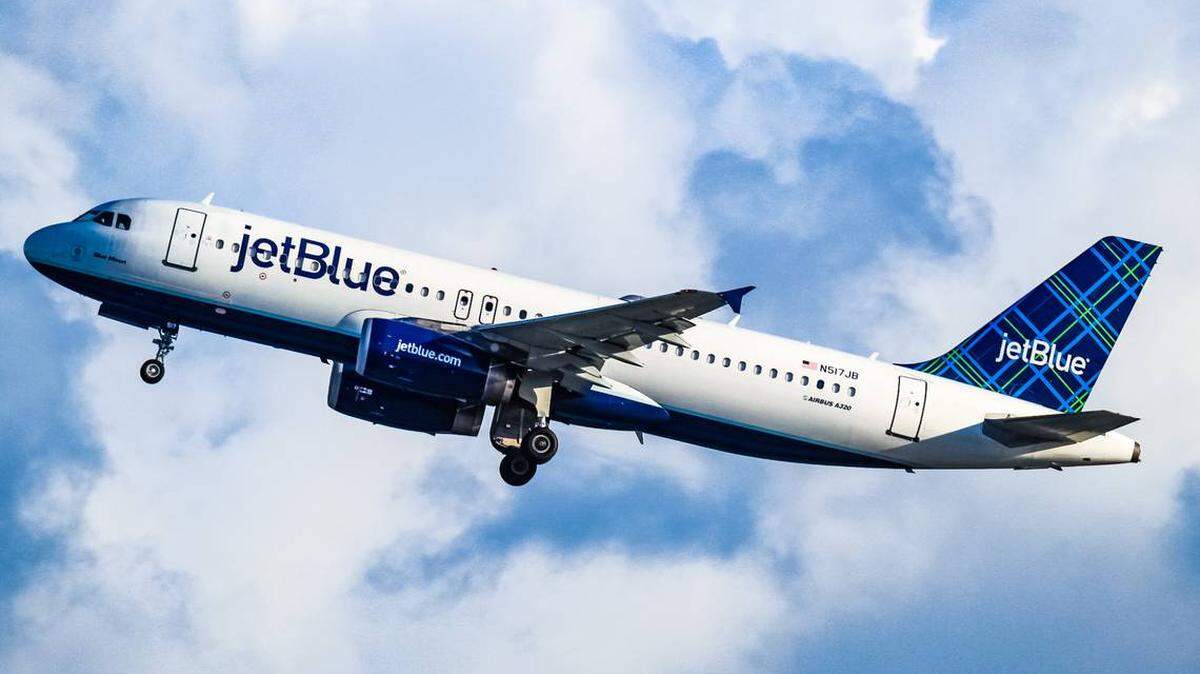
A JetBlue Airways pilot reported narrowly avoiding a midair collision with a U.S. Air Force aircraft near the Venezuelan coast on Friday, an incident that has drawn renewed attention to the risks posed by intensified U.S. military operations in the Caribbean amid escalating tensions with Caracas.
According to air traffic control recordings and company communications, JetBlue Flight 1112, an Airbus A320 en route from Curaçao to New York, encountered a U.S. military aircraft roughly 20 minutes after takeoff. Curaçao, a constituent country of the Netherlands, lies about 40 miles north of Venezuela’s coastline and has become a hub for both civilian air traffic and expanding U.S. military activity in the region.
In a recording published by LiveATC.net, the JetBlue pilot told Curaçao air traffic controllers that another aircraft crossed directly in front of his plane at close range. The pilot identified the aircraft as a U.S. Air Force air-to-air refuelling tanker and expressed alarm that it appeared to be operating without an active transponder to transmit its location.
“Sir, we just had traffic tap directly in front of us within five miles of us, maybe two or three miles, but it was an air refueler from the United States Air Force, and he was at our altitude. We had to stop our climb,” the pilot said. “They don’t have a transponder turned on. It’s outrageous.”
Transponders transmit aircraft identification and altitude data to air traffic controllers and nearby aircraft, forming the backbone of collision-avoidance systems such as the Traffic Alert and Collision Avoidance System. While civilian aircraft are required to keep transponders active, military aircraft may switch them off during sensitive operations, a practice that can increase risks in congested or shared airspace.
The JetBlue pilot reported that the A320 was climbing through approximately 33,400 feet toward a cruising altitude of 35,000 feet when the military aircraft crossed at around 34,000 feet, leaving an estimated 600 feet of vertical separation. Standard separation between aircraft at those altitudes is typically much greater.
The U.S. Southern Command confirmed it was reviewing the matter.
The close call occurred against a backdrop of heightened U.S. military activity in the Caribbean basin, where Washington has stepped up naval and aerial operations targeting suspected drug-trafficking routes and criminal networks linked to Venezuela. On Friday, U.S. Navy aircraft carried out patrol flights near the islands of Aruba, Bonaire and Curaçao as part of what U.S. officials describe as an expanded security mission known as Operation Southern Spear.
Air-tracking data showed multiple U.S. military aircraft, including combat fighters and electronic surveillance platforms, operating in international airspace close to Venezuela’s maritime boundary. Radar systems identified at least two F/A-18E Super Hornet fighter jets flying north of Curaçao.
U.S. officials say the operation is aimed at neutralizing security threats and dismantling drug-trafficking networks in the Western Hemisphere, with a particular focus on the so-called Cartel de los Soles. Washington claims the network is led by Venezuelan President Nicolás Maduro and senior figures within his inner circle, an accusation Caracas has repeatedly denied.
Venezuela reacted sharply to the increased U.S. military presence. Speaking on state television during a ceremony marking the 47th anniversary of Venezuela’s Comprehensive Aerospace Defense Command, Defense Minister Vladimir Padrino López accused Washington of intimidation and of pushing the region toward conflict.
“This is an attempt to impose a war on Latin America and the Caribbean,” Padrino López said, adding that surrender was a “historical impossibility” for Venezuela. He claimed U.S. military actions endangered American service members, accusing Washington of being willing to send home “young people of American society in black body bags and urns.”