Miami exiles alarmed as Caracas orders tracking of former cops, soldiers deported from U.S.
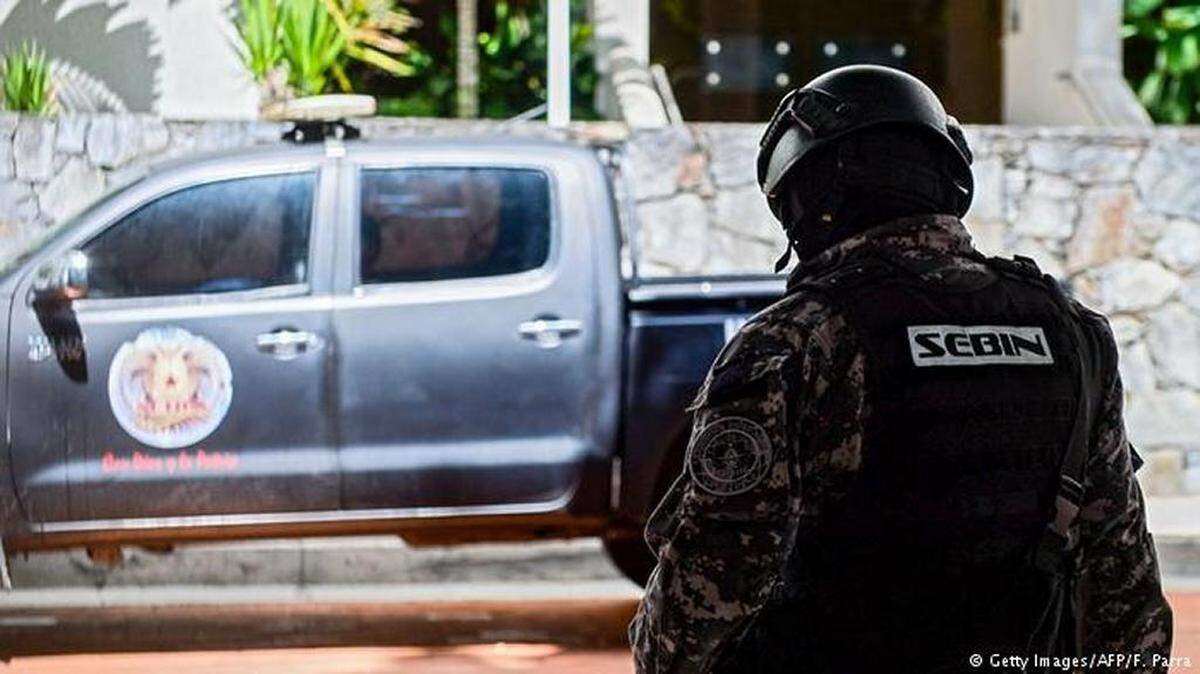
Venezuelan exile leaders in Miami are sounding urgent alarms after the leak of an internal intelligence memo that orders Venezuela’s security forces to locate and gather information on former police and military officers recently deported from the United States.
The document, issued by Venezuela’s Ministry of Interior Relations, Justice and Peace, surfaces as human rights groups have warned of a sharp escalation in enforced disappearances and politically motivated detentions following the country’s disputed 2024 presidential election.
Dated Dec. 1, 2025, and signed by Gen. Commissioner Darwin Echeverría, director of intelligence, the memo instructs Caracas’ regional command to dispatch teams to the homes of former officers returned from Central America and the U.S. through the government’s “Gran Misión Vuelta a la Patria” — Great Return Home Mission.
Agents are ordered to verify the individuals’ “physical location” and collect detailed personal information. Attached to the directive was a list of names along with a standardized form to be completed during the visits, according to the leaked memo.
The order has intensified fears among Venezuelan exiled former police and soldiers, who say the government is weaponizing repatriation programs to identify, monitor and potentially detain perceived dissidents.
Lt. José Antonio Colina, president of the Miami-based Organization of Venezuelans Politically Persecuted in Exile, called the memorandum “extremely serious,” saying it places returnees in immediate danger.
“They would be taken by the tyranny, they could be subjected to intense interrogations, they could be illegally detained and also subjected to torture and degrading treatment,” Colina said. Any former officer returning to Venezuela, he warned, “could become the victim of an illegitimate detention and… a physical disappearance because they are considered enemies of the state by the regime”
Colina said dozens of military and police personnel have died in government custody in recent years, underscoring the risks. He urged foreign governments not to deport Venezuelan officers who broke with the regime and sought refuge in their countries, arguing that “what awaits them in Venezuela is prison, torture or even death.”
Iván Simonovis, a former political prisoner who later served as special commissioner for security and intelligence for opposition leader Juan Guaidó, said the order reflects a continued effort by the Nicolás Maduro regime to neutralize dissent within the military and police.
“This is a continuation of a story we already know — the regime’s persecution of anyone who is a dissident,” Simonovis said. He noted that the involvement of the country’s intelligence chief signals the operation is a top priority.
The leak comes against the backdrop of a dramatic surge in politically motivated disappearances after Venezuela’s contested July 2024 presidential election. In a new 46-page report, Amnesty International says the disappearances are part of a coordinated campaign of repression that may amount to crimes against humanity.
In its investigation, “The Crime of Enforced Disappearance in Venezuela: Detentions Without a Trace,” Amnesty documented 15 emblematic cases between July 2024 and June 2025. The report outlines a systematic pattern of arbitrary detentions carried out by agents from the military counterintelligence agency and the Bolivarian intelligence service, often by agents in unmarked vehicles and plainclothes.
Victims are routinely abducted, transferred through clandestine facilities and held incommunicado as families desperately search for answers. Amnesty said the disappearances are not isolated abuses but part of a “deliberate strategy to silence dissent and terrorize the population.”
The leak has rattled South Florida’s Venezuelan exiled community, where thousands face imminent deportation as the Trump administration accelerates repatriation flights. Advocacy groups fear the memo could be used to target returnees, particularly those with law-enforcement and military backgrounds.
Repression intensified after Maduro declared victory in the widely contested July 28, 2024, vote. Within a week, more than 2,500 people were arrested during nationwide protests, and at least 25 demonstrators — including two minors — were killed by security forces.
The government expanded use of the “VenApp” mobile platform — originally created for reporting potholes and public-service complaints — to allow regime loyalists to report suspected protesters and critics. Passports were revoked, homes raided, and civil society organizations dismantled.
In a speech following the unrest, Maduro vowed “no forgiveness,” ominously invoking Tocorón, one of Venezuela’s most notorious prisons, as the fate awaiting demonstrators.
For human rights defenders, the leaked memo fits into the broader climate of repression. They say it highlights the Maduro government’s growing reliance on surveillance, intelligence operations and enforced disappearance to maintain control.
The order to verify the “physical location” of repatriated officers mirrors tactics used in previous waves of politically motivated arrests, where home visits by intelligence operatives often preceded warrantless detentions.