Missiles and militias: Maduro fortifies Caracas’ coastal access as US military looms
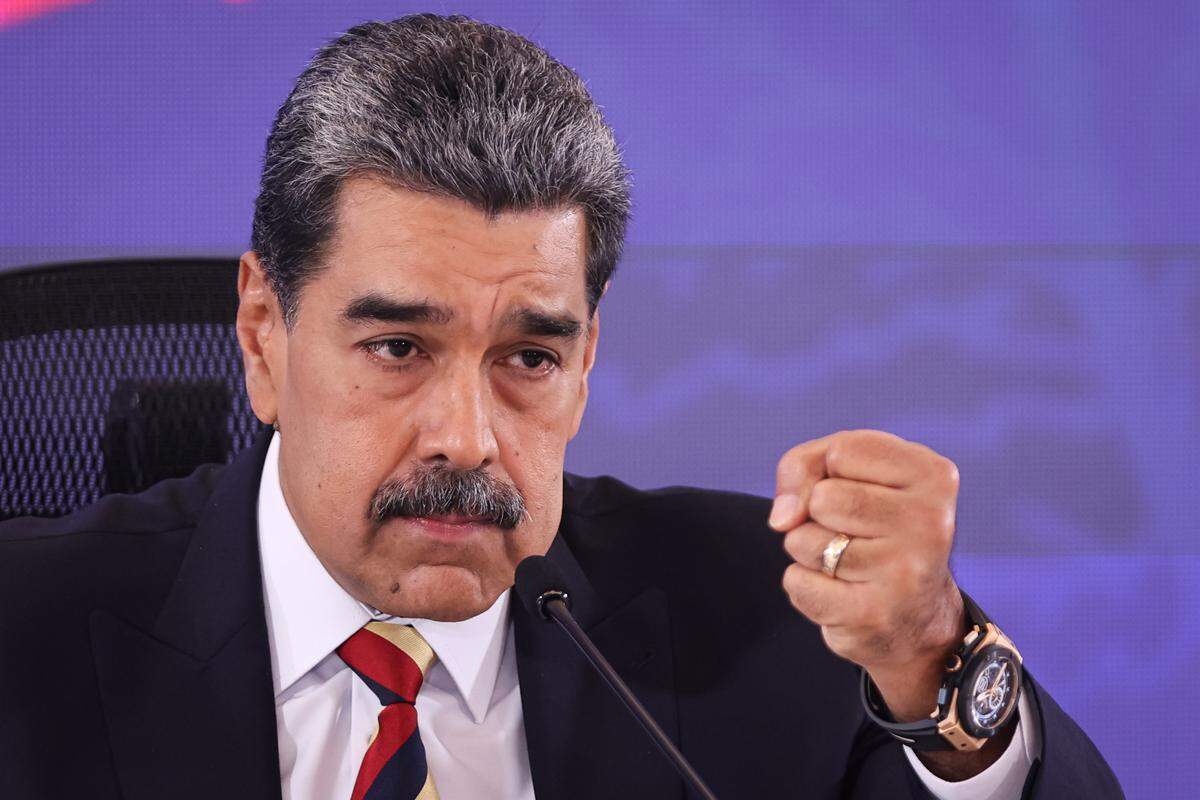
Venezuelan strongman Nicolás Maduro on Wednesday unveiled what he called a sweeping “comprehensive defense plan” to fortify the strategic corridor between Caracas and the coastal state of La Guaira, declaring that “heavy weaponry and missiles” are already deployed and operational as a U.S. military presence lingers in nearby Caribbean waters.
In a nationally televised presentation on state television channel VTV, Maduro stood before a map outlining the densely populated stretch linking the capital to the country’s main port and international airport. He said the plan detailed “street by street, community by community, weapon by weapon, weapons system by weapons system” how the government intends to defend the area from what he described as external threats.
The show of force comes as Washington maintains an air and naval deployment in the Caribbean that began in August as part of an anti–drug trafficking operation. Caracas calls the U.S. presence a “threat” and an attempt to provoke regime change — accusations Washington denies. Diplomatic relations between the two countries have been frozen since 2019.
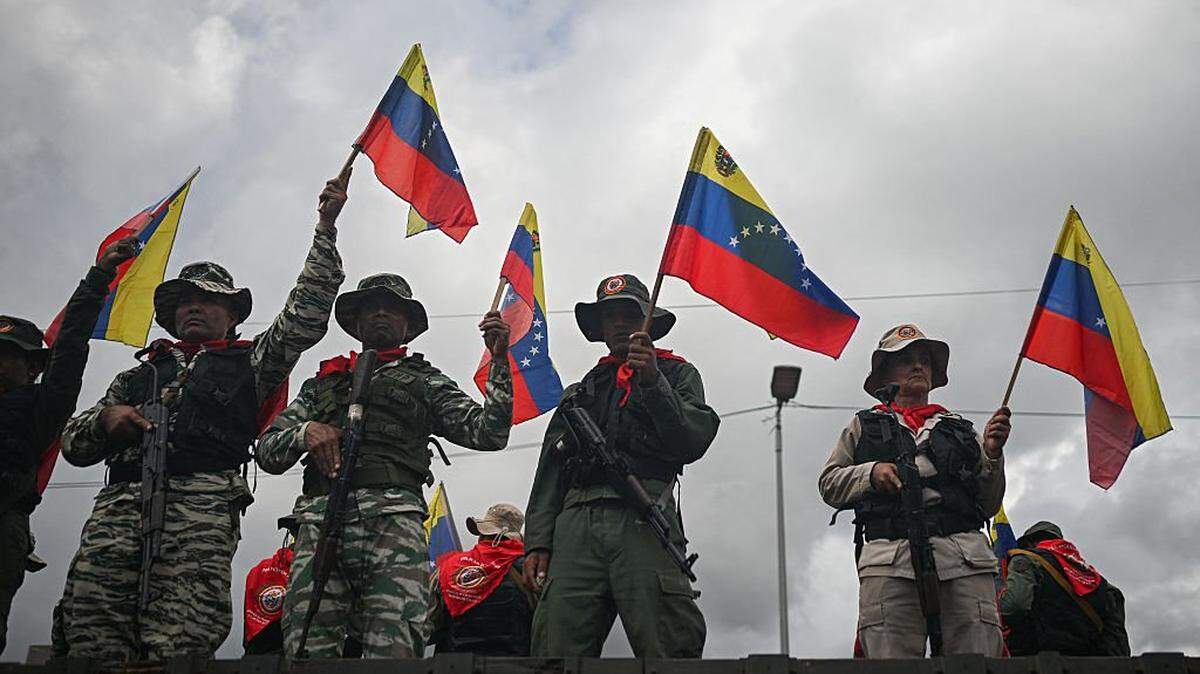
Maduro said an “arsenal of weapons for the militiamen and militiawomen” — members of the citizen-based Militia, a special component of the Bolivarian National Armed Force — is already in place. According to the government, more than 8 million people enrolled in the Militia during an enlistment drive launched in August, shortly after the U.S. deployment began.
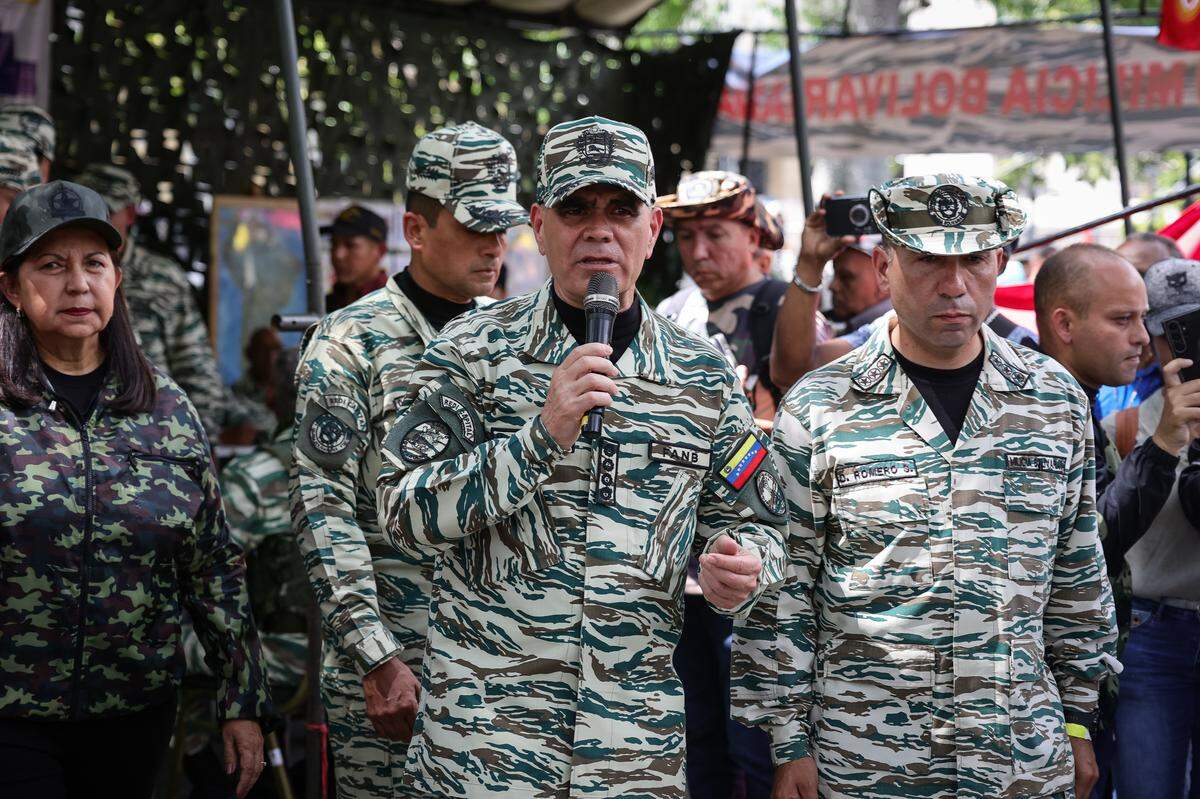
He added that the entire system of “rifles, heavy weaponry, and missiles” in the Caracas–La Guaira corridor is active, focused on defending the coastal mountains and key infrastructure, including La Guaira’s port and Simón Bolívar International Airport in Maiquetía.
Maduro emphasized that the defense blueprint was devised not by military strategists but by “the thinking minds of the empowered people” who live in the communities along the corridor. In September, the government announced the creation of more than 5,300 Communal Militia Units across the country, reinforcing the administration’s long-standing claim that “the people have the weapons” and that Venezuela is prepared for “any prolonged war.”
The escalating military rhetoric comes amid a new phase of uncertainty in U.S.–Venezuela relations. On Monday, Maduro warned that a U.S. attack on Venezuela would mark the “political end” of President Donald Trump, though he also signaled openness to a “face-to-face” meeting.
Trump, for his part, said Sunday that “there could be discussions” with Maduro because “Venezuela wants to talk.” On Friday, he added that he had already decided on a set of measures regarding Venezuela but offered no further details.
Over the weekend, the State Department announced it will designate the Cartel de los Soles — a drug network Washington says is led by Maduro and senior Venezuelan officials — as a Foreign Terrorist Organization on Nov. 24. The move is widely seen in Venezuelan political circles as one that could clear the way for military action and eliminate any remaining possibility that Maduro might negotiate a peaceful exit before becoming a military target.
U.S. accusations against Maduro intensified in August, when Attorney General Pam Bondi doubled the reward for his capture to $50 million and called him “one of the world’s biggest drug traffickers.” Bondi said Maduro not only leads the Soles cartel but also collaborates with criminal groups including the feared Venezuelan gang Tren de Aragua and Mexico’s Sinaloa cartel.
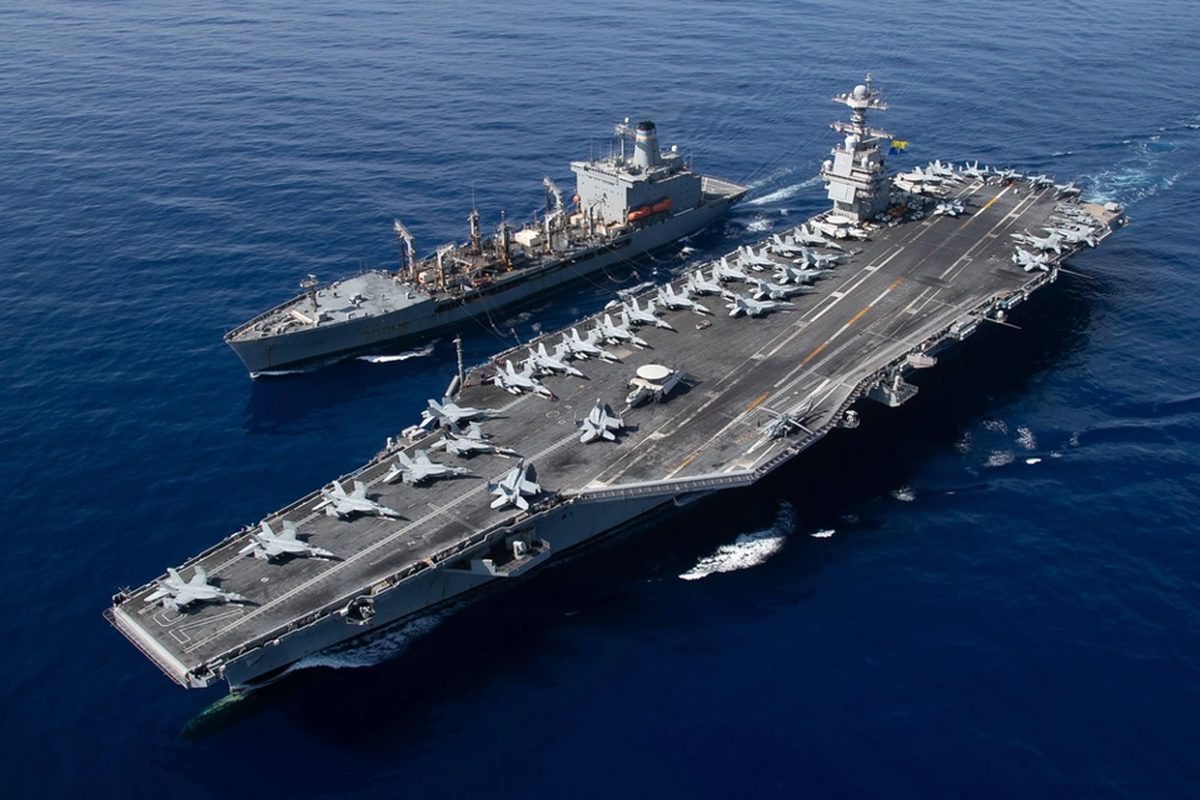
Meanwhile, the U.S. military has moved unprecedented firepower into the region. The USS Gerald R. Ford, the world’s largest aircraft carrier, entered U.S. Southern Command’s area of responsibility last week, expanding what officials describe as the biggest American military presence in the Caribbean in decades.
Under what the Pentagon has labeled Operation Southern Spear, an estimated 15,000 to 16,000 military personnel are now operating near Venezuela. Washington describes the mission as a counter-narcotics effort; Caracas insists it is a prelude to regime change and has ordered a nationwide military mobilization.
The Ford Carrier Strike Group includes seven Arleigh Burke–class destroyers and two guided-missile cruisers. A powerful amphibious force — the USS Iwo Jima, USS San Antonio and USS Fort Lauderdale — is carrying roughly 4,500 Marines from the 22nd Marine Expeditionary Unit. Live-fire drills near Venezuelan waters, the deployment of the fast-attack submarine USS Newport News, Coast Guard cutters, F-35Bs, MQ-9 Reapers, CH-53 helicopters, P-8 Poseidons and the special operations vessel MV Ocean Trader underscore the scale of U.S. readiness.
Inside Venezuela’s ruling party, Trump’s recent comments have triggered divergent interpretations. Diosdado Cabello, one of the regime’s most powerful figures, used his weekly program to suggest that Trump is being pushed toward hardline positions by advisers hostile to dialogue.
“Trump knows perfectly well that within his own team there swarm such shadowy characters that they seem to have been raised in a damp basement,” Cabello said, referring to what he called a faction that “dreams of seeing him stumble again” in Venezuela policy. He argued that Trump’s openness to talks with Maduro detonated “like a nuclear bomb” among U.S.-based Venezuelan hardliners and domestic opposition figures such as María Corina Machado, whom he mocked as part of a “mafia” advocating foreign military intervention.
The corridor between Caracas and La Guaira — the gateway for the nation’s imports and its primary link to the outside world — has long been one of Venezuela’s most sensitive zones. Any militarization there resonates deeply in a country shaken by economic collapse, mass migration, and political repression.
This article was complemented with el Nuevo Herald’s wire services.