Senate GOP blocks war-powers curb on Trump as U.S.–Venezuela standoff deepens
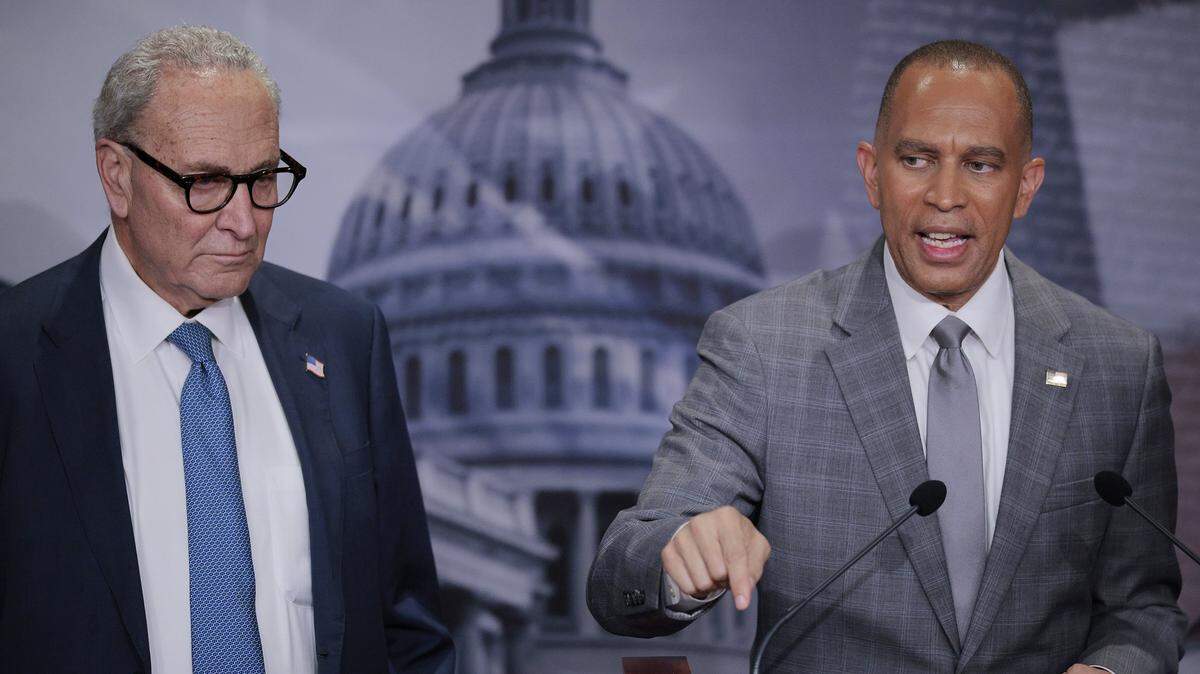
Senate Republicans on Thursday blocked a resolution aimed at restricting President Donald Trump’s authority to launch military strikes against Venezuela, deepening tensions over an expanding U.S. campaign in the Caribbean.
The measure, sponsored by Democratig Sen. Tim Kaine of Virginia, failed 49–51. Only two Republicans — Rand Paul of Kentucky and Lisa Murkowski of Alaska — joined Democrats in support. The resolution would have required Trump “to terminate the use of the United States Armed Forces for hostilities within or against Venezuela” unless explicitly authorized by Congress.
The vote came amid mounting concern in Congress that U.S. strikes on alleged drug-smuggling boats in the Caribbean and eastern Pacific could escalate into a direct confrontation with the Nicolás Maduro regime.
‘A recipe for catastrophe’
From the Senate floor, Democratic leader Chuck Schumer delivered one of his sharpest criticisms yet of Trump’s Venezuela policy, accusing the president of “pushing constitutional boundaries more than any other president” in matters of war and peace.
“Donald Trump seems ready to lead our troops over the Rubicon with a blindfold over his eyes, and that is a recipe for catastrophe,” Schumer said. He thanked Kaine for serving as “a vigilant watchdog” over Congress’s war powers and praised Sens. Paul and Adam Schiff for championing the resolution.
Schumer warned that the deployment of the USS Gerald R. Ford aircraft carrier to the Caribbean — part of what he called “the largest military buildup in our hemisphere in decades” — raised urgent constitutional and strategic questions.
“As we speak, America’s largest aircraft carrier, the Gerald Ford, is on its way to the Caribbean,” he said. “According to press reports, Donald Trump is considering military action on Venezuelan territory. But it also sounds like nobody really knows what the plan is, because, like so many other things with Donald Trump, he keeps changing his mind.”
The New York Democrat accused the administration of offering “no clear goals, no clear timetable, no clear explanation” for its objectives in Venezuela. “This is unacceptable, and it’s dangerous,” he added, calling for a full Senate briefing on U.S. policy toward Caracas.
Schumer said that even after a closed-door meeting with Secretary of State Marco Rubio, senators were left “with more questions than answers.”
“These actions certainly do not sound like mere drug enforcement against organized criminals,” he said. “Not even close. These are actions you take before you consider launching a major military operation against another country — and that authority, the Constitution is clear, must come from Congress.”
Escalation at sea
Since Sept. 2, U.S. forces have carried out at least 16 strikes on what Pentagon officials describe as drug-trafficking vessels, killing 67 people.
The Pentagon has steadily reinforced naval and air assets in the region. The Gerald R. Ford carrier group is expected to arrive in the Caribbean next week, joining what is already the largest U.S. deployment in the area in decades.
Trump confirmed last month that he had authorized covert CIA operations inside Venezuela, saying, “A lot of the Venezuelan drugs come in through the sea, but we’re going to stop them by land also.” He added last week that he had not yet made a decision on potential strikes within Venezuela itself.
Administration officials briefed lawmakers this week on the legal rationale for the operations, citing a Justice Department opinion they say justifies the actions. Rubio and Defense Secretary Pete Hegseth met Wednesday with congressional leaders as lawmakers demanded more details about the constitutional and intelligence basis for the strikes.
Under the 1973 War Powers Resolution, presidents must notify Congress within 48 hours of introducing U.S. forces into hostilities and end operations within 60 days unless authorized by lawmakers. That deadline expired Monday.
The U.S. buildup has alarmed foreign governments and analysts who see it as a prelude to possible strikes on Venezuelan territory. The Center for Strategic and International Studies estimates that the U.S. military will soon have 13 vessels in the region, including eight warships, three amphibious ships and a nuclear-powered submarine. The newly arrived cruisers USS Gettysburg and USS Lake Erie have joined other American ships already operating near Venezuelan waters.
While officially described as a counternarcotics mission, the deployment coincides with what officials call “intensifying deliberations” in the White House over potential direct action against Maduro’s regime. Both the Miami Herald and Wall Street Journal have reported that the administration has identified Venezuelan military installations allegedly linked to drug-trafficking networks as potential bombing targets.
The New York Times has reported that Trump is weighing broader intervention options, including seizing oil fields, targeting Maduro’s elite guard units and even forcibly removing the Venezuelan leader from power.
The administration has not sought a formal declaration of war from Congress. Instead, advisers are exploring alternative legal justifications for regime-change operations under existing anti-drug authorities, arguing that Maduro and his inner circle function as key nodes in transnational narcotics networks.
‘You break it, you own it’
Schumer stressed that while “nobody here denies the Maduro regime is horrific and undemocratic,” military force would be a dangerous and potentially counterproductive path.
“Saber-rattling and military escalation are a poor substitute for a real counter-narcotics strategy,” he said, invoking former Secretary of State Colin Powell’s warning about the perils of unilateral intervention. “You break it, you own it. That’s the old Pottery Barn rule.”
He cautioned that the mere thought of another “endless war” should make Americans “sick to their stomachs,” and urged the Senate to “uphold the Constitution, uphold our national security, and reaffirm Congress’s authority to have its proper say on matters of war and peace.”
In August, U.S. Attorney General Pam Bondi announced that Washington had doubled to $50 million the bounty for Maduro’s capture, calling him “one of the world’s biggest drug traffickers and a threat to our national security.”
Bondi accused Maduro of heading the Cartel de los Soles, a criminal network embedded within Venezuela’s military that allegedly collaborates with Mexico’s Sinaloa Cartel and other transnational groups, including Venezuela’s Tren de Aragua.