Venezuelan leaders deny Miami Herald report they offered U.S. to have Maduro step down
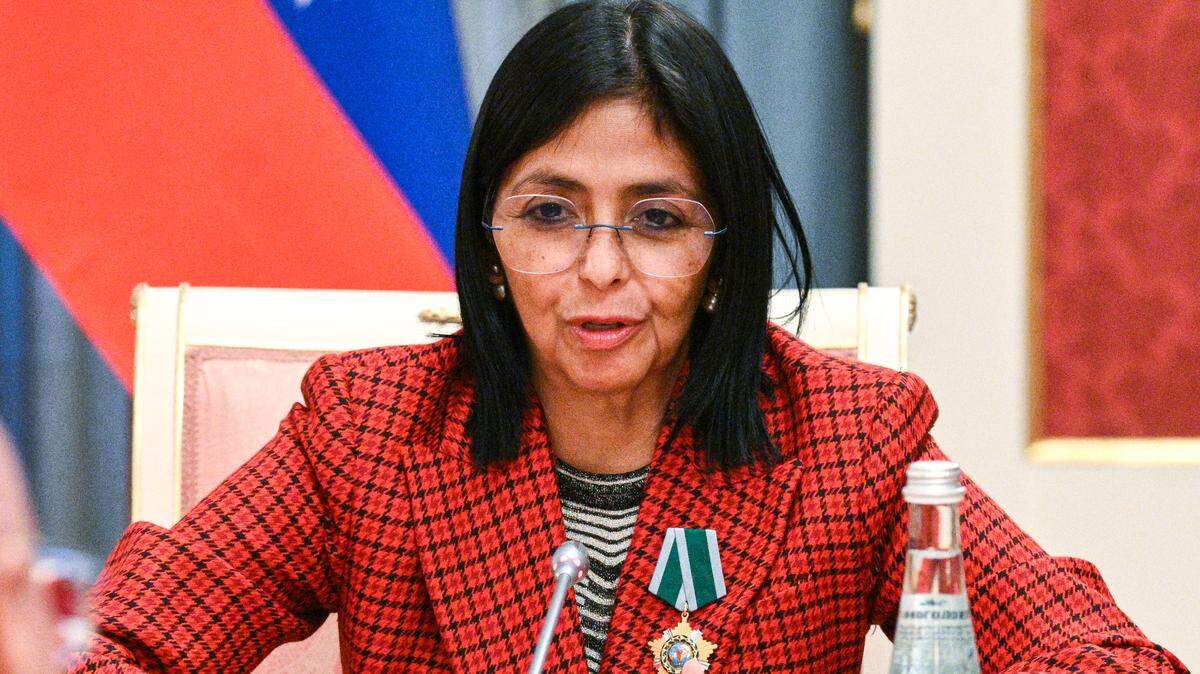
Venezuelan Vice President Delcy Rodríguez on Thursday rejected as “false” a Miami Herald report that said a group of senior regime officials — led by her and her brother Jorge Rodríguez — had twice offered Washington a plan to replace Nicolás Maduro in an effort to ease tensions with the United States.
The Herald story reported that intermediaries for the two siblings approached the Trump administration earlier this year — with Maduro’s knowledge — with two separate proposals suggesting a “Madurismo without Maduro” formula that could facilitate a peaceful transition in Venezuela while keeping much of the current power structure intact. Rodriguez’s brother Jorge is president of Venezuela’s National Assembly.
Following the Miami Herald report, the Associated Press confirmed the story Thursday evening, reporting that the regime had floated a plan in which Maduro would eventually leave office — an effort aimed at easing mounting pressure from the U.S. The AP story said a former Trump administration official briefed on the plan said the proposal called for Maduro to step down in three years and transfer power to Delcy Rodríguez.
Later on Friday, President Donald Trump confirmed that Nicolás Maduro’s regime has tried to negotiate with Washington, offering broad concessions in a bid to ease tensions between Venezuela and the United States.
Read more: Exclusive: Venezuelan leaders offered U.S. a path to stay in power without Maduro
In a Telegram post late Thursday, Rodríguez denounced the Herald story as part of a “psychological warfare” campaign against Venezuela.
“FAKE!! Another outlet joins the filth of psychological warfare against the Venezuelan people. They have no ethics or morals and exclusively favor lies and carrion,” Rodríguez wrote.
Rodríguez, who also serves as oil minister, insisted that Venezuela’s political and military leadership remains united behind Maduro.
“The Bolivarian Revolution has a high political and military command that is united and committed to the will of the people,” she said, vowing that “nothing will deviate” her government from the “defense of Venezuela’s rights and its dignified Bolivarian legacy.”
To underscore her message, Rodríguez posted a smiling selfie with Maduro, captioned: “My response to the liars and schemers. Together and united with President Maduro, consolidating the path of Chávez. They have not been able to do it, nor will they be able to.”
Maduro echoed her denials during a televised event later Thursday, accusing the United States of waging a campaign to overthrow his government and seize Venezuela’s oil reserves.
“I have bad news for the schemers, the imperialists, and all their media outlets, websites, and agencies,” Maduro said on state television. “Today, the political-military high command of the revolution is more united and determined than ever to defend our homeland, imbeciles.”
Maduro also claimed that 6.2 million Venezuelans are currently enlisted in the Bolivarian Militia, a civilian reserve force that the government describes as part of the nation’s “comprehensive defense system.”
The Venezuelan government has repeatedly accused Washington of plotting regime change under the guise of counter-narcotics operations in the Caribbean, where U.S. naval patrols near Venezuelan waters have intensified. U.S. officials, meanwhile, maintain the deployments target drug trafficking networks linked to senior Venezuelan political and military figures.
Caracas’s efforts to reach an understanding with the Trump administration grew more urgent as Washington expanded its military presence in the region—amassing the largest deployment the Caribbean had seen in decades and launching deadly strikes against boats suspected of smuggling drugs from Venezuela en route to the United States.
On Tuesday, Trump announced that U.S. forces had carried out another deadly strike in the Caribbean, destroying a vessel off Venezuela’s coast that he said was tied to a “Designated Terrorist Organization” involved in drug trafficking. It was the sixth such strike in two months, bringing the death toll to 27.
Trump said the operations were authorized under his executive powers and aimed at neutralizing networks posing a “direct threat” to U.S. national security.
Read more: Trump won’t rule out land strikes in Venezuela as CIA given authority for lethal action
The deployment now includes more than 4,500 U.S. Marines and Navy personnel, supported by a cruiser, destroyers, a Los Angeles-class attack submarine, and F-35 fighters based in Puerto Rico—giving Washington overwhelming air and sea superiority over Venezuela’s aging fleet.
According to sources familiar with the Rodriguez siblings’ offers to the U.S., two versions of the transition proposal were conveyed to Trump administration officials in April and September through intermediaries in Qatar. Both plans had Maduro’s initial approval and portrayed the Rodríguez siblings as potential guarantors of continuity and stability.
The pitch described a regime headed by the siblings as a more acceptable version of chavismo — the socialist ideology named for deceased leader Hugo Chávez — since neither has been indicted for drug trafficking in U.S. courts, unlike Maduro and several top aides.
However, former regime insiders whose testimonies underpin U.S. narcotrafficking cases have linked both Rodríguez siblings to logistical and laundering operations tied to the so-called Cartel of the Suns, which federal prosecutors say is run by high ranking members of the Venezuelan government and the military.
U.S. officials ultimately dismissed the Rodriguez proposals after concluding they were designed to preserve the regime’s criminal and political structures under a new guise.
“The ‘Cartel Lite’ was not a viable option,” one source told the Herald.
From that point forward, Trump advisers ruled out any negotiation involving sanctioned officials or individuals tied to human rights abuses and organized crime.
This story was originally published October 17, 2025 at 8:17 AM.