Human trafficking of Venezuelans explodes into $2.6 billion industry, report says
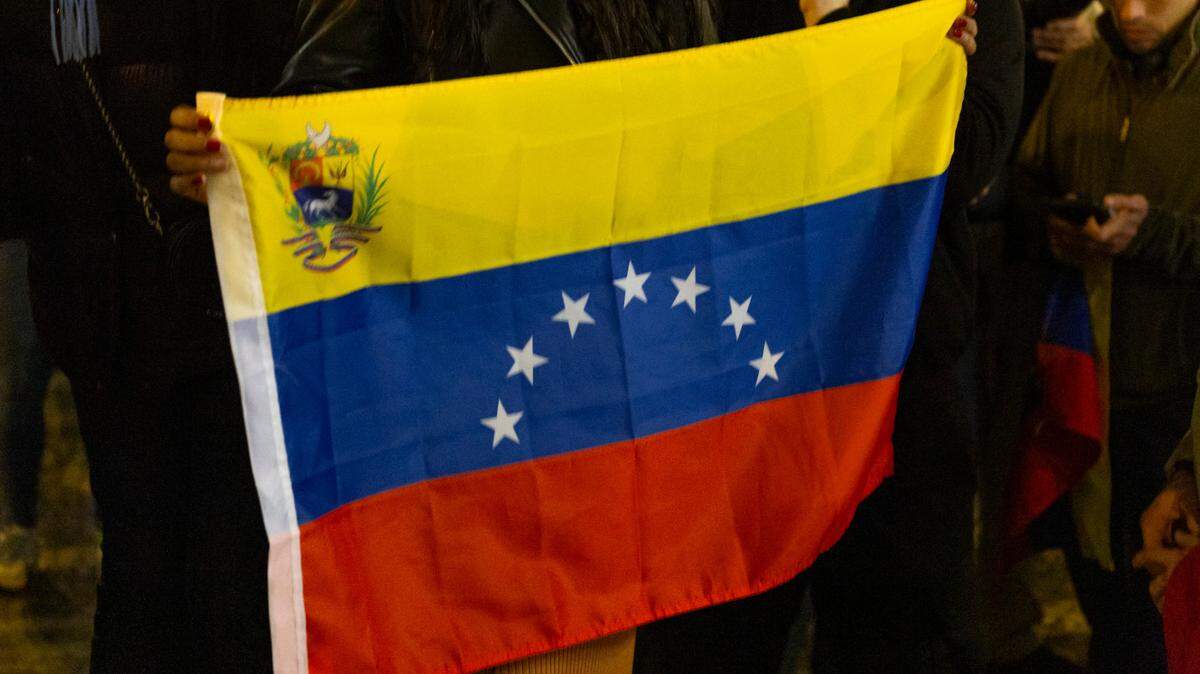
Human trafficking has exploded into one of Venezuela’s most profitable criminal enterprises, generating an estimated $2.6 billion last year, according to a new report by the Venezuelan unit of Transparency International.
The anti-corruption watchdog group warns that hundreds of thousands of Venezuelans are trapped in forced labor, sexual exploitation and even forced marriages, with criminal networks cashing in on the country’s economic collapse and mass migration.
The 124-page report paints a bleak picture: human trafficking in Venezuela thrives on misery, corruption and mass displacement, intertwining with drug trafficking, illegal mining and organized crime. Without systemic reforms, transparency and international cooperation, Venezuelans—especially women, children, migrants, and indigenous communities—remain vulnerable to exploitation on a massive scale.
Migrants traveling without documents are easy targets for deception, extortion and coercion. Recruiters often use social media, fake job offers, or even beauty contests to lure victims, while others are abducted or sold through debt-bondage schemes.
Groups like Tren de Aragua, ELN guerrillas, and FARC dissidents, the report says, play central roles, offering “travel packages” across dangerous routes such as the Darién Gap between Panama and Colombia, where migrants may be enslaved, forced into sex work or trafficked for organ sales.
The 2024 estimates are grim: 364,500 Venezuelans living in modern slavery, including 188,000 in forced labor and nearly 70,000 exploited sexually for profit. More than 105,000 people were forced into marriage.
Transparency Venezuela stressed that the increase in human trafficking is not an isolated phenomenon.
“It very often operates with the active or inactive participation of corrupt civilian and military officials who work with trafficking networks,” the group said. It also noted that “there is no coordination between Venezuelan authorities and other nations to curb the rise of this criminal economy that generates millions in profits.”
Trafficking spreads with migration
The crisis does not stop at Venezuela’s borders. As millions of Venezuelans flee poverty and repression, many fall into the hands of traffickers abroad. A survey carried out by Transparencia Venezuela last year estimated that a significant portion of the more than seven million Venezuelans who left their homes in recent years to escape violence and economic collapse have become victims of traffickers.
Official reports indicate that Venezuelan victims have been exploited around the world, with cases surfacing in Aruba, The Bahamas, Bolivia, Brazil, Chile, Colombia, Costa Rica, Curaçao, Ecuador, Egypt, Germany, Guyana, Haiti, Macau, Iceland, Mexico, Panama, Peru, China, Dominican Republic, Spain, Suriname, Trinidad and Tobago, and Uruguay.
The bulk of cases are happening in Colombia, with an estimated total of 1.4 million, Peru, 816,000, and the United States, 288,000, the report said.
The report said that the journey by foot to the United States has proven very dangerous for women.
“Venezuelans who make the journey to the United States by land are more likely to be affected by situations of sexual abuse than those who travel to Colombia and Peru, where they are more exposed to labor abuse. It is estimated that 33% of these migrants experienced sexual abuse on their way to the United States, a figure considerably higher than the 4% recorded in Peru and Colombia,” the report said.
The more than a quarter million Venezuelans trafficked into the United States have proven to be big business for criminal organizations here. According to the report, those victims there generated $343 million in profits last year.
Migrants who traveled overland to the U.S. reported the highest risk of sexual abuse, with one in three saying they had been assaulted. In Colombia and Peru, labor exploitation was more common, though cases of sexual violence were also reported.
Criminal profits are staggering. By applying international benchmarks, Transparencia calculated that criminal networks earned $1.45 billion in 2024 from the sexual exploitation of Venezuelan migrants in just three countries — Colombia, Peru and the U.S.
Victims: women, teens, indigenous groups
The majority of victims are women and adolescents, but certain groups are especially vulnerable: indigenous populations, residents of mining and border regions controlled by armed groups, and Venezuelans who have fled abroad.
Recruitment often begins with social media scams, fake job offers, or promises of housing. In other cases, traffickers rely on early marriages, kidnappings or outright force.
“These networks are sophisticated. They prey on trust and desperation,” the report notes.
The International Labour Organization calculates that each victim of forced labor generates about $3,600 a year for traffickers, while a victim of sexual exploitation produces an average of $27,000 annually.
With those numbers, Venezuela’s trafficking industry now rivals the revenues of other illicit trades such as drug trafficking and illegal mining. Globally, human trafficking profits topped $498 billion in 2024, according to the Financial Action Task Force.
Government looks away
What makes the situation worse, the report says, is the Venezuelan government’s failure to act. The country has no official trafficking statistics, no national plan, and weak or complicit institutions.
In 2023, the U.S. State Department ranked Venezuela at the very bottom of its annual Trafficking in Persons Report, saying the Nicolás Maduro government “does not meet the minimum standards” and “is not making significant efforts” to combat the crime.
“Maduro and his representatives were complicit in trafficking crimes as they maintained a permissive environment for non-state armed groups and other illegal armed groups that forcibly recruited and used children for conflict or forced criminality, and exploited in sex trafficking and forced labor, while operating with impunity,” the State Department said in its 2024 report.