
‘We came to contribute’: End of Venezuelan TPS threatens South Florida economy
Two months after the U.S. Supreme Court upheld the Trump administration’s authority to end deportation protections for Venezuelans, businesses in South Florida, home to the largest Venezuelan population in the U.S., are feeling the strain.
“How do you tell an employee they have to go back to Venezuela? Those who left didn’t leave because they wanted to—they left out of necessity,” said Mario J. Benedetti, a Venezuelan-American owner of multiple car dealerships in South Florida who employs a hundred fellow Venezuelans. “If our country hadn’t gone through such a political and economic crisis, we’d still be there.”
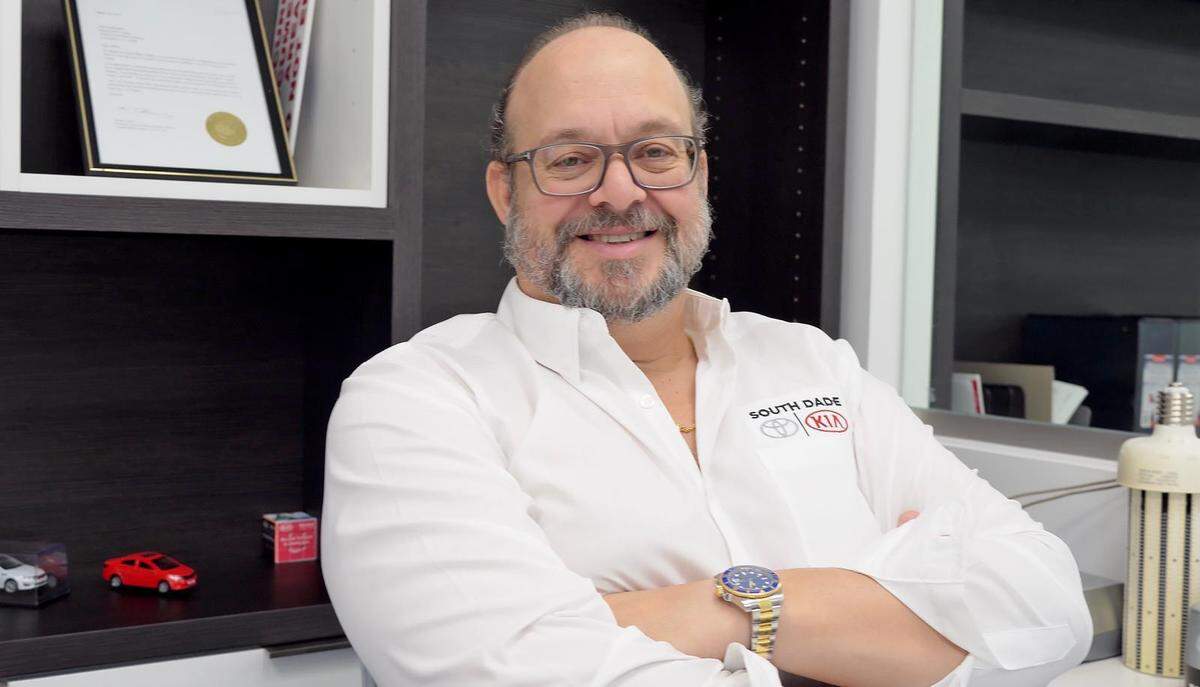
Benedetti, 61, a naturalized U.S. citizen, is a third-generation car dealer whose family began selling vehicles in eastern Venezuela over a century ago. He left the country in 2009 to start over in South Florida. Since then, he has built and expanded a network of car dealerships representing Toyota and Kia, along with a certified body shop servicing those automotive brands.
A third of Benedetti’s 325 employees are Venezuelan — including five with Temporary Protected Status, 63 asylum seekers, and 32 U.S. residents. Benedetti said the only option for him is to help them secure legal immigration status. He is now exploring employment-based labor certifications not only for TPS holders, but also for asylum seekers, who make up about 20% of his workforce.
“That’s an economic burden I have to assume,” he said, adding that the administration’s revocation of TPS has disrupted every aspect of his business, generating deep uncertainty—especially surrounding the expiration of work permits.
The decision to end TPS, which provided work permits for many of the 607,000 Venezuelan who have the status, has sent shock waves through the Miami area and beyond. As the largest TPS migrant group in the U.S., Venezuelans make a significant economic impact, contributing an estimated $11.5 billion annually to the U.S. economy, according to the immigration reform nonprofit FWD.us.
Venezuela was designated in 2021 for TPS — a temporary immigration status granted to nationals of countries facing unsafe conditions for return — due to a severe humanitarian crisis marked by political and economic instability, widespread human rights abuses, and high levels of violence. The Biden administration expanded TPS in 2023, and extended it through 2026. The Trump administration reversed the extension and the Supreme Court on May 19 upheld that decision, immediately stripping protections from roughly 350,000 people, with another 257,000 slated to lose their protected status on Sept. 10.
Giving back
Benedetti was among several Venezuelan business people who gathered last week at Florida International University for the launch of the Venezuelan Business Power survey — an initiative led by the Coral Gables-based Venezuelan-American Chamber of Commerce of the United States aimed at capturing a comprehensive picture of Venezuelan entrepreneurship in the U.S..
As one of the sponsors of the poll, Benedetti said the initiative seeks to challenge the negative stereotypes surrounding Venezuelan immigrants.
“For me, it’s crucial that people understand Venezuelans are not criminals. We didn’t come here to take from the state — we came to contribute, to help this country grow,” he said. “The best way to show our gratitude for the opportunity the U.S. has given us is by giving back. We need to restore the dignity of Venezuelans, whose reputation has been unfairly attacked.”
Chamber President Leonardo Trechi told the Herald that nearly every industry in South Florida — from automotive and finance to services — relies on Venezuelan workers. “Many are specialized and highly trained,” he said. “If they’re laid off, it won’t just harm those workers. It will hurt the companies that invested in them.”
The chamber estimates that, based on national Hispanic entrepreneurship trends showing that 7% of Hispanics own businesses, there could be more than 70,000 Venezuelan-owned businesses across the country. These businesses are believed to employ over 420,000 people and contribute an estimated $63 billion annually to the U.S. economy through billing, wages, and overall impact on GDP.
In South Florida, the food industry — a cultural and economic lifeline for Venezuelan immigrants — is already feeling the pain. From food trucks to brick-and-mortar restaurants, Venezuelan-owned eateries not only offer familiar cuisine but also provide jobs for fellow immigrants. Many owners, particularly those who hold TPS themselves, say they fear becoming targets for Immigration and Customs Enforcement.
Florida is likely to bear the brunt of the fallout from the end of TPS. Nearly half of all Venezuelans who had deportation protections live in the state, according to economist Michael Clemens, a professor at George Mason University, who based his findings on U.S. Census Bureau data. Clemens estimates that a third of the roughly 350,000 people who have already lost TPS protections are in Florida. Many may have also lost their work permits. While some TPS holders remain legally authorized to work through other pending immigration processes, such as asylum claims, there is no public data confirming how many still have valid authorization.
Clemens’ analysis shows Venezuelan workers with TPS are heavily concentrated in service-based industries, with the hospitality and recreation sector employing the largest share, followed closely by the retail trade. Other major sectors include professional and scientific services, construction and health care and education. Unlike other migrant groups, Venezuelans are rarely employed in agriculture or rural jobs. He said there’s a perception that jobs for waitresses, cleaners and cooks are easy to fill, but in reality those workers are indispensable. “That’s why research in the U.S. has found that mass deportation is followed by a reduction of business activities.”
One in 10 Venezuelan TPS holders in the U.S. are self-employed, while half work for wages. The remainder are not currently employed, a group that includes children, retirees, students and others outside the work force.
The end of TPS is being felt not only by families, but by entire industries and local governments across Florida. From Orlando to Miami, layoffs, legal uncertainty and business instability are on the rise. Major companies like Disney laid off 45 Venezuelan employees following the Supreme Court’s decision. A company spokesperson said affected workers were placed on leave with benefits to ensure compliance with immigration law.
The Miami Herald spoke with 10 South Florida businesses owned by or catering to Venezuelans. Most asked not to be identified, fearing retaliation from immigration authorities. But they all echoed a shared concern: Venezuelans are not just employees — they’re also customers. A sharp drop in consumer spending is already being felt, and many fear the ripple effects will deepen across multiple sectors, weakening the region’s economy.
Alexander Rueda, CEO of PANNA New Latino Food — a company founded in 2000 by a Venezuelan family in Weston and now a staple of Latin American cuisine in Broward County — said the impact goes beyond his workforce.
“More than a direct impact on our employees, the biggest impact is on the consumers,” he said. “Consumer demand has changed; many are now diverting part of their budgets to immigration processes instead of dining out or spending as they used to.”
Over the past 25 years, PANNA has grown from a small food stand inside a gas station into a thriving enterprise with five restaurants—three in Broward, one in Miami-Dade, and one in Orange County—as well as two food production factories in North Miami Beach and Miami Gardens. The company produces 4.6 tons of food daily for several brands and currently employs 246 people.
In 2024, PANNA reported $46 million in annual sales and expected to exceed that in 2025. However, the revocation of TPS is beginning to take a toll on the company through declining consumer spending at its restaurants. Rueda said demand at PANNA’s locations has fallen by 20% over the past three months.
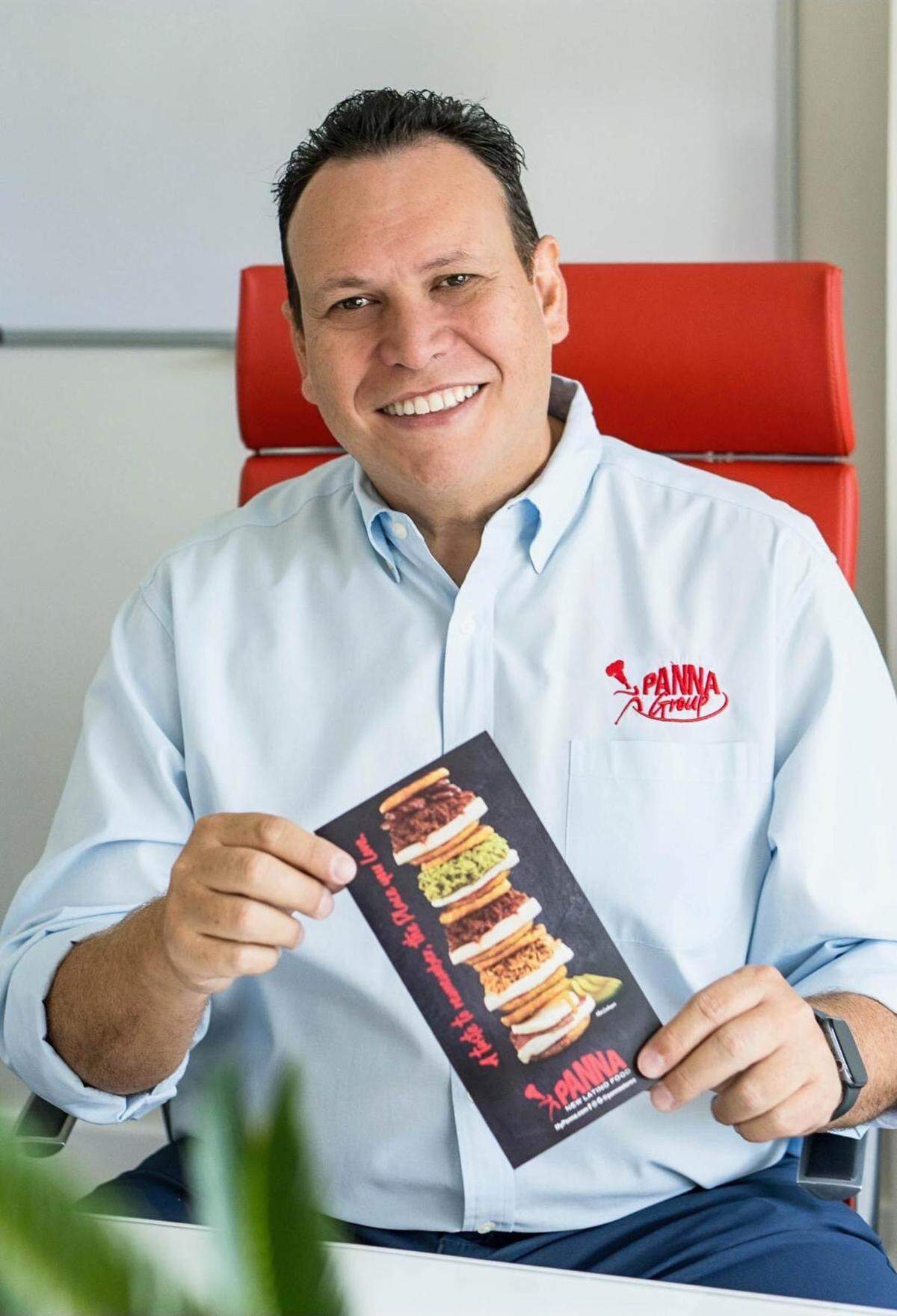
Rueda, 54, like Benedetti—a sponsor of the chamber’s poll—emphasized that “Venezuelans are more than the stigma tied to the Tren de Aragua gang,” he said, referring to the notorious criminal group. “We are entrepreneurial, educated, and we contribute significantly to the economy.”
Miami-Dade Mayor Daniella Levine Cava said she is “deeply saddened” by the potential impact of the TPS termination on the more than 300,000 Venezuelans living in the county.
“This decision not only puts thousands of our neighbors and friends at risk,” she said, “it punishes those who followed a legal process and are here contributing to our economy, our culture, and driving some of our most important industries.”
Disappearing American dream
The northwest Miami-Dade municipality of Doral — the U.S. city with the largest Venezuelan population, fondly known as “Doralzuela” — is at at the epicenter of the crisis.
A well-known Venezuelan bakery in Doral has grown from humble beginnings as a food truck, where it sold traditional sweets such as pan dulce, soft bread topped with sugar, and bombas rellenas , cream-filled puffs. The truck traveled across Miami-Dade, Broward, and Palm Beach counties, often stopping in cities with large Venezuelan communities, including Pembroke Pines and Weston—the latter nicknamed “Westonzuela” for being one of the earliest hubs of Venezuelan settlement more than two decades ago.
Today, the owner has expanded into a brick-and-mortar location in Doral. A TPS holder, he lives in the U.S. with his family. Before obtaining deportation protections in 2021, they had tried to apply for an investor visa.
The Doral bakery owner is among the 12% of Venezuelans with TPS who are self-employed, contributing to the U.S. economy through small businesses, independent contracting and entrepreneurship, according to data from Clemens. Like thousands Venezuelans in the U.S., the Doral bakery owner has a pending asylum case, filed in 2018. After years waiting for an asylum interview, TPS provided his family with much-needed stability that is now slipping away. Despite the uncertainty, he keeps running his bakery and dreams of opening a second location in Weston. But he fears being forced to leave the U.S..
“The promise of stability is disappearing,” he said. “And with it, the American dream.”
Returning to Venezuela is not an option for him.
“The country I left no longer exists,” he says, citing violent crime, the country’s humanitarian crisis and political persecution. He fears for his family’s safety as well as losing their livelihood. Their TPS protection could expire as early as September if a federal district court does not rule to extend deportation protections.
Litigation is still ongoing in several federal courts, because the Supreme Court ruling did not address the actual merits of a lawsuit challenging the administration’s revocation policy.
‘Doralzuela’ in peril
The fear is spreading through government offices too. In Doral, Mayor Christi Fraga said the city has already had to terminate a Venezuelan employee in code enforcement whose work permit expired after the Supreme Court ruling. Several more city employees could face the same fate in September.
Fraga, a Cuban-American Republican, warned of broader fallout: “We’ll likely see properties flood the market, driving down prices. Businesses may struggle to find workers or shut down. There’s a real risk of people working illegally or ending up homeless.”
About 40% of Doral’s residents are of Venezuelan origin. Roughly 10,000 are now U.S. citizens, a third of the city’s electorate, but many of their friends and relatives face growing legal uncertainty. “This city’s success is largely due to Venezuelan investment,” Fraga said. “It mirrors what happened with Cuban immigrants in Miami.”
City Council Member Rafael Pineyro, the only currently Venezuelan-born elected official in Doral, echoed the mayor’s concerns. “This has a knock-on effect that will impact not just Doral, but all of Miami-Dade,” he said. “Business owners might be forced to sell their homes and businesses — everything they legally built while contributing to this community.”
A Republican, Pineyro criticized the Trump administration’s decision to end TPS for Venezuela, saying it was based on a mistaken assessment that conditions there had improved. “Venezuela hasn’t improved — it has regressed,” he said. “The regime is more oppressive than ever.”
As TPS protections unravel, thousands of Venezuelans in Florida and across the country face difficult choices: stay and risk being deported, try to find another legal path, or flee again.
More than 66% of Venezuelans in the U.S.—a community now exceeding 903,000 people—were protected under TPS. Despite their growing numbers, Venezuelans remain among the least likely immigrant groups to be naturalized U.S. citizens.
According to the Migration Policy Institute, a nonpartisan think tank, one key reason is that most Venezuelans are recent arrivals: 74% have come to the U.S. since 2010, compared to 35% of all immigrants.
“Venezuelans, like other immigrants, sit at the dinner table with American family members, and a significant number have U.S. citizen children,” Clemens said. “That’s why making life precarious for Venezuelans, and the potential removal of over 600,000 people, isn’t just about disrupting immigrant lives. It risks a chilling effect that will reach into every corner of American society.”