US swaps Venezuelans held in El Salvador for political prisoners in deal with Maduro
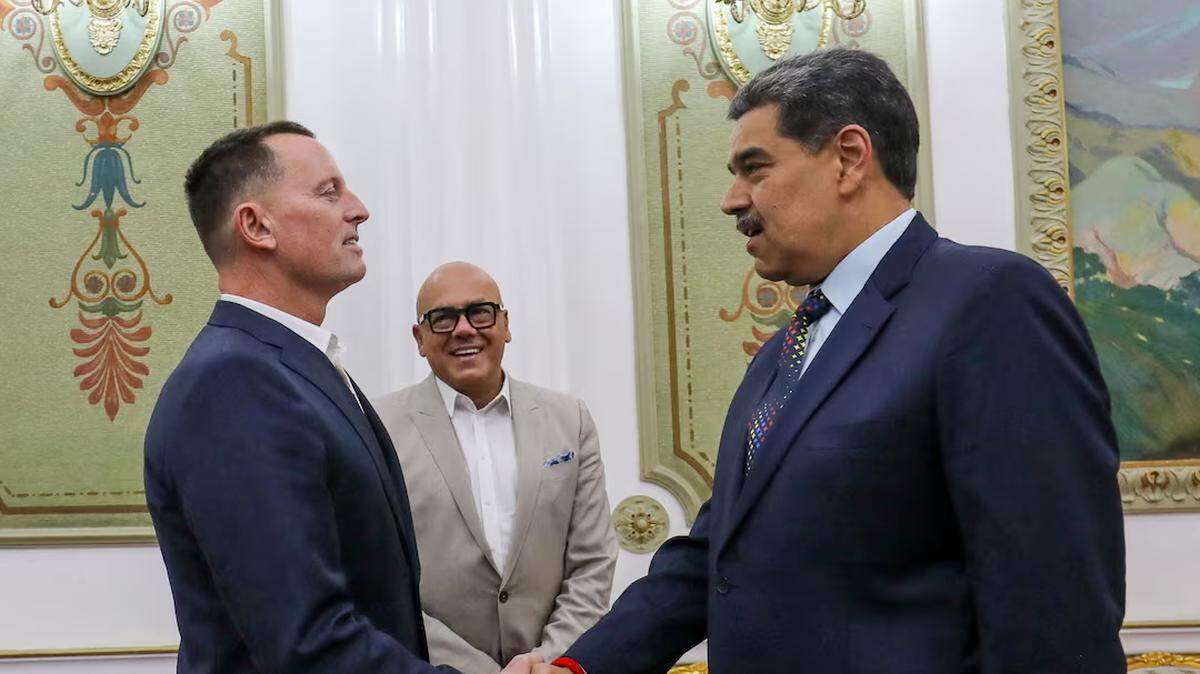
In a dramatic and high-stakes diplomatic maneuver, the United States and Venezuela have completed a sweeping prisoner exchange that could mark the beginning of a thaw in years of political hostility between the two nations.
The swap — in which 252 Venezuelan detainees controversially held in El Salvador’s CECOT prison were traded for dozens of political prisoners and 10 Americans imprisoned in Venezuela — was detailed by multiple sources familiar with the negotiations and confirmed Friday by a senior Trump administration official.
A Trump administration official described the swap as a significant milestone in Washington’s efforts to repatriate Americans wrongfully detained abroad. Following the deal, the U.S. no longer has any citizens in Venezuela who are designated—or believed to be—wrongfully detained.
The deal, quietly brokered over several weeks, was green-lit at the highest levels of both governments.
For the United States, the mission was clear: bring home American citizens who had been held in Venezuelan detention facilities—some on charges widely viewed as dubious or politically motivated. For the government of Nicolás Maduro, the deal offered not only the return of detained Venezuelans but also a possible opening to normalize economic ties, particularly in the crucial oil sector.
One source familiar with the discussions described it as “a geopolitical chess move” rather than a purely humanitarian act.
Confirming the news about the prisoner exchange, Secretary of State Marco Rubio praised Trump’s leadership and the help of Salvadorian president Nayib Bukele for getting the deal done.
“Thanks to @POTUS’s leadership, ten Americans who were detained in Venezuela are on their way to freedom,” Rubio wrote on his X account. “I want to thank my team at the @StateDep & especially President @nayibbukele for helping secure an agreement for the release of all of our American detainees, plus the release of Venezuelan political prisoners.”
Last-minute negotiations
Those involved said that the exchange, which was the final result of long-held negotiations, went down to the wire.
Even as planes were being readied and passenger lists finalized, the operation nearly unraveled at the last minute—over one man. An Uruguayan national with U.S. residency became a sticking point. Diosdado Cabello, one of Venezuela’s most powerful political figures and a hardliner within the regime, reportedly raised concerns that the man was a CIA asset or a mercenary.
“Diosdado was hell-bent on keeping him out of the deal,” one source told the Miami Herald.
The impasse was resolved through diplomatic compromise. Instead of being returned with the other detainees, the Uruguayan was rerouted to the Uruguayan embassy in Caracas, where he remains under consular protection.
That agreement cleared the final obstacle, and flights carrying the released American prisoners took off soon afterward. As is standard in such sensitive operations, families were only notified once the planes were in the air.
On the other end of the deal, the plane carrying the Venezuelan deportees — at the center of a months-long dispute between the Trump administration and the country’s judiciary — was expected to arrive in Caracas from El Salvador Friday afternoon.
Invoking the Alien Enemies Act of 1798, the Trump administration deported the group of Venezuelans in March, accusing them of being criminals or members of the feared Tren de Aragua gang. They were sent to El Salvador despite a judge’s order to return them to the United States and incarcerated at the CECOT maximum-security prison.
Their transfer to El Salvador was heavily criticized at the time by human-rights groups, which complained that the Venezuelans were accused of being criminals or members of the Venezuelan gang and taken to the maximum security prison in a third country without being allowed to challenge the accusations in court.
On Friday, while waiting for the plane carrying the 252 Venezuelans to arrive at Caracas’ international airport of Maiquetía, the Venezuelan regime issued a communique praising the deal while clamming that it came at an elevated cost to the country.
“Venezuela has paid a high price to obtain the freedom of these compatriots through an exchange with the authorities of the United States of America, involving a group of U.S. citizens who were under the jurisdiction of Venezuelan justice for their proven involvement in serious crimes against the peace, independence, and security of the Nation,” the communique said.
“The President of the Republic, Nicolás Maduro Moros, always committed to safeguarding the lives and integrity of these Venezuelans subjected to severe human rights violations, did not hesitate to carry out this exchange and thereby rescue these Venezuelan migrants who had been kidnapped in El Salvador due to the actions of the most extremist sectors of the Venezuelan right wing,” it added.
For humanitarian purposes
The scale of the exchange and the level of coordination involved have led observers to believe that this could be more than a one-off gesture, a theory that the Maduro regime hopes will bear out.
But speaking in the call with reporters, a high-ranking Trump administration official said that all negotiations that led to the release of the Americans held in Venezuela and the Venezuelans held in El Salvador were solely for humanitarian purposes.
“The conversation and the operation that took place and the events that took place today were specifically humanitarian-based on behalf of the Salvadoran government, and it was just an opportunity for the United States to obtain back our hostages who were captured in Venezuela. And thankfully, now we have more Venezuelan political prisoners who’ve been freed,” the official said.
Powerful oil industry advocates and conservative figures have been pushing to normalize relations with Venezuela, including activist Laura Loomer, who has publicly championed lifting sanctions on Venezuela’s energy sector.
On social media, Loomer, who is close enough with the president to get an Oval Office invite in April, claimed recently that Trump had previously agreed to extend Chevron’s license—a move she attributed to the administration’s special envoy Richard Grenell. But she said that internal resistance, particularly from Cuban-American lawmakers and senior State Department figures like Mauricio Claver-Carone, had blocked the deal.
“Some officials are letting personal biases cloud their judgment on what is best for America’s energy independence,” Loomer wrote on X, arguing that failing to renew Chevron’s license would hand Venezuela’s vast resources to geopolitical rivals like China.
“Venezuela holds the largest proven oil reserves in the world—over 300 billion barrels—alongside enormous deposits of gold, coltan, bauxite, diamonds, and nickel,” she added. “Why would we want China to benefit from those resources instead of the United States? It’s insanity.”
Speaking on the benefits of the deal reached, one of the sources said that allowing U.S. companies such as Chevron to operate in Venezuela would not necessarily mean giving in to Maduro. The United States can continue to “maintain significant pressure on Maduro,” he said, adding that ongoing personal sanctions on regime officials as well as sealed indictments against top regime officials would still allow Washington to maintain its leverage.
For the Trump administration, securing the return of detained Americans marks a notable humanitarian achievement. For Maduro, the exchange may offer a sliver of international legitimacy and a potential economic lifeline at a time of continued sanctions and diplomatic isolation.
Whether that vision materializes remains to be seen. But momentum is building. Behind the scenes, discussions are underway about reopening embassies, reissuing oil licenses, and gradually easing sanctions—steps that could unfold if Venezuela makes demonstrable progress on democratic reforms.
“This could lead to something,” one source said. “Maybe not right away, but eventually. There’s a chance for change.”
This story was originally published July 18, 2025 at 4:19 PM.