‘Grilled arepa’ torture: Report says Maduro is turning Venezuela into a prison of fear
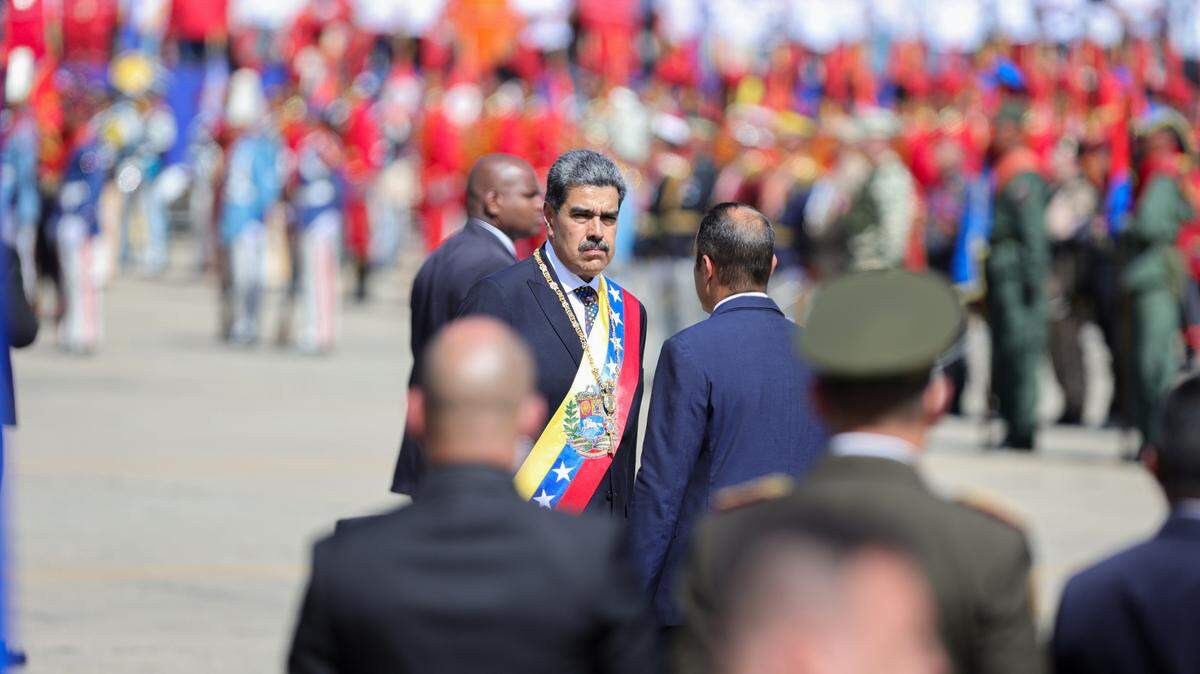
In post-election Venezuela, where dissent is silenced with steel prison bars, torture and psychological warfare, even the absence of a phone call or a family visit has become a deliberate tool of torment.
That is one of the salient points of a 110-page damning report released recently by the prominent human-rights group CASLA Institute, based on dozens of testimonies and extensive documentation that offer chilling insight into how repression has been normalized in Venezuela.
The report, that extend similar warnings issued in recent weeks by other human rights organizations, arrives at a particularly jarring moment: Just as the United States is preparing to deport thousands of Venezuelans on the grounds that the country is now “safe.”
The report dismantles that claim with methodical evidence of systemic violence.
The following are some of its highlights:
Since the disputed presidential election on July 28, 2024 — in which Nicolás Maduro claimed a controversial victory despite widespread evidence of fraud — the Venezuelan state has deepened its transformation into a machinery of repression. The prisons are full. The streets are eerily quiet. But this is not peace. It is paralysis—fear masquerading as calm, enforced not by justice but by brutality.
Inside the reinforced concrete cells of notorious prisons like El Rodeo I, Tocuyito, and the infamous Helicoide, political detainees are not merely stripped of their freedom; they are severed from their very humanity. In these dark facilities, deprivation is official policy and isolation a calculated punishment. What unfolds behind these walls is not imprisonment—it is the systematic destruction of identity, the severing of emotional lifelines, and the erasure of hope itself.
But the horror does not stop at the prison gates. According to the report, the Maduro regime has turned all of Venezuela into a sprawling, open-air prison. Neighbors are coerced into becoming informants. Social media posts can be rebranded as terrorism. And any Venezuelan can be disappeared into a clandestine “torture house.”
Chilling insights
According to the report, dissidents —including soldiers, opposition activists, human rights defenders, journalists and ordinary citizens— are being arbitrarily detained, forcibly disappeared, tortured, and subjected to sham trials. The regime’s goal, the report says, is not only to eliminate opposition but to disintegrate any possibility of its forming.
“All practices of state terrorism carried out in Venezuela have been ordered or sanctioned by the highest-ranking officials of the regime,” the report asserts. “These include persecution, kidnapping, forced disappearances, torture and the murder of protesters.” The crackdown intensified sharply following the post-election unrest, the report adds, and continues today under a cloak of near-total impunity.
More than 2,500 people were reportedly arrested in the weeks after the July election. While some have been released, hundreds remain incarcerated under conditions deliberately engineered to break their will. The arrests have triggered an exodus: many regime critics have fled the country, while thousands more live in hiding, knowing their names are on government watchlists.
Among those. who have left the country is Edmundo González, the opposition leader that nine out of ten Venezuelans, and a large number of countries that include the United States, believe was the actual winner of the presidential election.
Those who remain are being hunted down. They include elected officials, defense attorneys, student leaders, and everyday citizens who joined protests or criticized the regime online. In Maduro’s Venezuela, a meme can become evidence of sedition.
Torture in the shadows
One of the report’s most disturbing findings is the resurgence of “torture houses”—illegal, off-the-grid detention centers where abuse is the norm and accountability nonexistent. These are not isolated incidents but part of a pattern that CASLA insists reflects state policy.
The accounts in the report are horrifying: Victims report beatings with blunt objects, electric shocks applied to the genitals, mock executions, suffocation with plastic bags, and prolonged deprivation of sleep, food and medical care. Others were subjected to sexual violence or forced to witness the torture of fellow detainees. Women, in particular, have reported a harrowing array of abuses: invasive searches, threats to their children, forced nudity and psychological torment.
Throughout 2024 and into 2025, the Maduro regime has sharpened isolation into a psychological weapon. Political prisoners—both civilian and military—are held in notorious facilities such as El Rodeo I, Tocorón, Fuerte Guaicaipuro, and Tocuyito, all under the iron grip of Venezuela’s feared intelligence agencies, the report says.
In these prisons, even the right to a phone call is treated as a privilege to be withheld. Detainees swept up in the wake of post-election protests are often held in total isolation. Families, uncertain of their loved ones’ fate, sometimes receive news months later—if at all—via rare, state-vetted letters. These scraps of paper serve as desperate affirmations that someone is still alive.
Where visits are allowed, they are sterile and traumatizing. Twenty minutes through soundproof glass. Conversations via bugged telephones. No physical contact. No smiles. No reassurance. Words like “liberty” and “pain” are banned from use. For detainees with families abroad, even this minimal interaction is impossible. Some prisoners have endured over a year in silence.
The ‘Grilled Arepa’
Inside Tocorón and Tocuyito, cruelty is not only permitted, it is ritualized. Guards, many of them teenage cadets from police academies, are reportedly ordered to humiliate and brutalize detainees, some barely older than themselves.
New arrivals are often greeted with the “MataChivo”—a powerful blow to the base of the neck. This initiates a regime of forced squatting, naked inspections, and psychological degradation. Underwear is banned. Fungal infections and genital dermatitis are rampant, and treatment is rare.
In one case, a detainee named Carlos Valecillo Ramírez developed facial abscesses due to untreated infections and attempted suicide in December 2024. His farewell note was heart-wrenching: “There’s no point in being alive if I can’t enjoy my son and my loved ones.”
Tamara Suju, CASLA’s executive director, said that up to 1,700 people were incarcerated right after the election and held under inhumane conditions to the point that a large number of them attempted suicide.
“Witnesses claim that during the first three months at Tocorón, for example, there were up to eight suicide attempts per day. There were dozens of detainees who didn’t want to be there, who were desperate to get out, and this was especially true among people with some kind of psychiatric disorder, such as pre-existing illnesses, who weren’t receiving medication,” she said while presenting the report.
Tocuyito guards, meanwhile, introduced a new form of punishment: the “grilled arepa.” Inmates were handcuffed and forced to lie on scalding concrete in the prison yard, left to burn under the midday sun.
Those who protested were subjected to electric shocks—especially targeting the genitals—in a deliberate blend of physical and sexual torture. At night, the power was often cut, and guards would scream threats into the darkness, heightening dread and disorientation.
Prison officials began administering Altram, an opioid-based tranquilizer, not as treatment but to sedate entire cell blocks—especially before official visits.
No medicine
The prisons are also humanitarian disasters. Among those detained are minors, people with disabilities, and individuals with chronic illnesses. Medical care is virtually nonexistent. Prisoners with tuberculosis, HIV, epilepsy, and diabetes have reportedly gone untreated for months.
Even basic needs go unmet. In one case, an elderly man cried because he couldn’t chew the rock-hard arepas provided as rations. Toilets lack paper; water runs only sporadically. Many prisoners, out of fear and shame, refuse to relieve themselves.
For some, the degradation is so extreme that survival feels like betrayal.
Release, when it comes, is not liberation. Former detainees speak of haunting nightmares, paralyzing panic attacks, and an inability to function. Many are afraid of the dark, terrified of being alone, or unable to return to the lives they once led. Some cannot even bear to see their own reflection in a mirror.
One former prisoner put it simply: “The worst torture wasn’t the beatings. It was the lie they made you live. That no one would come. That your life had ended. That only they could make it stop hurting.”
Across Tocorón, Tocuyito, El Rodeo, and Fuerte Guaicaipuro, a pattern emerges: psychological dismemberment as state doctrine. The regime has perfected a model in which communication is a currency of obedience, and isolation is the most effective form of punishment.
The report concludes: Since family is hope, family must be denied.