
Venezuela tattoo parlors lose clients as people fear being seen as gang members in U.S.
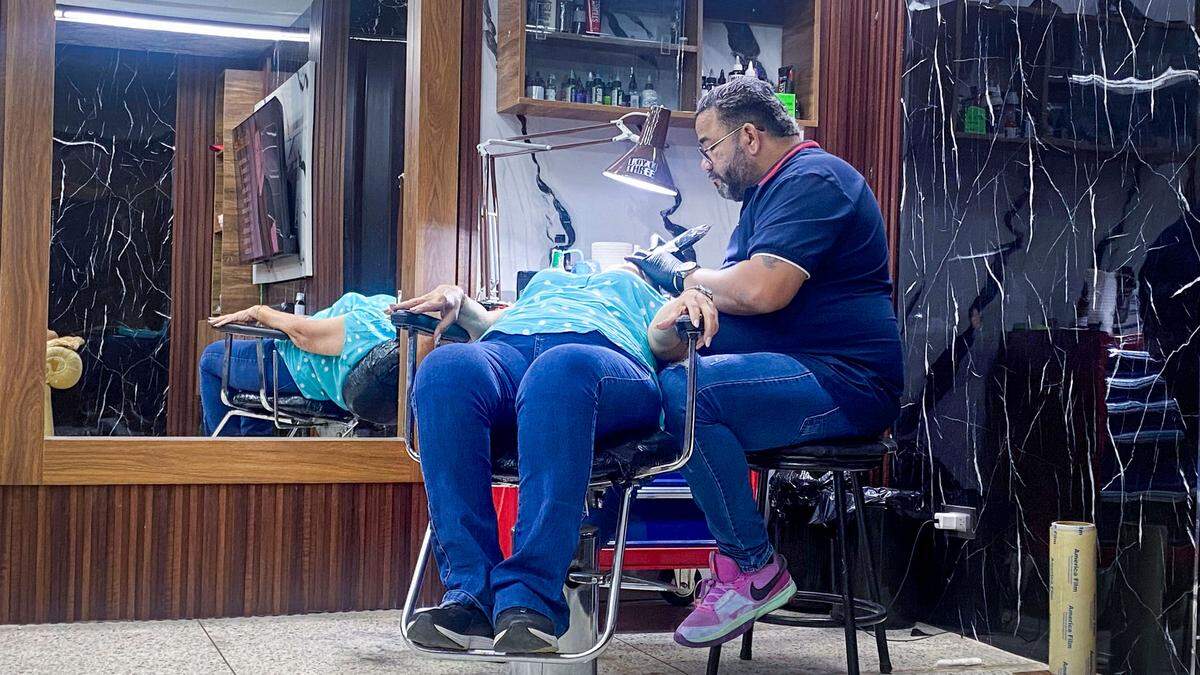
Hailand Pernía, a tattoo artist here in one of the biggest cities in western Venezuela, started warning his clients in March to be aware that certain images inked on their skins could be a problem if they planned to travel to the United States anytime soon..
Trains, stars, lions, wolves, the silhouette of a Michael Jordan dunk, AK-47 rifles and even roses — Pernía’s favorite design — are now among the tattoos that raise red flags since the U.S. immigration authorities are using them to identify suspected members of the feared Tren de Aragua gang.
Never in his six years in the business, Pernía, 37, says, has he ever had to give such a warning to his clients, but his tattoo studio needed to act “responsibly,” he says, in the face of news detailing the detention and deportation of hundreds of Venezuelans in the U.S., many of them tattooed and accused of being violent gang members.
He has understood the stigma for years: He himself often hides his many tattoos from his grandmother, who associates them with violent and criminal people.
“The taboo is coming back again. We are going backwards,” laments Pernía about the controversy in the United States, sitting near his business in a shopping center in the north of Maracaibo, where he charges between $20 to $70 dollars per tattoo.
In January, just days after he took office, President Donald Trump told Fox News that violent gang members with “tattoos all over their faces” were entering the United States at the southern border.
“You can look at them and you can say, ‘could be trouble, could be trouble’. Typically, you know, he’s not gonna be the head of the local bank,” he said, echoing similar statements he made during his presidential campaign.
Immediately after Trump assumed the presidency on Jan. 20th, his administration began a campaign of mass deportations and the targeting of immigrants, which included the designation of the Venezuelan gang Tren de Aragua as a terrorist organization and the use of a 227-year-old law, the Alien Enemies Act, to expel its alleged members from the United States.
Experts say the approach is misguided because members of the Tren de Aragua gang, which arose in a notorious prison in the Venezuelan state of Aragua, do not use tattoos to identify themselves, unlike other Latin American gangs.
The claims about the supposed links between tattoos and violent gang members “greatly affect” the reputation and profits of the tattooing business in Venezuela, says Pernía, who has seen the number of clients at his parlor drop off since Trump took office.
“My new clients aren’t coming to me with the same regularity”, he said.
Trained as an electronic engineer at a school of advanced studies in Venezuela, Pernía, 37, has had to compensate for his losses by working as a driver, using his car to support his wife and child.
Venezuelan clientele is vanishing
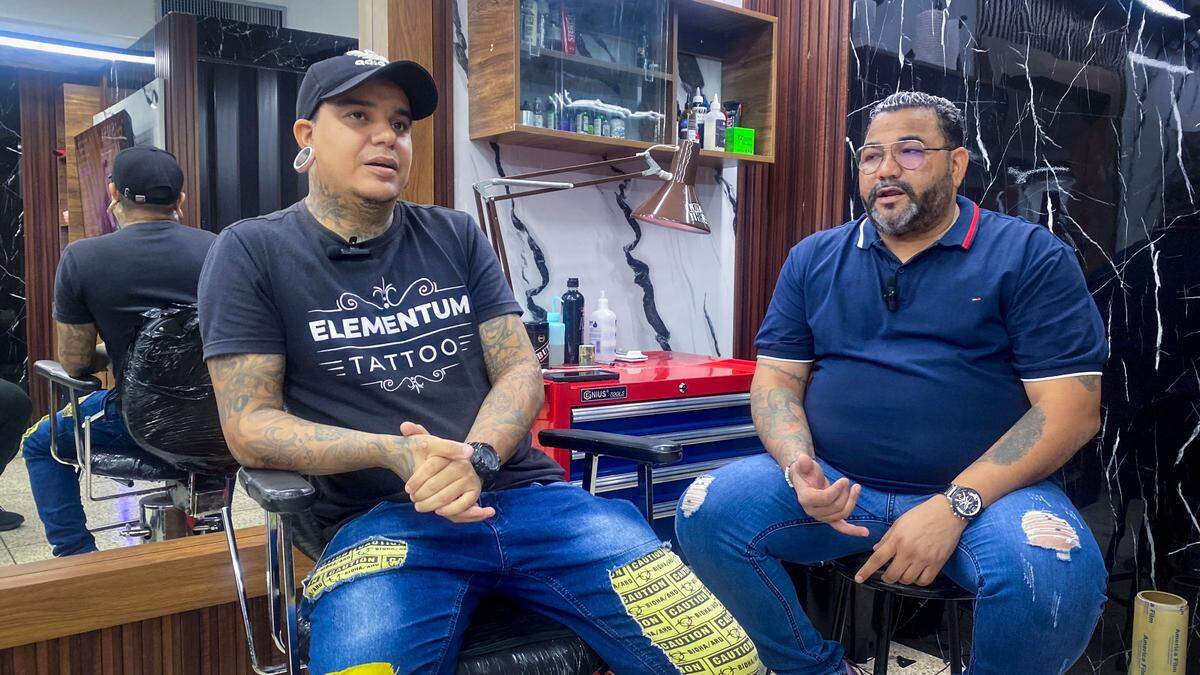
Andy Rojas, a tattoo artist with more than 20 years of experience, says the news about tattooed Venezuelans being targeted as criminals in the U.S. have hurting business at his parlor.
“The clientele has dropped. We used to do 10 to 20 tattoos. Now I do one” a day, said Rojas, who specializes in permanent makeup for women. In late April the numbers have gone up slightly, to maybe 3 or 4 on a good day, he said.
Many of his clients have told him they are postponing any plans for tattoos due to the news from the U.S.
Relatives and lawyers for several of the more than 200 Venezuelans deported in mid-March to a maximum security prison in El Salvador have denounced that the U.S. authorities wrongly classified them as dangerous criminals just because of their tattoos.
The mother and wife of Mervin Yamarte, a young man from Maracaibo detained in Texas and deported to El Salvador, told the media that her husband got a tattoo with the number 99 because it was his number as a member of a recreational soccer team. Yamarte, 29, also has tattoos with the names of his daughter and other relatives.
According to the American Civil Liberties Union, the Trump administration is using a point system to determine if a detained Venezuelan might be a member of the Tren de Aragua and warned that this guide, which it considers “illegal.”
Renny Lopez, one of Rojas’ partners in the tattoo studio in Maracaibo, sports multiple tattoos of numbers, names and symbols such as crosses and stars on both arms and all over his neck.
He proudly shows them off and says that his body, like those of all his clients, is full of “art,”. which he says are different. in style and finish as gang tattoos.
Rojas and Lopez’s clients include Venezuelans who now want to cover up their tattoos before emigrating to countries such as Ecuador, Chile and the United States. Some clients have called them from abroad seeking advice on how to hide them.
“It costs more money to cover them than to make them,” Lopez said.
‘Constant stress’
News about tattooed immigrants being detained and deported has sparked fear and concern among the close to one million Venezuelan immigrants in the U.S.
Omar, a 44-year-old Venezuelan who lives in Naples, Florida, and asked the Miami Herald to withhold his full name for fear of retaliation, said he lives “in a state of constant stress” trying to hide his tattoos when he is away from home or at his jobs at a demolition company and making deliveries.
He has large tattoos of watches, a Catholic rosary and the image of a wolf engraved on his arms and shoulders, some in memory of his grandmother and his ex-partner, both deceased. He got two of the tattoos in Maracaibo.
“I spend all day covered and self-conscious about showing my tattoos in public. I work with long-sleeved shirts. This makes you nervous and anxious,” said Omar, a beneficiary of Temporary Protected Status, whose validity is currently being litigated in federal court.
Discouraging migration
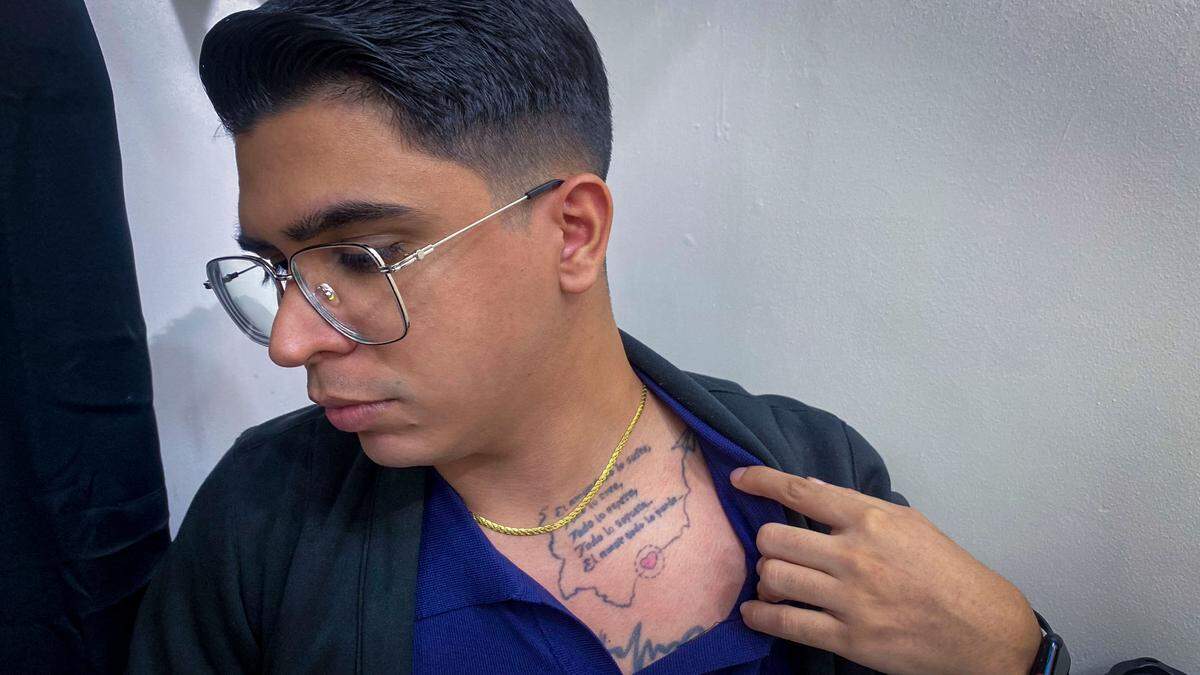
The controversy over tattoos has dissuaded Luis Abreu, 20, from attempting to migrate to the United States.
Abreu, who is about to graduate from the University of Zulia in Maracaibo, has 11 tattoos, several of them on his chest and forearms.
“There is nothing to ensure that nothing will happen to me and that I cannot be deported to a prison in El Salvador for the simple fact of having tattoos,” he says as he sells clothes at a shopping center in Maracaibo.
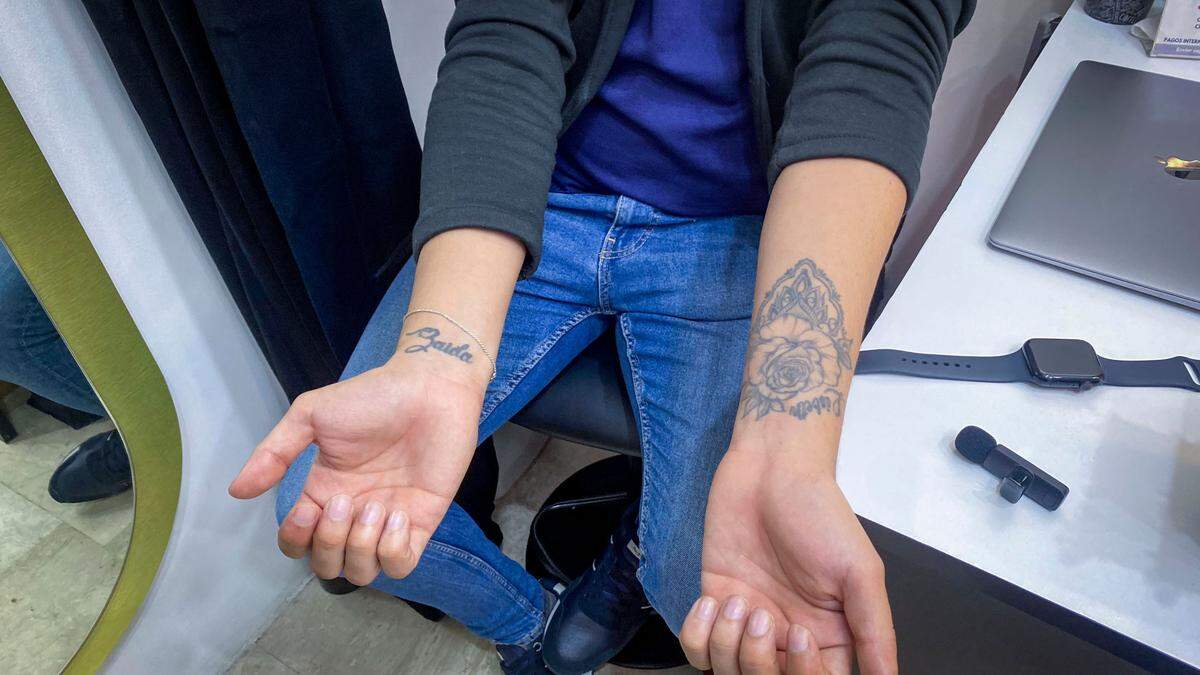
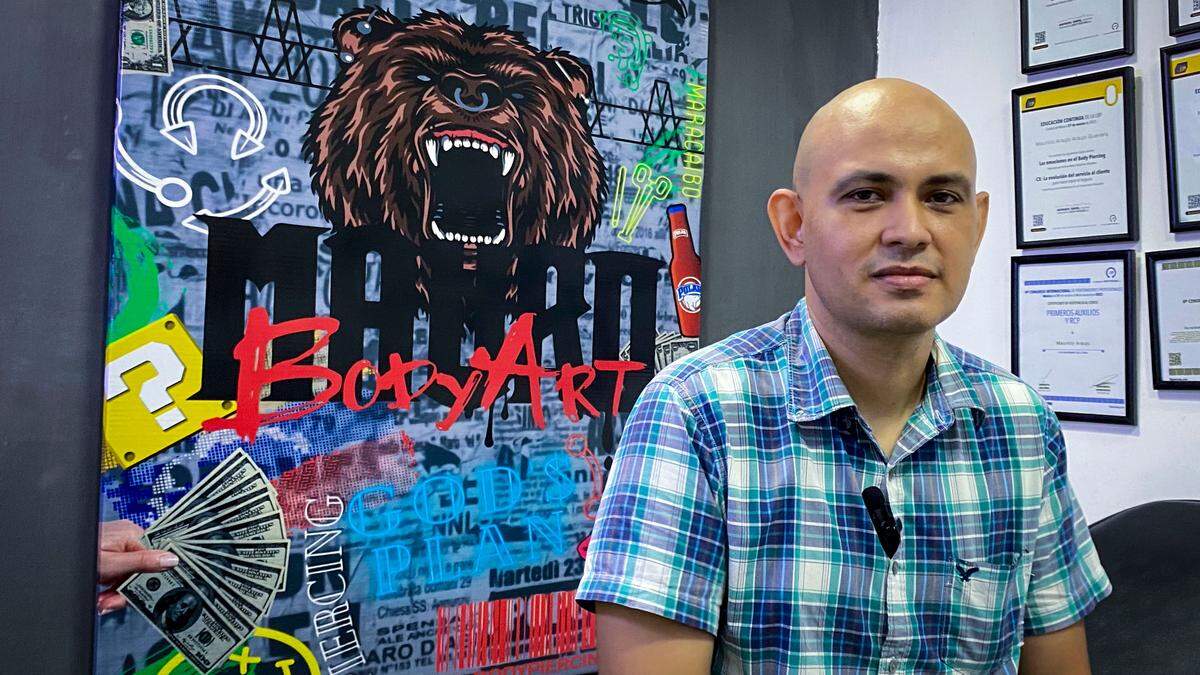
Mauricio Araujo, a specialist in body piercing and tattoos for 15 years who has a studio in a shopping center in Maracaibo, believes that the accusations in the United States feed the “taboo” against his industry, but says many people get tattoos simply for “fashion.”
Along with tattoos of a crown, a lion and a puzzle symbol, Araujo himself has the number 13 engraved on his right shoulder, but says he does not admire or belong to the Salvadoran Mara Salvatrucha gang, better known as MS-13: The number is just the birthday of one of his brothers.
One of his relatives who has the same number 13 tattooed in the same spot lives in the United States. “He is now covering it because of the persecution,” he said.
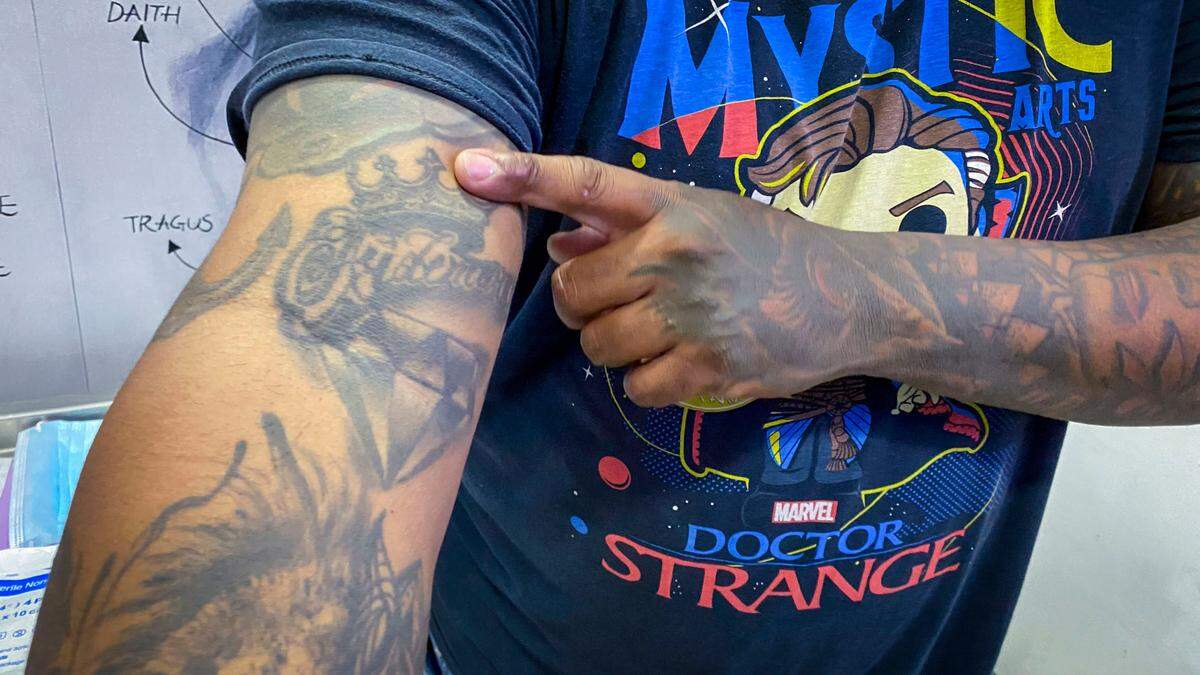
Tattoo artists say clients come in for body art displaying celegrity athletes, such as Argentine soccer mega-star Lionel Messi. Others want tattoos of catchphrases made popular by Latin-American performers, such as Puerto Rican reggaeton singer Anuel’s Real hasta la muerte — Real until death.
“Not everyone who is tattooed belongs to Tren de Aragua,” insists Rojas, the tattoo artist from downtown Maracaibo.
“A tattoo doesn’t make you a criminal, just as wearing a tie doesn’t make you decent.”
This story was originally published May 1, 2025 at 5:30 AM.