Maduro assumes emergency powers to ‘defend Venezuela from Trump’s war on global trade’
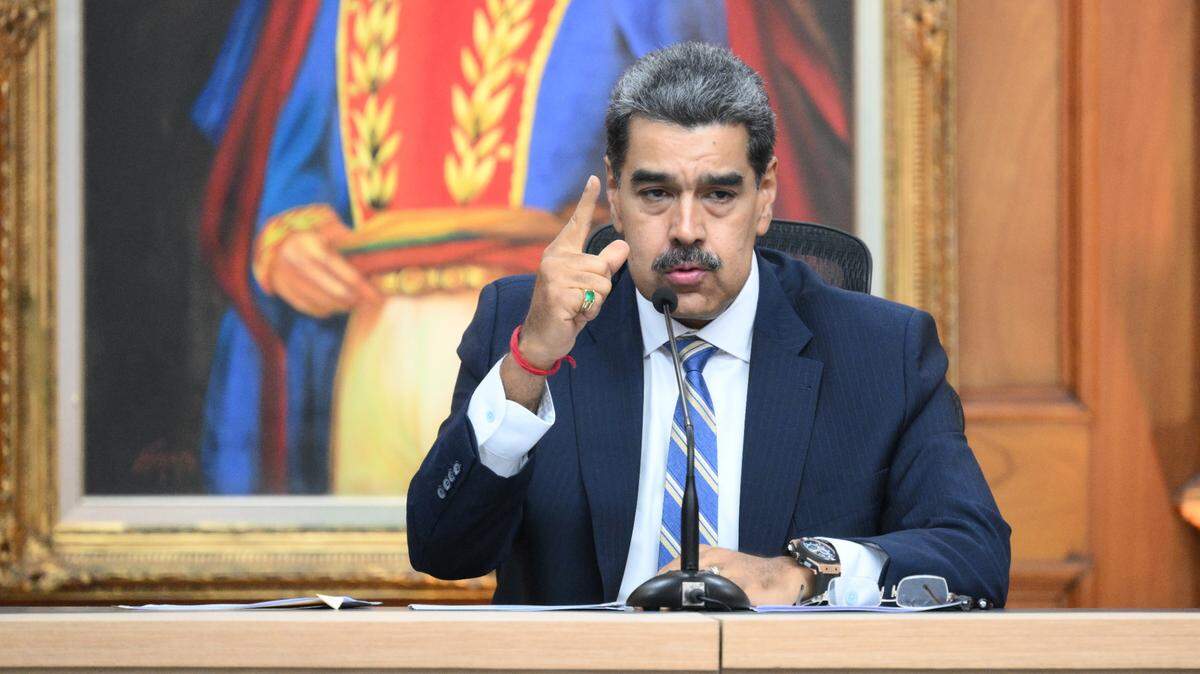
Venezuelan leader Nicolás Maduro has assumed sweeping emergency powers aimed at tightening his regime’s control over the economy, citing the need to shield the country from the escalating global trade conflict triggered by U.S. tariffs.
The decree, signed by Maduro late Tuesday, authorizes his government to implement a series of temporary economic measures. These include suspending certain taxes, centralizing revenue collection and reallocating funds from existing state programs. The regime will also gain the authority to mandate the purchase of domestically produced goods in a bid to reduce reliance on imports and attract both domestic and foreign investment.
“This is about protecting all our productive sectors from the global economic and commercial war — especially one aimed at Venezuela and the entire continent,” Maduro said during a televised address. “Today, I sign the decree of economic emergency which empowers me, for two months — renewable every 60 days — to act and deploy public policies to defend and advance the national economy.”
Venezuela is among the countries affected by the latest round of U.S. tariffs introduced on April 2, part of President Donald Trump’s broader strategy to reduce trade deficits and support American industries — though Trump said Wednesday afternoon most of the tariffs would be paused for 90 days. However, for Venezuela, the most severe blow came earlier, when Washington revoked special licenses granted to Chevron and other international oil firms that allowed them to continue limited operations in the country.
Adding further pressure, the U.S. imposed a 25% tariff on countries purchasing Venezuelan oil and gas, which analysts describe as a form of secondary sanctions reinforcing existing restrictions on state oil firm PDVSA. The move has already shaken global energy markets. Key buyers in China and India — traditionally among Venezuela’s largest customers — have signaled plans to shift purchases elsewhere.
In response to mounting international pressure, Maduro’s administration has sought to project confidence, insisting that Venezuela can endure the latest wave of U.S. economic measures. But the country’s currency markets tell a different story.
The Dólar Paralelo, Venezuela’s black-market exchange rate, has fallen dramatically in the past few days, with the bolívar stumbling past 105 per U.S. dollar — compared to the official rate of 74 announced Wednesday. The national currency has lost over 50% of its value since the weeks leading up to Trump’s re-election campaign, with the steepest drop occurring after the announcement of the 25% tariff.
Economists warn that the bolívar’s slide could signal a return to hyperinflation — a specter that devastated the country’s economy in recent years. Financial analysts caution that the currency collapse reflects widespread economic uncertainty despite the government’s reassurances.
The impact of the U.S. sanctions extends beyond Venezuela’s borders. Energy giants such as Spain’s Repsol, Italy’s Eni, France’s Maurel & Prom, and India’s Reliance Industries — all with stakes in Venezuelan oil — are reportedly reconsidering their involvement. Texas-based Chevron, long seen as a linchpin of Venezuela’s remaining oil exports, is already in the process of withdrawing.
Together, the companies represent nearly half of the country’s dwindling oil production, currently estimated at around 900,000 barrels per day. The expected exodus of international firms and declining exports to China — where Venezuela has been shipping roughly 200,000 barrels per day to repay massive debts — could deepen the fiscal crisis.
Analysts forecast a potential $5 billion shortfall in oil revenues for 2025, further depleting Venezuela’s foreign reserves and worsening its already limited access to global financial markets.
Maduro lashed out at the United States on Monday during his weekly broadcast “Con Maduro +,” accusing Washington of undermining the international trade order.
“The United States is destroying the economic rules of the world,” he said. “It is tearing apart international commercial law and dismantling the World Trade Organization. This tariff war makes no sense and punishes all of humanity.”