Trump revokes Maduro’s oil license, says he’s taking too long to take back deportees
President Donald Trump said Wednesday he is revoking the license that allows the Venezuelan government to export oil to the United States, claiming that the South American country has failed to take back Venezuelan deportees from the U.S. with the speed agreed to a few weeks ago by strongman Nicolás Maduro.
“We are hereby reversing the concessions that Crooked Joe Biden gave to Nicolás Maduro, of Venezuela, on the oil transaction agreement, dated November 26, 2022, and also having to do with Electoral conditions within Venezuela, which have not been met by the Maduro regime,” Trump wrote on his Truth Social account.
“Additionally, the regime has not been transporting the violent criminals that they sent into our Country (the Good Ole’ U.S.A.) back to Venezuela at the rapid pace that they had agreed to. I am therefore ordering that the ineffective and unmet Biden ‘Concession Agreement’ be terminated as of the March 1st option to renew,” he said.
The U.S. Treasury Department had recently renewed a license for oil giant Chevron to pump oil in Venezuela. Initially granted by the Biden administration in November 2022, the license has become an important source of income for the Caracas regime. Chevron’s production out of the South American country averages about 220,000 barrels per day, amounting to about a quarter of the country’s current output of 900,000 barrels per day.
Reacting from Caracas, Maduro’s vice president, Delcy Rodríguez, described Trump’s announcement as a “self-inflicted wound.”
“In reality, damage is being inflicted on the United States, its population and its companies,” she said.
Trump’s decision is a “harmful and inexplicable” measure that calls into question “the legal security of the United States in its international investment regime,” Rodriguez wrote on a Telegram chat.
Experts said that the Chevron suspension does not mean the oil giant will have until exactly March 1 to shut down its operations in Venezuela. The Treasury Department is likely to grant the U.S. oil company a reasonable time to halt its oil production, which can not be turned off with the flip of a switch.
But the measure is also likely to have a greater impact in the Venezuelan oil industry than the 220,000 barrels per day that Chevron currently produces.
Other international firms operating in Venezuela alongside Chevron would most likely also put on hold their operations in the South American country for fear of being found in violation of U.S. sanctions once the license’s suspension comes into effect, said Juan Fernández, former executive director of planning for the government-owned Petroleos de Venezuela, PDVSA.
Chevron’s operations have played a key role in Venezuela’s efforts to boost its oil production, which had fallen to levels nearing 400,000 barrels per day in 2020 from the 3.2 million barrels per day it managed to produce before late president Hugo Chávez launched his socialist revolution 25 years ago.
Trump’s announcement, if it is not reversed, would hit the pause button to a policy that sought to force Maduro to take back hundreds of thousands of Venezuelans currently living in the United States in exchange for allowing his regime to revive its ailing oil industry.
That policy was avidly promoted by a number of American oil businessmen who have dealings in Venezuela, led by Harry Sargeant III, a Florida tycoon with close ties to the Republican Party.
According to a Miami Herald investigation, it was Sargeant who ,behind the scenes, helped set up the a meeting between Maduro and Trump’s special envoy, Richard Grenell, on Jan. 31. That meeting laid the groundwork for a deal to allow the Caracas regime to boost its oil sales to the United States in exchange for accepting hundreds of thousands of Venezuelan deportees.
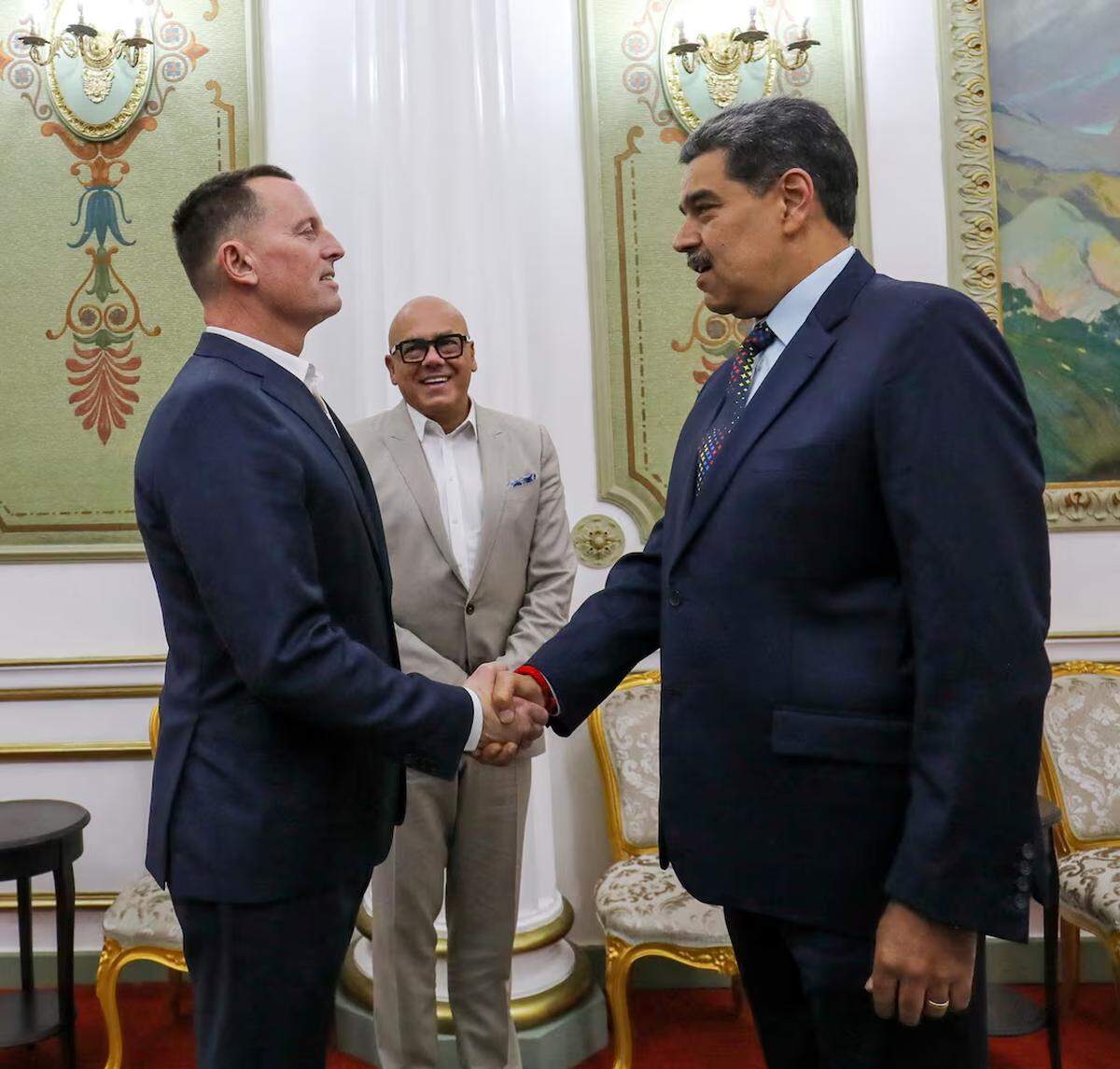
That decision immediately enraged Venezuelans in South Florida who have temporary protections from deportation, who now fear they will be sent back to a nation that has suffered economic collapse under Maduro’s authoritarian rule.
As of this week, just over 600 Venezuelans have been sent back to Venezuela in four separate flights, including one from Mexico and another from the U.S. Navy base in Guantanamo Bay, Cuba.
But at the current frequency of flights, it would take more than a decade for the Caracas regime to fly back the hundreds of thousands of Venezuelans that Trump wants to deport, following his decision to suspend the Temporary Protection Status granted to 350,000 of them in 2023.
The Grenell meeting in Caracas became the focus point of criticism among Venezuelan policy watchers, concerned that allowing Chevron to continue selling oil from the South American country inside the United States would provide Maduro with sufficient funds to remain in power.
An ad published on Tuesday by the Human Rights Foundation on the media website Politico claimed that Chevron and Sargeant were financing a narco-state headed by two men – Maduro and his number two, Interior Minister Diosdado Cabello, each of whom have a $25 million reward offered by U.S. authorities for their capture.
This story was originally published February 26, 2025 at 3:18 PM.