
U.S. reimposes sanctions on Venezuela’s oil after Maduro violates election agreements
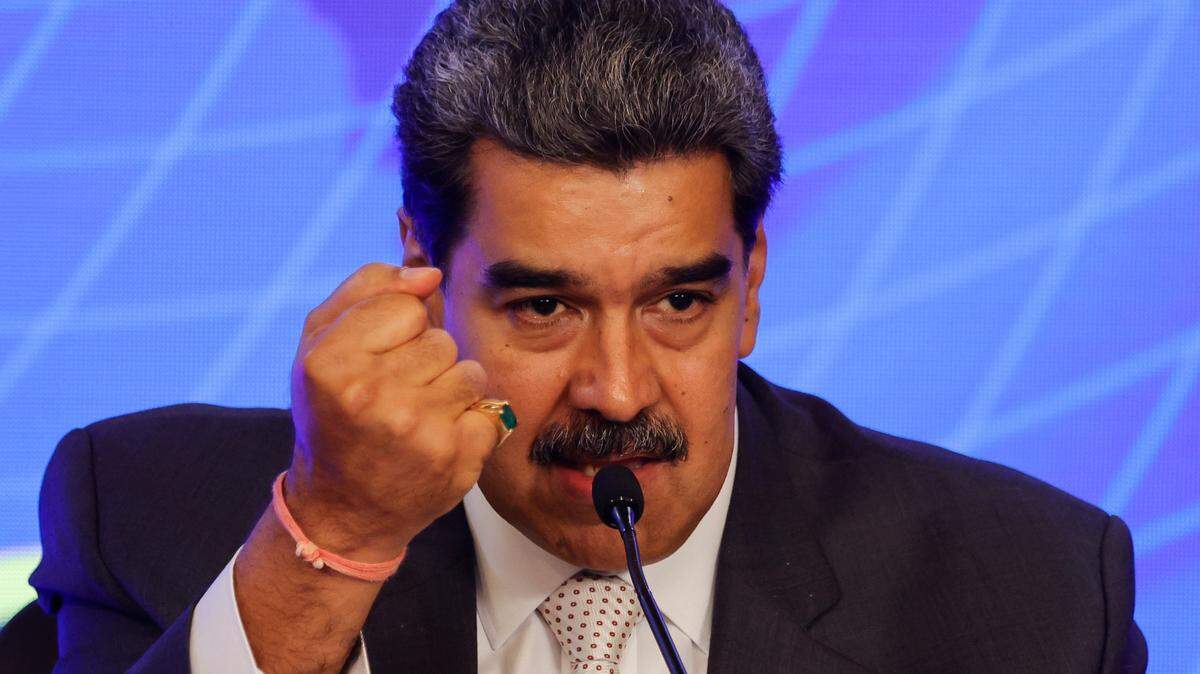
The Biden administration will reimpose broad sanctions on Venezuela’s oil industry after the country’s strongman leader, Nicolas Maduro, failed to honor commitments signed in Barbados last year to allow for free and fair elections this year and banned the elected opposition candidate María Corina Machado from running for president.
Senior Biden administration officials told reporters Wednesday that the Treasury Department will let expire on Thursday a license that allows companies under U.S. jurisdiction to engage with the Venezuelan state oil company PDVSA to produce and export oil and gas. The companies will have 45 days to wind down operations. The license was issued for six months in October last year to encourage Maduro to comply with the terms of the deal signed with the opposition with the U.S.’s blessing on Oct. 17.
“Maduro and his representatives did not fully comply with the spirit or the letter of the agreement,” a senior administration official said, citing the ban on Machado and her substitute candidate, Corina Yoris, as well as the arrests of members of the opposition, civil society and campaign staffers.
The official said the decision not to renew the general license should not be taken as “a final decision that we no longer believe Venezuela can hold competitive and inclusive elections,” leaving open the possibility of a future reversal if, though unlikely, Maduro changes course.
“The Barbados agreements still represent the best available path for a more democratic, secure and prosperous Venezuela, if fully implemented,” the official said, adding the U.S. government will continue to engage with Maduro representatives and members of the opposition on the subject.
“There are some near-term decisions that the Venezuelan authorities will be making, which we will be watching and monitoring very carefully,” a second high-ranking official said.
State Department spokesman Matthew Miller conveyed a similar message in a statement on Wednesday afternoon, saying that the decision to ban transactions involving Venezuelan oil followed careful consideration of Maduro’s actions.
“We will continue to support Venezuelans’ aspirations for a more democratic, stable, and prosperous Venezuela,” he said. “We and our partners in the international community urge Maduro to uphold all the commitments made under the electoral roadmap established by the signatories of the Barbados Agreement.“
The administration stopped short of shutting down limited extraction operations in Venezuela by the American multinational oil company Chevron, which had been authorized in 2022 in response to negotiations between the opposition and the Maduro regime.
The officials declined to comment on other authorizations, known as licenses, obtained by foreign companies to engage in operations in the Venezuelan oil sector. They also said companies can still apply for individual licenses to conduct business with Venezuela, which will be reviewed on a case-by-case basis.
Wednesday’s measure puts Venezuela’s oil industry back in the state it was in in October, when only Chevron was allowed to market Venezuelan oil to recoup part of the large debt the company was owed. The Trump administration imposed sanctions on PDVSA in 2019, prohibiting American companies from buying and selling Venezuelan oil, following the international outcry caused by charges that Maduro had stolen the 2018 election.
Experts estimate that Venezuela saw as much as an additional $3 billion in revenues in the six months the oil sanctions were lifted.
For weeks, Biden aides have been discussing what to do after increasing signals that the Venezuelan government was not going to comply with the Barbados deal.
Maduro banned Machado from running for office despite her being the Venezuelans’ choice, getting over 92% of the vote during the opposition primaries in October. He has moved to block other picks by the opposition’s main political alliance, the Unitary Platform, so he can control who runs, all in violation of the agreement signed in Barbados.
Maduro is now scheduled to run in the election on July 28 against 12 unpopular or otherwise little-known adversaries that he can easily beat.
“It is important for the U. S. and the international community to remain vigilant in monitoring Maduro’s next steps, where he may round up more opposition leaders and commit further human rights violations and violent atrocities,” said Eddy Acevedo, a senior advisor at Woodrow Wilson International Center for Scholars. “The Biden administration made a positive step forward... but new pressure should be applied against Maduro and his criminal enterprise. Maduro must continue to be recognized by the United States, the European Union, and other like-minded nations as an illegitimate dictator.”
During discussions between Biden administration officials from different agencies, some voiced concern about the impact on world oil prices of reimposing sanctions — Venezuela has the world’s largest proven reserves of oil. There are also worries that the economic impact of reimposed sanctions would encourage more Venezuelans to flee their country and head to the United States so close to the U.S. presidential election in November.
A senior administration official said that “fundamentally, the decision to reinstate the sanctions was based on the actions and non-action of the Venezuelan authorities.” Another official called the decision a “proportionate response” to the lack of progress under the Barbados agreement.
Members of the Venezuelan community in Miami said that they saw the reinstatement of the Venezuelan sanctions as the logical reaction to Maduro’s acting in bad faith.
“The sanctions should have never been lifted,” said Ernesto Ackerman, president of Independent Venezuelan American Citizens, a grassroots organization based in Miami. “The U.S. government gave way too much in the way of concessions, getting practically nothing in exchange.”
The breakdown of the Barbados accord does not come as a surprise to many Venezuelans who have seen in the past the failure of many similar efforts to engage the Caracas socialist regime into a negotiated solution to the country’s political crisis.
“Just like we saw a few years ago in the negotiation process held in the Dominican Republic, and in other failed efforts, the regime never meant to keep its word,” but was happy to make false promises if that would translate into obtaining billions of dollars in oil revenues, Ackerman said.
Orlando Viera Blanco, president of the group VeneAmerica, added that even though the sanctions are likely to have an impact on the welfare of millions inside Venezuela, the regime’s actions have left the Biden administration with no choice but to reimpose them.
“The regime’s actions completely justify this end result,” he said. “A positive outcome would have been if Maduro had fulfilled at least at a minimum level what he had promised in terms of ending violence, putting an end to repression, and establishing a democratic transition, but that is not what happened, so we are now going back to the sanctions.”
U.S. Rep. Debbie Wasserman Shultz, a Democrat representing a heavily Venezuelan district in South Florida and co-chair of the Congressional Venezuela Democracy Caucus, praised Biden for taking action to enforce the terms of the Barbados agreement.
“I know the people I represent appreciate the Administration’s commitment to amplify the voices of Venezuelan Americans who demand democracy,” she said. “I look forward to continuing my legislative efforts to complement the President’s policy, including the VOICE Act, which would sanction corrupt regime officials attempting to rig Venezuela’s presidential election and disenfranchise millions of Venezuelans.”
In Caracas, ahead of Washington’s decision, Maduro sent President Biden a message on live television. He tried to say in broken English: “ If you want [the deal], I want. If you don’t want, I don’t want.”
This story was originally published April 17, 2024 at 3:30 PM.