
What U.S. spy agencies expect from Venezuela’s election after trying to engage Maduro
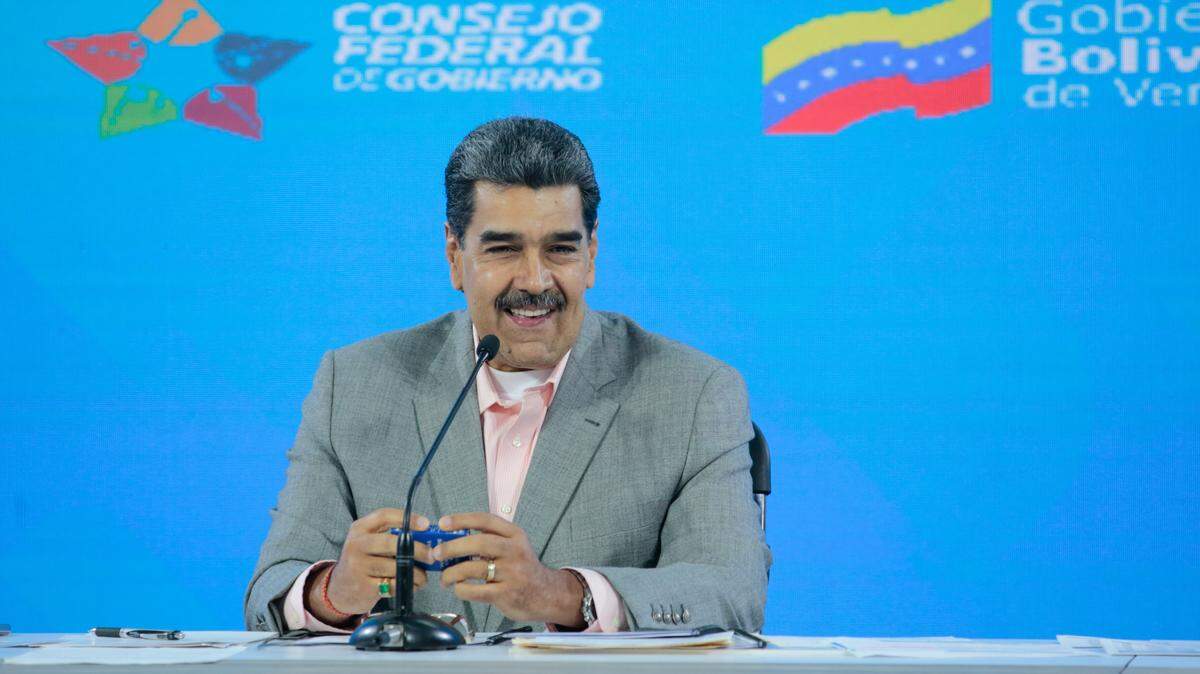
U.S. intelligence agencies predict that Venezuela’s strongman, Nicolas Maduro, will likely prevail in the forthcoming presidential election in the South American nation in July, according to their latest assessment of threats to the United States’ national security.
The unclassified report released Monday said Maduro, who, as expected, is seeking to run as the ruling party candidate, “will retain a solid hold on power and is unlikely to lose the 2024 presidential election because of his control of state institutions that influence the electoral process and his willingness to exercise his power.”
The report, dated Feb. 5, notes that Venezuela’s opposition “has often been divided” and holds “few public positions of influence.”
The blunt conclusion comes after Venezuela’s Supreme Court, under Maduro’s control, upheld a decision prohibiting Maria Corina Machado, who won the opposition primaries, from holding public office.
On top of banning top opposition candidates from holding office, Maduro has also restricted media coverage of opposition politicians, and placed “close allies” in the National Electoral Council to ensure his victory, the report says.
The assessment signals an admission that the Biden administration’s bid to directly engage with Maduro and lift some oil sanctions in the hope he would agree to “free and fair elections,” a line frequently repeated by U.S. officials, will not succeed in restoring democracy in Venezuela.
Juan Gonzalez, the senior director for the Western Hemisphere at the National Security Council and architect of that policy, is stepping down this month. He led the negotiations for a prisoner swap that freed 10 Americans detained in Venezuela in exchange for the release of Maduro’s ally Alex Saab, a Colombian businessman was was being held in Miami on money-laundering case charges.
Calls for changes in U.S. policy toward Venezuela’s policy are growing in Congress and academic circles after Maduro signaled he will not honor what was negotiated with the opposition and the United States in Barbados last year.
“It is time for the Biden administration to recognize the truth that has been on display for years: the Maduro dictatorship will not be goaded into meaningful democratic processes that put its power and criminal earnings at risk,” Evan Ellis, a research professor at the U.S. Army War College Strategic Studies Institute, wrote in Global Americans. “It is past time for a U.S. shift from a posture of wishful thinking to containment.”
The intelligence agencies also assess that emigration from Venezuela will likely remain high.
“Political repression and lack of economic opportunities will continue to drive Cuban, Nicaraguan and Venezuelan emigration.” the report adds. “Changes to Western Hemisphere countries’ visa requirements — such as Nicaragua’s relaxation of requirements for nationals from Haiti — could trigger new surges in U.S.-bound irregular migration.”
The agencies also said the situation in Haiti, which is near collapse due to the violence unleashed by powerful gangs, will “remain unpredictable.” They also anticipate that the gangs are “likely to violently resist a foreign national force deployment to Haiti because they perceive it to be a shared threat to their control and operations.” A long-planned multinational mission led by Kenya is expected to deploy to Haiti, though no date has been set.
The annual threat assessment published by the Office of the Director of National Intelligence is mostly focused on the threats posed by foreign adversaries like Iran, Russia and China. The agencies said China’s army is reportedly considering “pursuing military facilities in multiple locations including… Cuba.”
The Cuban government has denied that China is seeking to build a base in Cuba, which was first reported by the Wall Street Journal last year, citing U.S. intelligence sources.
This story was originally published March 12, 2024 at 4:37 PM.