Venezuelan migrant mothers try to regain custody of children taken by their fathers
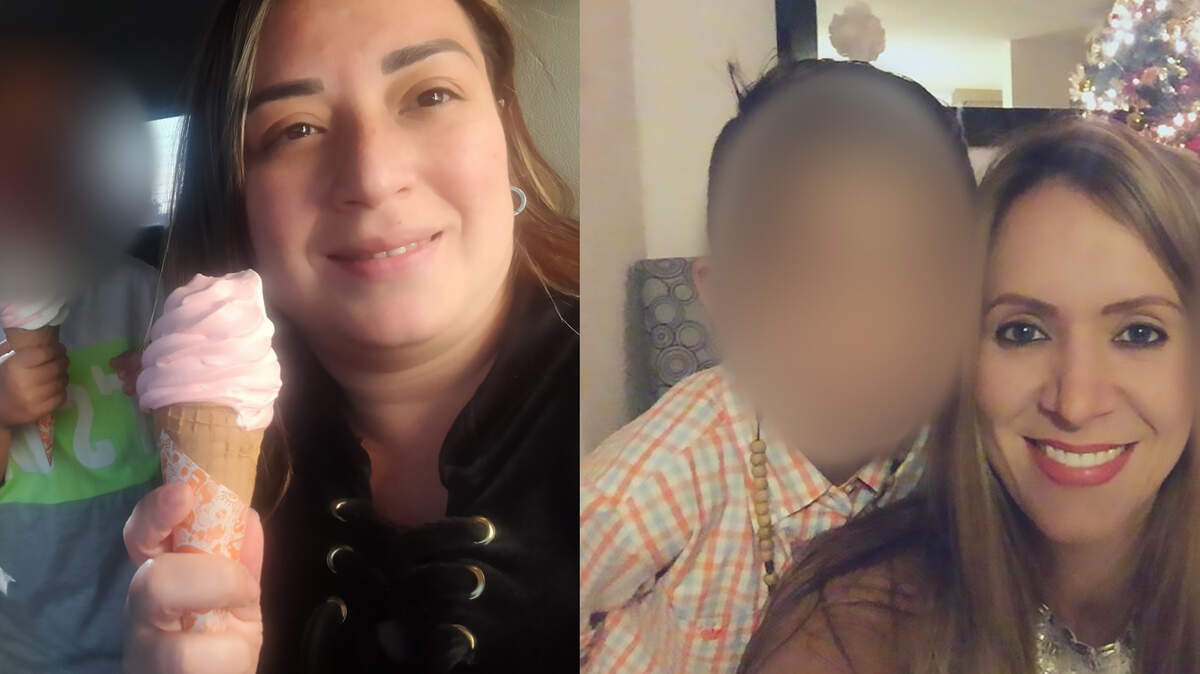
Just a week before Christmas, Rossana Pérez gave her 4-year-old son to his father because he promised that he would take him to buy holiday clothes. But instead of going shopping, the father left Venezuela with the child to take the tortuous, dangerous road to the southern border of the United States, Pérez told el Nuevo Herald.
The Venezuelan teacher said her former partner picked up the boy on Dec. 17, 2021, saying that he would take him to Maracaibo, another city in the state of Zulia state where she lived, to buy him clothes, but days passed and neither of them showed up. She has not seen the boy again.
She later found out the boy and his father had crossed the Rio Grande into the United States from Mexico.
“It was my worst Christmas. My parents were crying, I couldn’t sleep, that was horrible. I’m still upset because I haven’t seen my son,” she said. She decided to make a similar trip, she said, and came across the river into the U.S. on Jan. 15.
Pérez is one of many Venezuelan immigrant mothers who are fighting in the United States to recover custody of heir children, who are with their ex-partners, and in some cases the women say that their children have been used by the fathers to help them make their immigration cases.
Some immigrant women have managed to obtain political asylum in the U.S. with their children, but the fathers have demanded the return of the children to Venezuela, and in some cases it has been granted. Even so, the women keep trying to get their children back.
Verónica Tescari had to hand over her 9- and 10-year-old children to their father after an appeals court in Cincinnati upheld a court ruling that said that she “unlawfully abducted” the minors in Barquisimeto, in the center-west region of Venezuela, to bring them to the United States in 2018, and that keeping them in this country was contrary to Venezuelan law.
Two years ago the children were returned to their father, who filed a petition in 2019 based on the Hague Convention on Civil Aspects of International Child Abduction.
Tescari had argued in court that her former husband was “physically and verbally abusive,” and that due to the economic and social crisis in her country it was important not to return the children.
“My life was them. I have not been able to overcome depression, anguish and despair,” she said.
Tescari had the support of the National Immigrant Women’s Advocacy Project, which along with her defense lawyers asked a court to grant a new hearing in the case or a court hearing with a panel of judges.
But the request was denied, and her lawyers are considering appealing to the Supreme Court, Tescari said.
The Venezuelan woman’s lawyers argued that “Venezuela is a war zone plagued by famine and that the Venezuelan judicial system is incapable of adjudicating the parties’ custody dispute” and returning the minors “would expose them to a serious risk of physical or psychological harm or otherwise subject them to an intolerable situation,” according to court documents.
The appeals court said she failed to prove that returning the children would expose them to those risks and mentioned a Florida court ruling in another case involving a Venezuelan minor saying current conditions in that country do not reach the level of a zone of war, famine, or disease.
Leaving without authorization
Pérez said that according to Venezuelan law, her son’s father needed to have a document signed by her authorizing the child to travel abroad. She suspects that the father took their son to Colombia and from there he traveled to Mexico.
Pérez says she was never asked to sign any departure documents and that she filed a complaint with the Venezuelan police in December.
She maintains that the father used their son to gain expedited entry into the United States for immigration purposes.
Crossing the southern border
John De la Vega, an immigration attorney, said that undocumented migrants who arrive with minor children at the U.S. border are usually allowed to enter more quickly.
The authorities ask them to prove their family relationship and usually request the children’s birth certificates, he said.
De la Vega said that he has seen many cases similar to those of Pérez and Tescari.
“These cases are frequent. We have seen them in different states, such as Texas and New York, people who have a custody fight and the parents are involved in an immigration process. The fathers are in Venezuela and the mothers are here. And they are complicated, complex cases,” he said.
This story was originally published May 12, 2022 at 11:59 AM.