Sanctions on Russian banks could also hurt Moscow’s Latin American allies
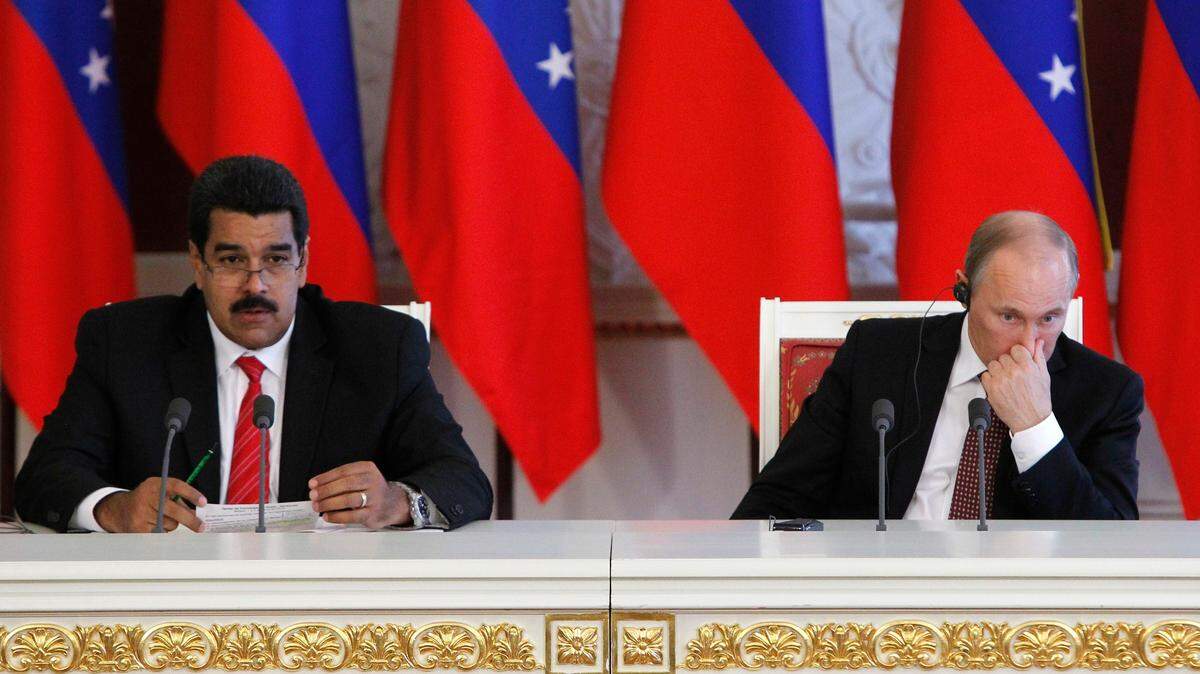
The United States and the European Union decision to sanction Russian banks over the invasion of Ukraine could also end up punishing some of Moscow’s closest allies in Latin America — Nicaragua, Cuba and Venezuela — given their dependence on the Russian financial system to bypass their own U.S. sanctions, financial experts said.
The harshest blow would come out of the decision announced on Saturday to bar 13 of Russia’s main banks from having access to the Swift network, widely used between financial institutions for everyday international transactions.
Some of the experts said that Venezuela could possibly be affected the most.
After the U.S. sanctions against the Nicolás Maduro regime began during the Trump administration, a significant number of Venezuelan government companies began to use Russian banks to make payments abroad, said economist and opposition deputy José Guerra.
“That means that if Petróleos de Venezuela, or any government entity, wants to make a payment to a European country through its Russian banks, now it cannot do so,” Guerra said.
Another blow to Venezuelan finances will come from the devaluation of the ruble amid growing tensions with Western nations. The Russian currency has lost 30% of its value since the crisis began, and could continue to fall as the confrontation continues.
The shock to Venezuela would come from trying to exchange funds they might have in rubles into hard currency as they seek to move their funds to more stable places, Guerra said.
The amount of money that Venezuela has in Russian financial institutions is unknown, but the regime began to use the Russian banks heavily following the U.S. sanctions against Caracas’ socialist regime and the institutions it controls, including the state-run oil company, PDVSA.
In addition to Venezuela, the measures announced over the weekend could also punish Cuba and Nicaragua, which have also come to rely on Russian banks, said Juan González, the Biden administration’s National Security Council Director for Western Hemisphere Affairs.
“The sanctions on Russia are so robust that they will have an impact on those governments that have economic affiliations with Russia, and that is by design,” González said in an interview with the Voice of America. “So Venezuela is going to start to feel that pressure, Nicaragua is going to start to feel that pressure, just like Cuba.”
The U.S. and a number of European nations agreed on Saturday to impose the toughest financial sanctions on Russia to date in retaliation for its invasion of Ukraine, going after the central bank reserves that underpin the Russian economy and shutting out 13 of the most important Russian banks from the vital international financial network.
The sanctions could be among the harshest imposed against a nation in modern times and could do serious damage to the Russian economy, severely limiting its ability to import and export goods, experts say.
This story was originally published February 28, 2022 at 3:30 PM.