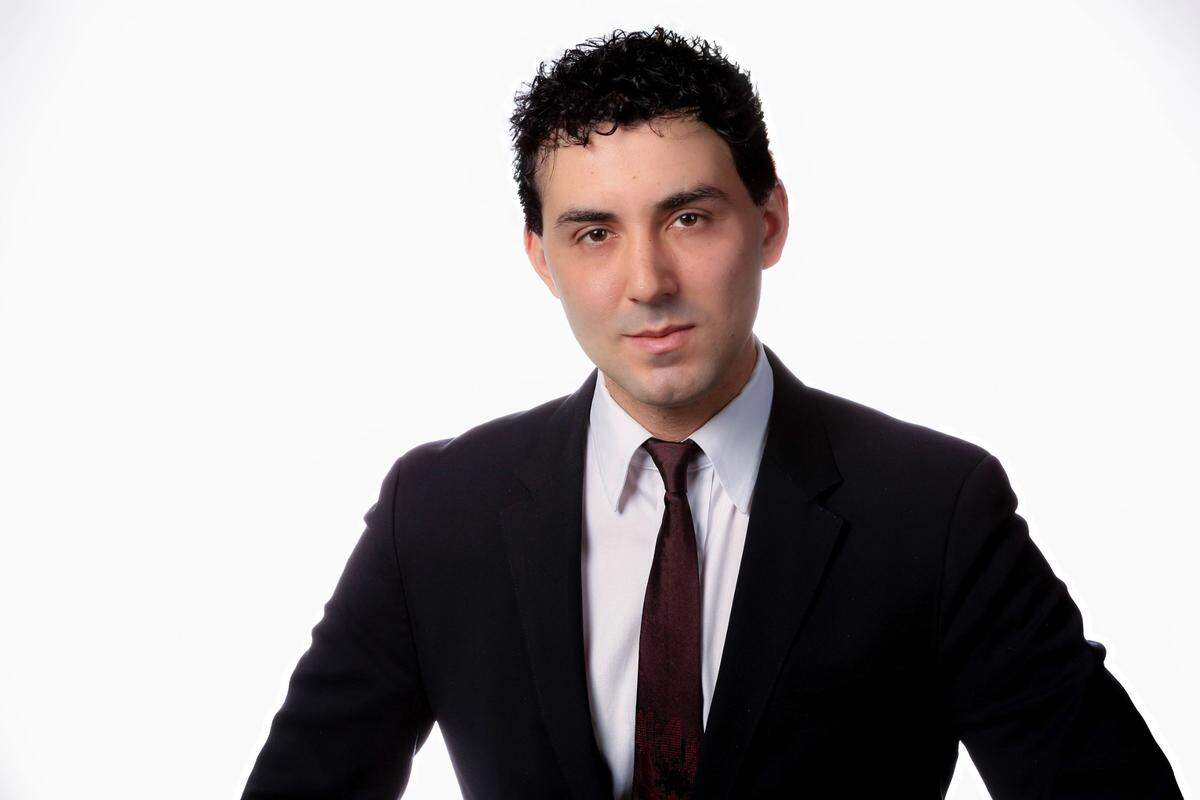
Trump hosts Venezuela’s Juan Guaidó at the White House for the first time
President Donald Trump hosted Juan Guaidó at the White House for the first time on Wednesday, offering Venezuela’s interim leader the rare honor of a South Lawn welcome and an Oval Office meeting.
Their gathering comes one day after Guaidó, the president of the Venezuelan National Assembly recognized by the United States and 60 other nations as the nation’s legitimate leader, attended Trump’s State of the Union address on Tuesday as his guest on Capitol Hill.
Guaidó’s high-profile trip to Washington was prepared in secrecy over two weeks, according to a senior administration official, who said the president’s top aides kept a “close hold” on their plans as Trump sought to provide the Venezuelan opposition leader with an exceptional platform.
In recent days, ahead of Guaidó’s arrival, the president directed his Cabinet to “accelerate” the administration’s policy of maximum pressure on Venezuelan leader Nicolás Maduro, the official said, anticipating new, “impactful measures” within the next 30 days that go beyond current Treasury Department sanctions.
A second senior administration official told McClatchy that the pomp and circumstance surrounding Guaidó’s visit was intended, in part, to dispel concerns that the administration had lost faith in his leadership — or that the president had lost interest in Venezuela policy amid stalled efforts to remove Maduro from power.
The visit marks Trump’s first meeting with Guaidó since the administration recognized him as Venezuela’s interim president one year ago.
Several of Trump’s top aides and Cabinet officials have met with Guaidó before, however, including his daughter and senior adviser, Ivanka Trump, Vice President Mike Pence and Secretary of State Mike Pompeo, among others.
Since the administration first recognized Guaidó in January 2019, Venezuela’s humanitarian and economic crises have continued to spiral, perpetuating the greatest migration in the history of the western hemisphere.
Trump has incrementally increased sanctions on the Maduro regime over the course of his presidency. But officials in his administration have begun to examine potential sanctions on his two greatest patrons — Cuba and Russia — in order to escalate the pressure.
The official who previewed new sanctions against Maduro in the coming weeks did not rule out the possibility.
“Everything is an option as regards creating pressure, whether it’s towards Russian entities that are supporting Maduro or others,” the official told reporters. “Whether it’s Rosneft, whether it’s Reliance, whether it’s Repsol, whether it’s Chevron here in the United States, I would tread cautiously towards their activities in Venezuela that are in support, directly or indirectly, of the Maduro dictatorship.
“We’re halfway through our maximum pressure campaign,” the official continued, “and we’re only moving in one direction, and that is forward.”
Over the course of those two weeks, as the administration quietly planned Guaidó’s travel, officials had denied the likelihood of a White House meeting as rumors circulated in Spanish-language media.
One top reason for the secrecy was Guaidó’s safety: Every time he leaves Venezuela, he faces the risk of being denied reentry, two administration officials explained.
Briefing reporters, one official warned Maduro’s regime “not to interfere in Guaidó’s return,” and said that any harm to Guaidó would result in “very significant consequences.”
Guaidó met earlier in the day Wednesday with Pence and Florida’s two Republican senators, Rick Scott and Marco Rubio, at the Capitol.
Scott said he had pushed for a meeting between the two leaders earlier this week, and praised the president for inviting him to Tuesday night’s speech.
“I encouraged President Trump to meet with Interim President Guaidó when we spoke Monday, and I am glad President Trump is taking this historic step today,” Scott said in a statement. “This meeting, as well as having President Guaidó as his guest to last night’s State of the Union, sends a clear message to Maduro that his time is up.”
Rubio, the top senator overseeing Latin American affairs, said he wants the Trump administration to implement the Verdad Act, a bill that provides a half billion dollars in humanitarian aid to Venezuela.
“Following yesterday’s historic moment at the State of the Union, I was honored to meet with the legitimate Interim President of Venezuela Juan Guaidó in Washington,” Rubio said in a statement. “The Trump administration deserves tremendous credit for its leadership supporting Guaidó’s administration. As we continue to assist in Venezuela’s path to democratic order, we must prioritize efforts that will help the nation prosper in a Venezuela liberated from the evils of Maduro’s narco-dictatorship, such as my co-led bipartisan VERDAD ACT.” Verdad is the Spanish word for truth.
Guaidó received rare bipartisan praise during the State of the Union, and was given a standing ovation after Trump said his administration was committed to the ouster of Maduro.
“Here this evening is a very brave man who carries with him the hopes, dreams and aspirations of all Venezuelans,” Trump said. “Joining us in the gallery is the true and legitimate president of Venezuela, Juan Guaidó.
“Please take this message back,” he continued, “that all Americans are united with the Venezuelan people in their righteous struggle for freedom.”
But Broward County Democratic Rep. Debbie Wasserman Schultz, who represents one of the largest Venezuelan communities in the country, said Trump’s invite and meeting means little without extending Temporary Protected Status to Venezuelans.
“An invite is easy. Granting TPS protection to those fleeing Venezuela requires Trump to challenge his xenophobic base,” Wasserman Schultz said in a tweet. “Trump affirmed our bipartisan U.S. support for Juan Guaidó. Good! But he did nothing for those fearing deportation back to a dangerous corrupt homeland.”
Trump has declined to extend TPS, a program that allows a specific group of people to live and work in the U.S. without the fear of deportation, to Venezuelans. Miami lawmakers from both parties support expanding TPS, though Rubio and Scott have said the proposal that passed the Democratic-controlled House of Representatives does not have enough support to pass the Republican-controlled Senate.
On Saturday, Guaidó held a rally with the Venezuelan diaspora in the Miami area, joined by several members of Congress from both parties. He received protection from the Secret Service, like other heads of state.
That afternoon, the interim president met with Rubio and Scott. Still, the absence of Trump, who stayed playing golf in Palm Beach County, increased speculation about why the American president, who has led an active campaign of sanctions against Maduro, would not offer the Venezuelan opposition leader the coveted photo in the White House.
In Miami, Guaidó declined to answer directly if, in a meeting with Trump, he would discuss the possibility of coordinating military action to force Maduro out of power. But he said that all options on the table, and “under the table,” were available. He acknowledged that any military action involving Americans would depend entirely on the president.
In an exclusive interview with el Nuevo Herald and the Miami Herald, the opposition leader said that Maduro was driving the world to take more severe measures.
Yet, despite frustration within the administration that Maduro remains, Trump’s top officials say the president remains committed to a diplomatic resolution to the crisis.
“The United States is leading a 59-nation diplomatic coalition against the socialist dictator of Venezuela, Nicolás Maduro,” Trump told lawmakers at the State of the Union address. “Maduro is an illegitimate ruler, a tyrant who brutalizes his people.”
“But Maduro’s grip on tyranny will be smashed and broken,” Trump added. He did not elaborate.
This story was originally published February 5, 2020 at 10:49 AM with the headline "Trump hosts Venezuela’s Juan Guaidó at the White House for the first time."