
In Venezuela, some people can buy their way out of the endless power outages
Eduardo, a 40-year Venezuelan who runs a mini market in the city of Maracaibo, was deeply concerned last May when sales were collapsing because of the frequent power outages.
The store was close to bankruptcy. So, he made a bold — and illegal — move.: He paid his way out of the electric interruptions for good.
“I gave $550 to someone who connected the electric wires from our store with the power grid from across the street, one that never goes dark”, said Eduardo, who asked the Miami Herald to not to identify him.
The capital of the largest state in the country, Zulia, was — and still is — affected by rolling power cuts that last up to 16 hours a day per group of city blocks since five massive blackouts left 95 per cent of the country without electricity for several days between last March and April.
The circuit to which Eduardo’s store is now wired just experiences minor power failures per month.
Because a major hospital is located in it, that particular electrical circuit has been left out by the state power company, Corpoelec, from the power-rationing schedule that is still taking place all over Maracaibo and 10 more cities.
Nowadays, the mini market can be seen with its lights on at night, selling products to dozens of customers even when a rolling power outage is taking place. It’s the only illuminated building on those pitch-black streets.
The local Chamber of Commerce estimates that at least 92 per cent of businesses and shops around the city are affected by the rolling power outages.
Eduardo says his business is booming.
“We used to fool our customers telling them that we had light because we had installed a power generator on the roof”, he says. “I believe we would be closed if we hadn’t done what we did. That saved us.”
Zulia is the Venezuelan region with the most power outages this year, says the Committee of Customers Affected by Blackouts, a civilian organization formed to keep records of electric interruptions and failures all over the country.
Aixa López, president of the committee, says that Zulia, with 3.7 million residents, has experienced 26,509 power cuts between January and August this year. That is an average of 3,313 electric failures per month and 110 every single day. The following state is Táchira, with only 2,083 electric interruptions.
The era of power outages and electric rationing in Venezuela has provided fertile ground for corruption in Zulia.
Workers from Corpoelec confirmed to the Herald that dozens of their colleagues have received payments from businessmen and regular citizens to guarantee the electric service for specific buildings, houses, stores and companies all across Maracaibo.
“This has been happening since the electric crisis began in 2009”, one of the sources said. “However, the manipulation of the official rationing schedule – we call it the Charge Administration Plan — has gotten worse these last months since the national blackouts”.
Venezuela is the most corrupt country in Latin America, said Transparency International last January. The organization, in its yearly report called Corruption Perception Index, said that the corruption in the South American country was “systemic” and undermines democracy.
An informant who works as field supervisor in Corpoelec mentioned that half of the 140 electrical circuits in the city are “protected,” meaning that they never suffer from power cuts.
“Protected circuits” is the way local authorities like Gov. Omar Prieto, loyal to President Nicolás Maduro, label those blocks that are not included in the rationing plan because there are alleged “strategic facilities” in it, such as hospitals, police or military stations and public institutions.
Payments to be included in these so called protected circuits are mostly made in foreign currency, especially in U.S. dollars and Colombian pesos. The Venezuelan bolívar is not used because it has been losing value due to hyperinflation.
There are average fees for having the power stay on: one building reconnection can be worth $900 to $1,500. It can be half that much to benefit a modest store or a medium-size home.
Another way of getting around a power outage is more direct: Venezuelans with the means to do so — and with the connections inside the electric company or the governor’s office — can ask for special treatment on any given day to be left out of the power-rationing plan.
Groups of businessmen and residents from suburbs in the north and east sides of Maracaibo, areas where the middle and upper classes live, often pay Corpoelec workers in cash or lunches “to be treated nicely” during the daily power cuts.
It means that their electric circuit won’t be turned off that specific day they pay.
Electric benefits can be paid also with lunches and dinners, because food is scarce and pricey in Venezuela.
“I paid with four roasted chickens and 10 dollars so we won’t get cut off yesterday in the afternoon.,” said one of those who benefited.
Workers from Corpoelec confirmed these deals. “People involved charge their so called ‘customers’ with money, food or even favors that they need from them. They are willing to accept basically any kind of barter”, one of the workers said.
Fedecámaras Zulia, the business chamber that represents 6,700 companies in the region, says that none of its members are part of this corruption. In its last monthly report, the organization said that being without electricity for 12 hours a day is “a nightmare” for local companies, though.
Ricardo Acosta, president of the organization, says that his board has only heard rumors about the matter of corruption with electrical service.
“What we know for sure is that there are no power cuts in neighborhoods where there is high-profile chavista official living in Maracaibo,” he says.
Prieto, the governor, mentioned last year that there were “conspirators” inside Corpoelec and the security forces.
Workers from the state company, however, say that Prieto and high officials in Corpoelec are aware of every single decision about rolling power outages in Zulia.
Powerful politicians in the region from the Venezuelan United Socialist Party — like the governor, his secretary Lisandro Cabello, and also their officials responsible for dealing with the electricity crisis — coordinate which blocks have electricity or not in Zulia and for how long, Corpoelec workers told the Herald.
The mayors of Maracaibo and San Francisco, Willy Casanova and Dirwings Arrieta, and the senior Corpoelec officials — all Maduro supporters — participate in the decisions too.
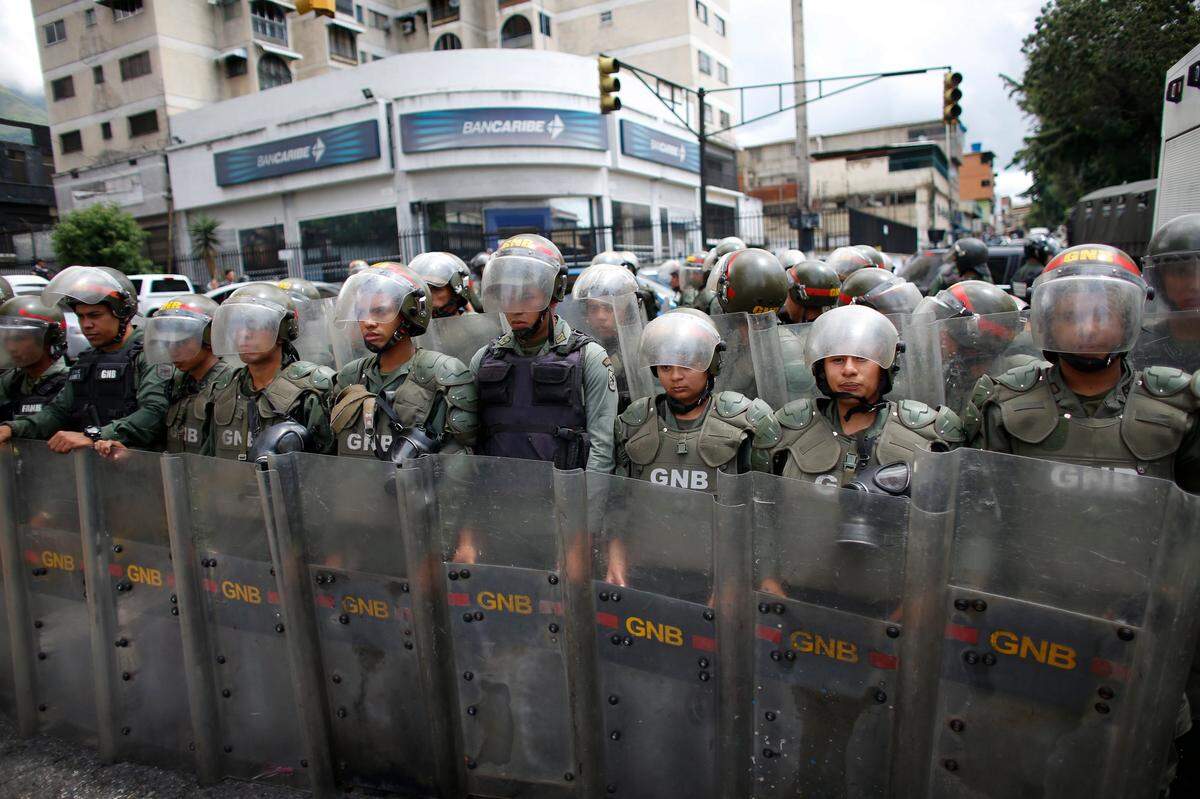
There is a permanent military presence, mainly of intelligence and counterintelligence forces, in the main station where Corpoelec controls the electricity all over the city, the sources said.
Eduardo, the mini market manager who got rid of the power cuts by paying, knows a thing or two about cronyism that infects the power rationing.
A state intelligence patrol visited his store recently ago to check why it had electricity during blackour hours while the rest of the block didn’t.
Among the patrol was a police officer who was a regular customer of the store. A friend, Eduardo calls him now.
“He told us that nothing was going to happen to us,” Eduardo says. “He said that if any other patrol came by, we only had to give him a call.”
Nobody has come around yet.
This story was reported by a Miami Herald correspondent in Venezuela. The reporter and some of the sources quoted in the story are not named to avoid reprisals by Venezuelan authorities.