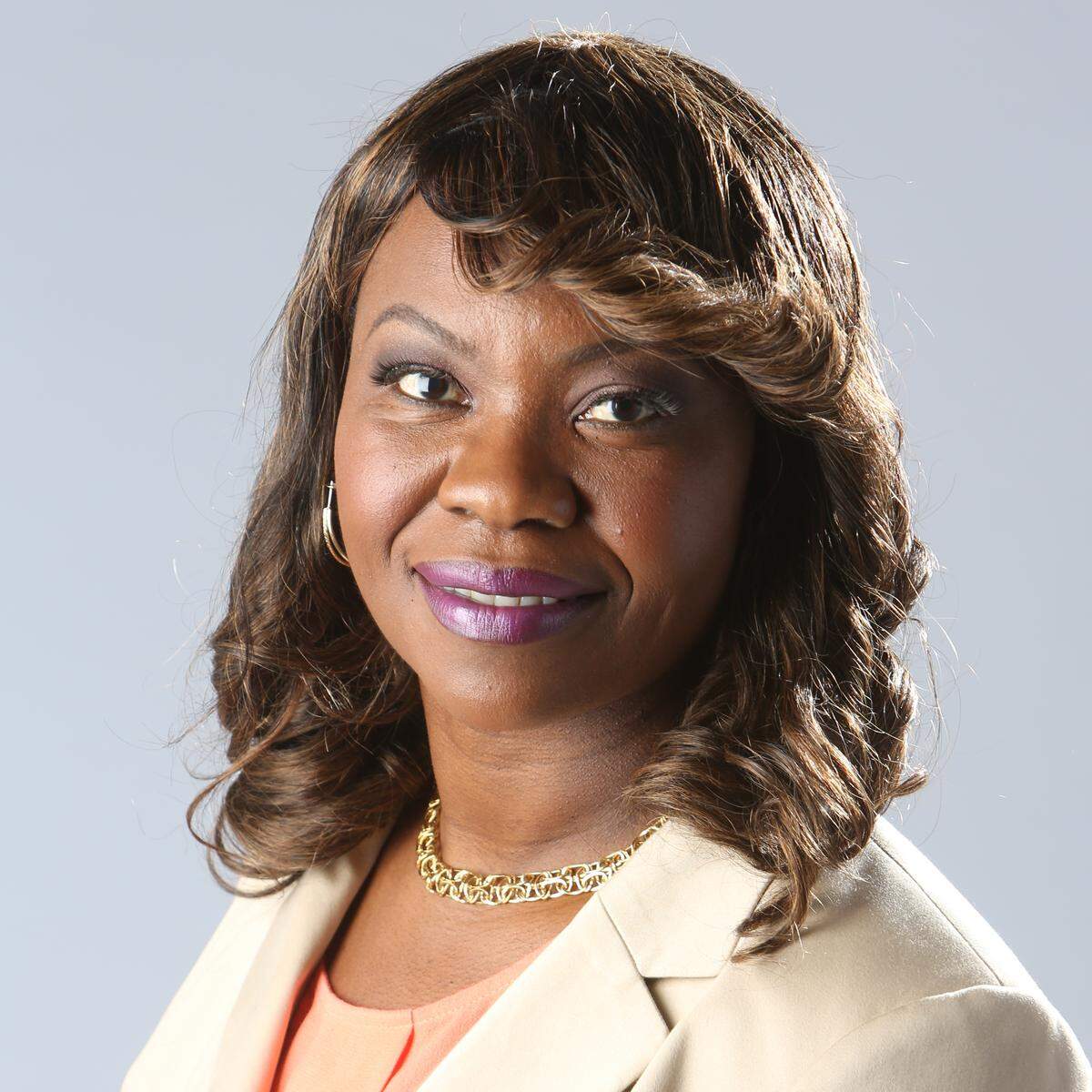
Aid cuts forcing women’s groups worldwide to close. In Haiti, they are feeling the toll
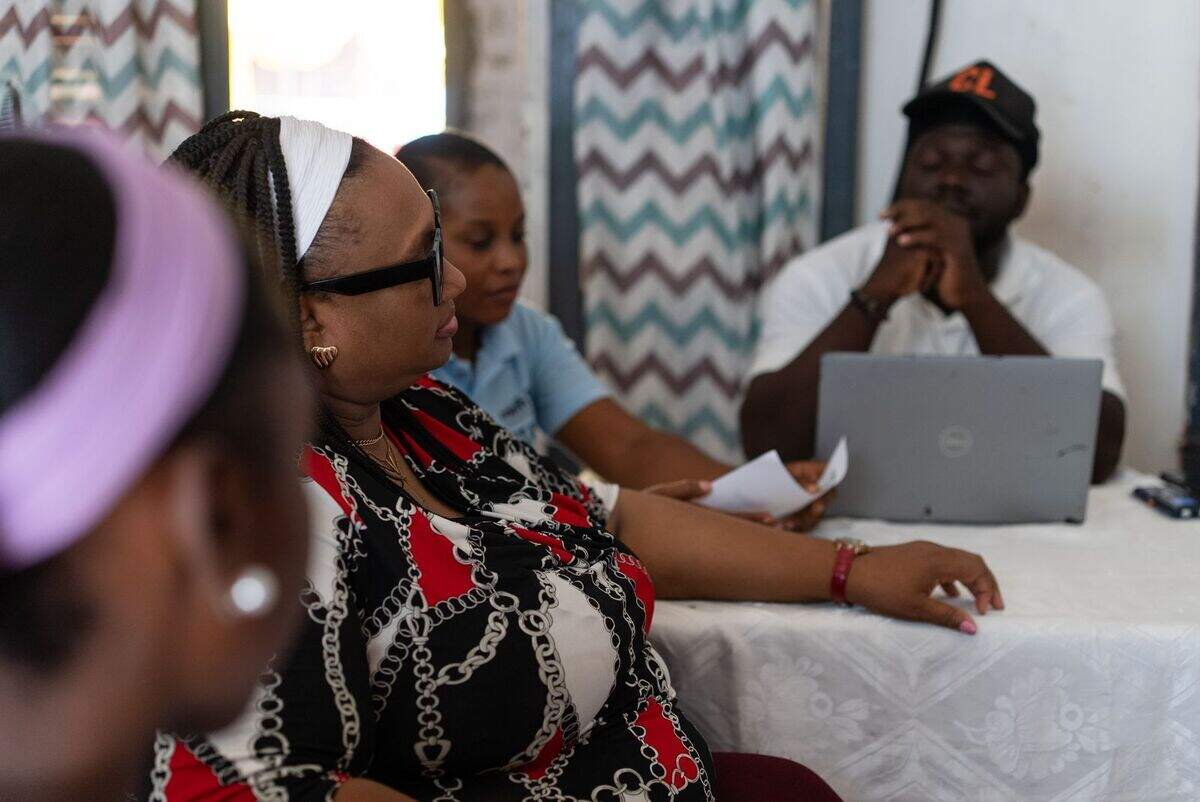
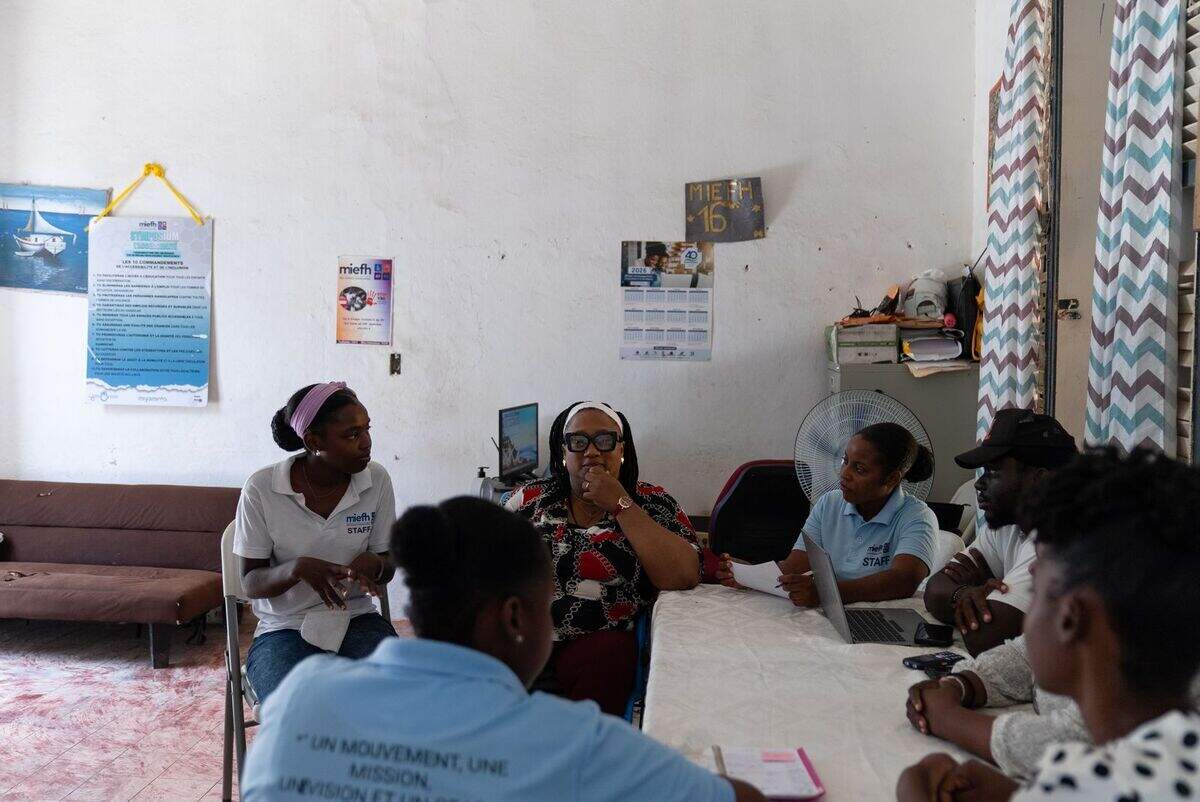
For nearly two decades, Régine Zéphirin Diègue has worked to bring women and girls with disabilities in Haiti out of the shadows by providing psychological counseling, small-business grants, and more recently, support for survivors of sexual violence.
Her work often extends beyond advocacy for those who are disabled. She accompanies survivors, some as young as 9, to hospitals, police stations and, on rare occasions when cases make it to court, to hearings despite facing mobility challenges herself.
Now, she fears her efforts may be forced to end.
Since funding from the United States Agency for International Development ended last year, Diègue’s staff has been working without pay. Their office regularly runs out of paper and even drinking water. The rent is overdue, and the organization she founded in Cap-Haïtien is struggling to keep its doors open.
“If we must close, it would be a grave situation,” said Diègue, founder of the Movement for the Integration and Emancipation of Disabled Women. “Imagine someone who wasn’t used to having certain things, wasn’t working and now has some economic power — they are working now and can take care of themselves — that’s returning to the same precarious situation. Mentally that person is destroyed. Morally as well. Not to mention economically.
“Closing,” she added, “would be a real disaster for the disabled women we support.”
Her fears echo the findings of a new United Nations report that warns deep international cuts in humanitarian funding are forcing women’s organizations in crisis-and conflict-afflicted countries to scale back or even shut down. The report released Friday estimates that at least one million women and girls have lost access to critical support since January 2025.
The report “Beyond the Breaking Point” from U.N. Women found that two in five women’s organizations worldwide are at risk of closing temporarily or permanently within the next year as a result of aid cuts. Nearly nine in 10 said they already cannot meet current levels of needs.
The report’s findings are based on responses from 855 women-led and women’s rights organizations across 52 crisis-and conflict-afflicted countries including Haiti.
“The women’s organizations at risk of being shut down are on the front lines of the world’s most severe humanitarian crises,” said Sofia Calltorp, U.N. Women chief of humanitarian action. “In countries including Afghanistan, the Democratic Republic of the Congo and Haiti they operate where international actors cannot and stay long after global attention has moved on. Every dollar withdrawn from women’s organizations is a dollar withdrawn from survivors of conflict-related sexual violence, displaced mothers, girls forced from school and communities struggling to survive.”
Armed conflicts
The U.N. says armed conflicts are at the highest levels in 80 years, leaving an estimated 120 million women and girls requiring humanitarian assistance and protection worldwide. The consequences of the cuts are already evident: Half of women’s organizations report turning women and girls in need away or placing them on waiting lists. Ninety-two percent say poverty among those they serve is on the rise, while 82 percent report seeing more girls dropping out of school.
At the same time, conflict-related sexual violence doubled in 2025, just as protection services were being scaled back.
In Haiti, where armed gang violence has forced nearly 1.5 million out of their homes, the statistics tell a painful reality, the U.N. report shows.
One women-led group that has spent years sheltering displaced women and survivors of gang violence, offering food, hygiene support, psychosocial care and a temporary place to stay while families rebuild their lives, said it’s now down to four staffers from 14 because of cuts.
In Diègue’s case, they are simply going without pay.
Higher numbers of rapes
Partially paralyzed after an injection at four months old, Diègue founded her organization in 2009 to address the exclusion and discrimination faced by women and girls in Haiti, where people with disabilities are stigmatized and ridiculed.
Though her group is based in the north of the country, demands for he services have grown, she said, due to the gang violence engulfing Port-au-Prince and displacing hundreds of thousand of people. Since 2024, she’s been seeing alarming levels of sexual violence against those with disabilities.
“There are so many displaced people who are staying with friends and family,” Diègue said. “The people hosting them feel like they have all rights because they are providing a little food or place to sleep. Sometimes because the other person is asking them for help, it becomes transactional.”
Before, her organization primarily supported survivors of sexual violence by referring them for services. But as the number of cases increased, Diègue said staff began accompanying survivors.
Among the cases that continue to haunt her is that of a 9-year-old girl who was unable to speak, feed herself or walk without a wheelchair. She was raped by eight men.
After rushing the child and her mother to the hospital, Diègue said, the men “came to the hospital with machetes” to pressure them not to pursue the case. “I didn’t give in,” she said.
But the pressure was too much for the girl’s mother, who, fearing retaliation from the attackers who lived in their neighborhood, decided not to file a complaint.
The next day, the child drank poison and died.
“Two days after that, the mother went insane and was running in the street,” Diègue said, adding she was traumatized for six months, crying, unable to eat “because I felt I failed them”
But for every missed opportunity to save a life, there are instances where her group helped one. Before the USAID shutdown, Movement for the Integration and Emancipation of Disabled Women used grants to support as many as 4,000 women and girls.
Diègue, who is also a mother, recalls persuading one desperate mother not to dump her disabled child in the trash.
“They brought her in, I spoke to her, convinced her,” she said. ”In the end she agreed to keep the child, but we gave her aid because we had to keep her close, so she wouldn’t get discouraged and throw away the child at some point.”
The child is now being raised by the father in the Dominican Republic.
Women-led organizations overwhelmed
Youri Saadallah, the global emergency director for the Norwegian Refugee Council, and Maria Moita, who works at the United Nations’ International Organization for Migration said during their ongoing visit to Haiti that women-led organizations told them they are being overwhelmed by the scale of the trauma and suffering in Haiti.
“The strongest message we heard was that people no longer feel safe; they are being stripped of our dignity. Women and children are bearing the brunt of this crisis. Sexual violence, including collective rape, is rampant,” said Saadallah, who led the mission.
“What we heard very clearly is that the bodies of women and girls are being used as the battlefield in Haiti,” he said adding that in Port-au-Prince gangs are not only expanding but they have infiltrated shelters for those who have been forced to flee their homes. “One mother, told us that she has to sleep on top of her daughter every night to keep her safe, and sadly, this story is only one among the many we heard throughout our visit.”
Families trapped
The group visited a hospital in Saint Marc in the Artibonite region and Hôpital Universitaire de La Paix in the capital, the only government hospital still operating. Health workers spoke of severe exhaustion, skyrocketing maternal mortality, increasing numbers of survivors of sexual violence and of women giving birth and then forced to sleep on the floor with their newborn babies.
“Families are trapped in a cycle of violence, displacement, migration, deportation and forced return,” said Moita. “Many families cannot safely return to their homes because armed groups remain present, and their homes were burned. Their message was simple: They want safety, dignity and a future.”
The crisis is being compounded by deportations to Haiti, particularly from the neighboring Dominican Republic, where humanitarian partners report as man as 700 forced returns a day
Meanwhile, Port-au-Prince remains the epicenter of Haiti’s displacement crisis.
“Schools have become shelters. Communities have been uprooted. Safe space is almost non-existent in Haiti. Displacement sites are extremely congested. There is no space to sleep,” Moita said. “There is no space to install the most basic services such as latrines or cooking areas. People are living on top of each other. Privacy is non-existetn, and therefore protection needs are immense. Families have been displaced multiple times.”
Both called for an acceleration of financial support to Haitian organizations. Immediate humanitarian funding and long-term investments in development and recovery are equally critical.
“The clearest message we heard came from Haitian responders themselves. Supporting local leadership is not simply a commitment; it is an operational necessity,” Saadallah said. “Local actors are the past of this response, the present of this response, and the future of this response.”