Haiti, Brazil FIFA showdown is more than just a World Cup match. It’s history, affinity
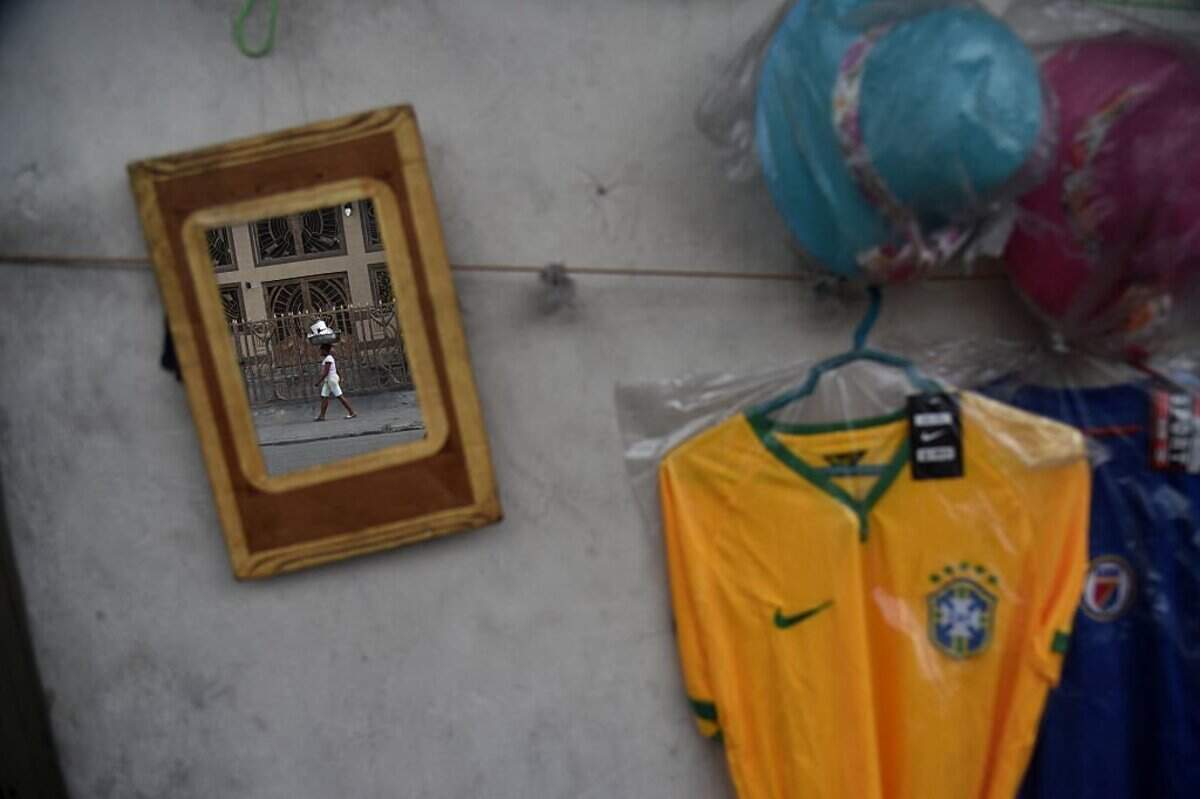
Haitians have long been passionate supporters of Brazilian soccer.
Some say it has to do with the South American country’s style of play, which Haitian footballers have long sought to emulate.
Others trace the connection to visits of the sport’s biggest icon, Edson Arantes do Nascimento. Known to the world as Pelé, the Brazilian legend visited Haiti twice, his visit in 1971 at the invitation of the brutal Duvalier regime.
Still, others say the draw is a combination of both play and history, but also identity: Brazil represented a global soccer powerhouse with deep African roots, and players often looked like them.
Whatever the reason, one thing that’s not up for debate is Haitians’ love for Brazil’s Seleção whenever the men’s soccer team takes the field.
That devotion has at times even transcended sports. Lawmakers in Haiti, for example, have been known to pause parliamentary debates to watch Brazil play. One administration even counted on a Brazilian victory to reportedly help temper public reaction to an unpopular fuel-price increase. When Brazil lost, celebrations didn’t happen. But anger-fueled protests did.
Now, as Haiti and Brazil prepare to go head-to-head in a World Cup group stage match on Friday in Philadelphia, many Haitians are finding themselves in an unfamiliar position.
Fans, who never had a chance to cheer Les Grenadiers on soccer’s biggest stage, have had to decide where their loyalties will lie while players who perhaps grew up idolizing the team must now convince themselves their idols can be beaten.
“It is within them for sure,” Patrick Tardieu, a former captain of Haiti’s national soccer team, said about Haiti’s national men soccer team.
If anyone knows the psychology of this, it is Tardieu.
On June 8, 1999, Haiti faced Brazil in the Caribbean Cup in Trinidad and Tobago and won 4-3. Though it was an official CONCACAF regional tournament, Brazil sent its under-23 Olympic squad rather than its senior national team, but to Haiti it did not matter.
“For us, it was an official competition,” Tardieu, who has been working as a commentator on the Haiti’s matches for Miami’s Island TV, said about the game, recently unearthed by Brazilian journalists. “We didn’t care. We played against Brazil, and we were extremely motivated, and we beat Brazil.”
Tardieu, who has long counted himself an admirer of Brazil scored in the match and initially struggled to process the feat.
When he realized what had happened, he was overwhelmed with a sense of pride. “I had put them on their knees,” he said.
Looking back, he believes his love for Brazil helped fuel his determination.
“When I got on the field it felt like I was playing against my big brother,” he said. “And I wanted to prove to my big brother that I could beat him.”
Nearly 30 years later, and some 52 years after the country’s first World Cup appearance in West Germany, Haiti’s players must summon that same strength. But the stakes are so much higher.
Heavy underdog
Haiti arrived at this year’s World Cup without having played one match at home because of gang violence in Port-au-Prince, but remains an underdog in a 48-team field that few expected it to reach. Many of the players grew up admiring Brazil, just as many of the Haitian fans flooding this city in their Caribbean nation’s blue and red national colors, to see the game live from the stands.
And unlike the 1999 match in Trinidad, this official tournament features the actual Seleção team.
After a 1-0 loss to Scotland in the opener, and watching Brazil and Morocco settle for a draw, Les Grenadiers come into Friday’s against the five time World Cup champion facing immense pressure.
“They have nothing to lose and everything to gain,” said Tardieu, who believes Haiti’s players have it within them to, if not win, at least tie during the match. “It within them for sure.”
But the psychological challenge is immense.
“They are playing one of the best teams in the world, and they are playing a team by which all Haitian people have a fascination, even those kids on the team and those raised in Europe,” he said. “They were raised with their parents being in love with Brazil.”
That love said Robert Fatton, a retired political scientist, began with Pelé whose February 1971 visit with his club Santos, “was one of the greatest sports event in the history of Haiti.”
“I remember being at the stadium and seeing adults cry like babies when Pelé step into the pitch,” said Fatton, 71, who was working as a sports commentator at the CONCACAF tournament in December 1973 when Haiti won and qualified for its first World Cup the following year. Haiti’s President-for-Life Francois “Papa Doc” Duvalier, who would die a few months later, had used the Pelé visit for as propaganda, bringing his son and designated successor Jean-Claude “Baby Doc” along.
More recently, Haiti received another visit by the Brazilian national team when the South American nation led the United Nations peacekeeping mission in the country after 2004’s bloody coup. Fatton again was at the stadium, and remembers “talking to a very poor fellow, and he told me ‘I have seen Ronaldo, I can die now!’”
“Futbol passion makes you irrational and totally emotional,” the soccer aficionado. “Only those suffering from the disease can understand the mania!”
Indeed, both Haitians and Brazilian fans from Miami were already arriving in Philadelphia where a Fanfest for Friday was already at capacity. Meanwhile in Miami, one brave soul sported both a Brazilian and Haitian flag on his car.
Matchup more mental than physical
The game, will be more of a mental exercise than physical, he added. “Ninety-five percent of it is in the mind; in the will, in the combativeness, in the resiliency fight.”
Brazil opened the tournament with a 1-1 draw against Morocco, while Scotland moved atop the group after defeating Haiti 1-0.
Though Haiti is ranked last in the field and Brazil remains one of the sport’s global powers, Morocco is widely considered to be Africa’s best team.
“It’s critical because if we don’t win that game, there is a 98% chance that we don’t make it because those teams are the best teams in the world,” said Tardieu. “Whatever is going to come their way, it’s going to come like a tsunami.”
Still, in this David vs. Goliath story, the outcome is far from predetermined, and at least one legendary former Haitian midfielder sees hope.
“I always believed that Haiti would return to the World Cup,” said Ernst “ZeNono” Jean-Baptiste, 70, after the team beat New Zealand in one of two friendlies they played in South Florida ahead of the tournament.
His preaching and belief were so strong, Jean-Baptiste said with a laugh, that “I got on their nerves as they questioned how can Haiti qualify.”
“But I know the talent that exists in Haiti,” he said. “I always said if we could get the minimum things will change.”
For years, Haitian soccer was undermined by the country’s political instability, poor administration of its football federation, unpaid players and scandal. Today with new management and a team consisting of professional players mostly out of the diaspora, the fortunes have started to change, he said.
“Once the players are at ease, they can accomplish anything,” said Jean-Baptiste. “It’s professionalism and management.”
As for Haitians’ enduring affinity for Brazil, he sees several explanations.
“The way they make love to the ball, the way they balance the ball,” he said of Brazil while describing the European style of play as too “aggressive” for Haitians’ liking.
“We love Brazil because you find a lot of Blacks, people like us, and they have our style,” said Jean-Baptiste, whose own nickname in soccer is an ode to Brazil. “When Pelé became the world’s best player everyone was happy because he looked like us.”
Haitians, he said, are obsessed with football. “It’s always a passion, a love.”
This story was originally published June 18, 2026 at 2:27 PM.