UN chief heads to Haiti as displacement reaches record levels, electoral challenges mount
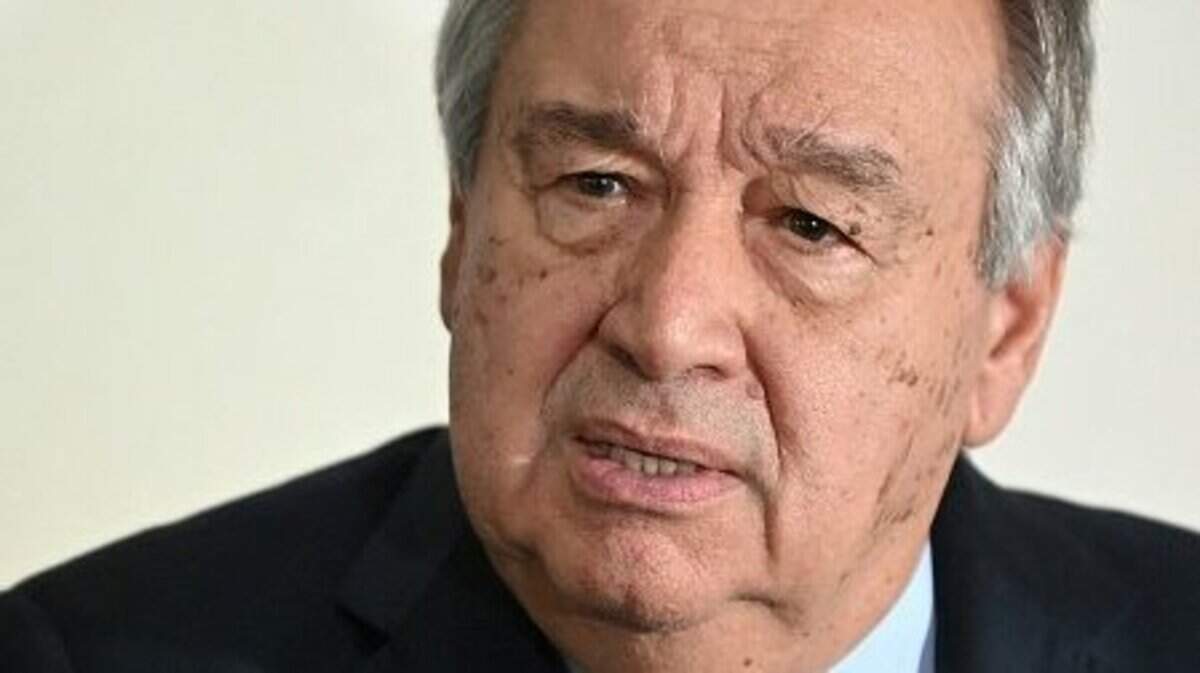
United Nations Secretary-General António Guterres will travel to Haiti next week to assess first hand the impact of the country’s ongoing gang violence and the international community’s response.
The one-day visit on Tuesday, June 16, will be Guterres’s second trip to the volatile Caribbean country following his first visit in July 2023. His trip comes amid a recent escalation in violence by armed groups in metropolitan Port-au-Prince and the neighboring Artibonite region, and continued pleas by the U.N. for member nations to support the response to the rapid increase in humanitarian needs.
The escalation in violence has led to dozens of deaths in recent weeks, and set a new record of nearly 1.5 million people who have to flee from their homes, worsening an already severe humanitarian crisis.
During the visit, the U.N. chief is expected to meet with displaced residents, including women and girls who have been disproportionately affected by the violence. He will also review the early deployment of the U.N.- authorized Gang Suppression Force, whose logistics and operations are being overseen by a new U.N. Support Office in Haiti and a standing group of partner countries.
In addition to its worsening security and humanitarian crises, Haiti is grappling with efforts to organize long-delayed elections.
Last week, a disagreement over the electoral law erupted into a power struggle between Prime Minister Alix Didier Fils-Aimé and the Provisional Electoral Council after council members accused the government of overstepping its authority and acting unconstitutionally.
The dispute was trigged by the government’s attempt to push through an electoral decree, whose text, the members of the councils said, they had not previously seen. Also at issue was the prime minister’s decision to elevate the council’s executive director, Uder Antoine, to the role of director general. In the latter, Antoine would be under the authority of the executive branch and not the nine-member electoral council.
To protest the move, a majority of the council signed a document baring Antoine from entering the council’s offices in Petion-Ville and later signed a resolution dismissing him. Amid the dispute, the U.N. political office and the U.S. Embassy sought to ease tensions as both welcomed the adoption of the electoral decree, which was published in Haiti’s official gazette, Le Moniteur, and made public over the weekend.
Antoine, meanwhile, was sworn in on Friday in a small and brief ceremony attended only by the electoral council’s president, Jacques Desrosiers, who quickly left.
During the U.N. visit, Guterres will assess the support given by the global agency to Haiti, including the support to the Gang Suppression Force, and he will speak with humanitarian partners about the challenges.
He is also expected to meet with Fils-Aimé, who is expected to attend the first FIFA World Cup match involving his Haiti national soccer team against Scotland in Boston on July 13..
The Secretary-General will travel to Haiti via the Dominican Republic, which shares the island of Hispaniola. While in Santo Domingo, he is expected to meet with national authorities there.
Guterres is the second high-profile diplomat to visit the island in recent weeks. Late last month, U.S. Deputy Secretary of State Christopher Landau traveled to Port-au-Prince before continuing on to the Dominican Republic. A group from the Caribbean Community’had also hoped to visit, but Haitian authorities informed the delegation the timing wasn’t appropriate