Hunger persists across Haiti where floods, armed attacks, high fuel costs threaten gains
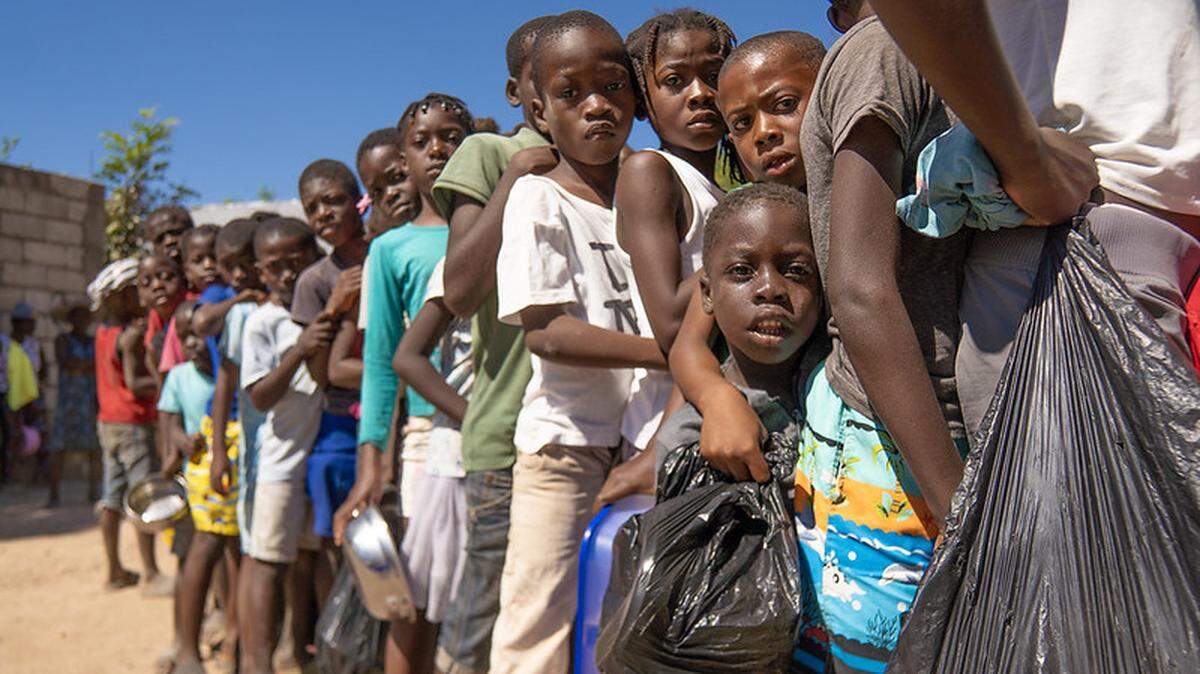
Haitian continue to struggle to find enough to eat, with more than half of the country’s nearly 12 million residents expected to experience high levels of acute hunger between now and June, a new report said.
The latest projections of 5.83 million people going hungry represent a slight improvement from the 5.91 million estimated in September 2025. But conditions remain critical, the leading international authority on hunger crisis, the Integrated Food Security Phase Classification, warns.
Nearly 1.9 million people, or 16 percent of the analyzed population, are expected to experience emergency levels of hunger. That number is down slightly from 2 million people, the report said.
The report cited “minor positive impacts,” including a slowdown in annual inflation, which dropped from 32 percent to 22 percent; generally favorable winter conditions for crops and improved access along some road corridors. But those gains risk being threatened by the country’s persistent instability, natural disasters, and soaring fuel and food prices.
Haiti’s hunger crisis has worsened as humanitarian aid has declined, leading the World Food Program on Friday to urgently call for robust support and funding “to protect recent fragile gains in the fight against hunger” and to foster stability in the struggling country.
“These small improvements to food security numbers must not lead to complacency,” Wanja Kaaria, WFP Haiti country director, said. “Elevated fuel prices and the resulting rise in food costs risk rolling back these gains, pushing already vulnerable families deeper into crisis and further destabilizing the situation.”
Kaaria stressed that with at least one in two Haitians struggle to find food, and added that “tackling hunger is vital to restoring stability in Haiti.
“We cannot build peace when families have nothing to feed their children. Hunger opens the door to armed groups who will exploit the crisis, luring children with food and preying on women and young mothers who are struggling to provide for their families,” she said. “Food assistance is the first line of defense in empowering vulnerable populations and rebuilding local food systems that can foster hope for the future.”
Gangs, natural disasters
Violence remains unpredictable and is increasingly spreading beyond the capital. Rising fuel costs are driving up the cost of delivering food, while the threat of violence limits access to people most in need.
The International Monetary Fund recently warned that although Haiti was on track for modest growth this year amid easing inflation, global developments — including conflict in the Middle East and potential disruptions in the Strait of Hormuz — could have direct consequences for the country by further straining the global food system.
In recent days, armed gangs have intensified attacks. In the southeast, gang members targeted rural communities, stealing livestock and forcing residents to flee. According to the United Nations’ International Organization for Migration, attacks in Kajak, on the border between the municipalities of Marigot and Kenscoff, as well as in Seguin, forced 1,341 people to flee their homes. At least eight people were killed, local officials said.
The U.N. agency said it was the first time its tracking has recorded significant displacement linked to violence in the southeast region, an area that has typically hosted people fleeing unrest in the west, which includes Port-au-Prince.
At the same time, violence continues to escalate in the Artibonite region, considered the country’s breadbasket. Gangs have taken control of the city of Marchand-Dessalines, while attacks in the Petite Desdunes area have forced 1,676 people to flee.
Recent flooding has compounded the crisis. Flooding in the northwest corner of Haiti this week killed at least 12 people and submerged hundreds of homes and farms, according to Haiti’s Office of Civil Protection. Officials reported destroyed bridges, damaged roads and more than 950 flooded homes in and around the city of Port-de-Paix, the capital of the northwest.
“The situation is very critical,” the agency said, noting that families had been displaced by rising water in Saint-Louis-du-Nord, Anse-à-Foleur and other towns.
World Central Kitchen
World Central Kitchen, the nonprofit founded by international chef José Andrés, said the findings underscore the widening gap between needs and available aid.
“As hunger deepens again, we cannot turn our backs—because Haiti is not just where we started, it’s part of who we are,” Andrés said. The charity was born in Haiti 16 years ago in the aftermath of the 2010 earthquake.
The organization operates community kitchens on the campus of the Hospital Albert Schweitzer in the Artibonite. It also operates kitchens in displacement camps and in surrounding communities, hiring local residents and sourcing from local farmers, butchers, and distributors to support the economy while providing a critical source of stability.
In the Artibonite region, the group has served nearly nine million meals over the past year through 26 community kitchens, providing about 35,000 meals a day. Still, Andrés said, the scale of assistance falls short of the need.
“People are already living day to day, often served only small portions of rice,” Andrés added. “Even small increases in the price of food and fuel—driven in part by global disruptions such as the conflict in Iran, which is pushing up energy and fertilizer costs—translate into immediate consequences for families who are already on the brink of famine.”
Violence choking Haitian economy
The Integrated Food Security Phase Classification, a global initiative that classifies the severity and magnitude of hunger and malnutrition, said that violence continues to suffocate the Haitian economy, restricting the movement of goods and people as armed groups continue to control major transport route.
The report also notes that Haiti is still recovering from last year’s Hurricane Melissa, which caused torrential rain, flooding, landslides and destruction across the southern and west regions of the country.
Of the 30 areas analyzed, 10 are classified as “Emergency,” including parts of the northwest and Artibonite, camps for internally displaced people, La Gonâve, Belle-Anse and poor neighborhoods of Port-au-Prince and Cité Soleil. The rest of the country is expected to remain one phase below, at “crisis.”
This story was originally published April 17, 2026 at 8:52 AM.