Boulos argues he’s still a U.S. citizen as a judge orders government to explain custody
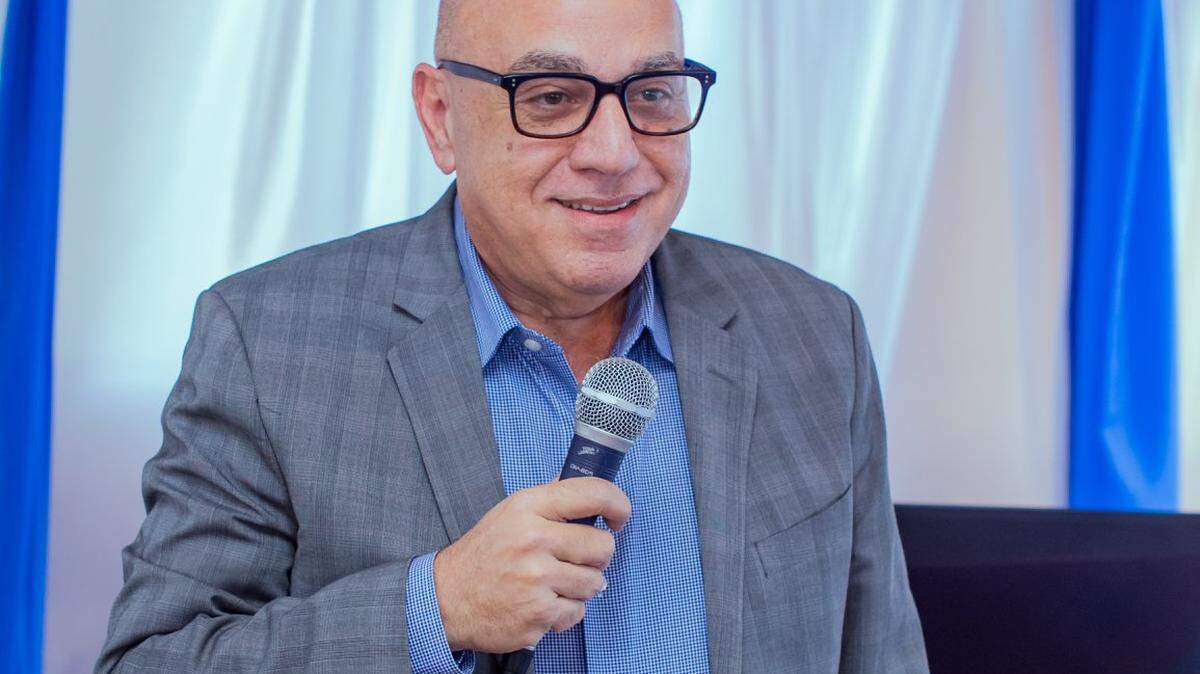
A Florida federal judge ordered the Trump administration Tuesday to explain why it is detaining a well-known Haitian businessman and former Haiti presidential hopeful whose shocking arrest by Immigration and Customs Enforcement last month continues to reverberate among Haitians.
Pierre Reginald Boulos, who was back in immigration court on Tuesday, was arrested on July 17 at his home in Palm Beach County on an immigration violation. But the Trump administration has accused him in public statements and on social media of being “engaged in a campaign of violence and gang support that contributed to Haiti’s destabilization.”
His family has denied the allegations. Ahead of his latest appearance in immigration court, Boulos’ attorneys filed suit against the U.S. government in the Miami federal court challenging his ongoing detention at the Krome North Service Processing Center in Miami, asking a federal judge to order the government to explain why he’s being detained.
In his petition, Boulos claims he has been “unlawfully detained” by immigration authorities. U.S. District Judge Beth Bloom ordered the Department of Homeland Security “to show cause” by Sept. 2 “why” his petition “should not be granted,” according to her order issued Tuesday.
Bloom’s order came as Boulos, 69, made his appearance before an immigration judge at Krome. Dressed in an orange jumpsuit, he appeared on video due to his cell block being under quarantine. At several points he could be seen pacing back and forth inside the room.
Inside the courtroom about a dozen or so family members, including his siblings and children, listened as attorneys for the Department of Homeland Security and Boulos argued back and forth over his U.S. citizenship. Lawyers for DHS said Boulos renounced that status in 2008, but his attorneys countered that it didn’t take effect because federal authorities made procedural mistakes. Lawyers for Boulos told immigration Judge Jorge Pereira that DHS had failed to submit documents establishing that Boulos was no longer a U.S. citizen. The judge, who pondered whether he had jurisdiction over the matter, at one point quipped, “This case uses a lot of old case laws.”
Boulos, a former public health doctor, is the most high-profile Haitian to date to be arrested by the Trump administration. He was born in New York in 1956 but grew up in Haiti, where he began his career as a physician working in the slums of Port-au-Prince before turning his focus to business. While becoming a successful businessman, he also emerged as one of the country’s most prominent political players, a distinction that has earned him friends and foes.
Among those who came to view his immigration proceedings on Tuesday, but not allowed in, were Haitian bloggers and activists who blame him for the country’s ills.
Boulos’ attorneys said the State Department had failed to follow its own procedures on revoking his U.S. citizenship after Boulos made his intentions known in 2008. Documents were either missing or lacked the necessary official seals, said attorney Richard Jurgens, with the law firm Candela, Eig & Jurgens.
The documents that have been submitted, Jurgens said, “are inherently flawed and do not show the Department of State followed its own rules in reference to renunciation.”
“Dr. Boulos continues to be a United States citizen,” he said, as he insisted Boulos was not removable from the U.S. on immigration grounds.
He and partner Atara Eig also argued that DHS had not provided an approved Certificate of Loss of Nationality, an official document issued by the State Department confirming that someone had voluntary relinquished U.S. citizenship.
Gina Garrett-Jackson, the DHS attorney on the case, said the government had met its burden of proof and the “the issue of citizenship has been proven.”
Boulos, who moved back to the U.S. in early 2021, was no longer protected by U.S. citizenship because he had renounced it, Garrett-Jackson said. Garrett-Jackson asked why, if he were still a U.S. citizen, he would apply for a non-immigrant visa in 2020 to travel to the U.S. and then for Temporary Protected Status in 2021. Boulos also later applied to adjust his status to become a green card holder, which is when he allegedly failed to reveal he had been involved in politics in Haiti as the founder of a political party, Third Way Movement.
To support the DHS position she highlighted a letter from Secretary of State Marco Rubio describing Boulos as being deportable.
“This is sufficient,” Garrett-Jackson said, reading the letter where Rubio said that Boulos was “a deportable alien.”
“The actual Secretary of State made that determination after a review of the evidence,” she said. “It’s already been done. ... On Feb. 14, 2008, [Boulos] formally renounced his citizenship at the U.S. Embassy in Port-au-Prince.”
Pereira, the immigration judge, said he was neither an expert on foreign policy nor citizenship, and the question may best be left for a federal court to decide.
“I don’t think I can say, ‘The Department of State, you did it wrong.’ I am limited,” he said. “I don’t think I have these kinds of power. I will look into it.”
The judge recommended that the parties make their arguments in writing, saying he will make a decision on whether Boulos can be removed to Haiti soon. Another hearing has been scheduled for Sept. 22.
Miami Herald staff writer Jay Weaver contributed to this report.
This story was originally published August 26, 2025 at 8:45 PM.