Prominent Haitian businessman, former presidential hopeful arrested by ICE in South Florida
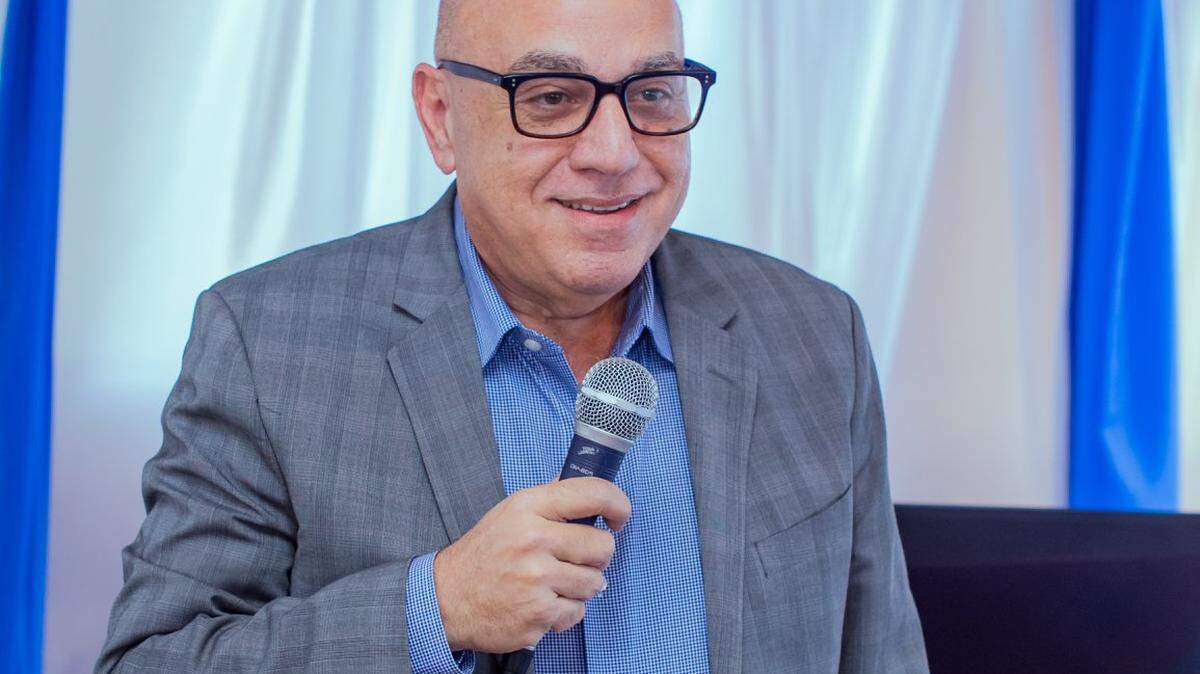
An influential Haitian businessman and controversial political powerbroker is being detained by the U.S. Immigration and Customs Enforcement, according to immigration court records and sources familiar with the arrest.
Pierre Reginald Boulos, an American-born entrepreneur and physician who exercised his influence through connections with top State Department officials and vocal criticism of Haitian presidents and politicians, is being held on immigration violations in Miami after being arrested by ICE agents at his home in Palm Beach. The arrest took place on Thursday.
To date, Boulos is the most high-profile Haitian to be detained by the Trump administration, which in recent months has tried to shorten the deportation protections and work permits for over a half million Haitians temporarily in the United States. The case is complicated by his uncertain immigration status. As a one-time Haitian presidential aspirant, he renounced his U.S. citizenship several years ago.
Boulos, 69, is not yet listed in the ICE detention locator system due to a backlog of recent ICE arrests. But sources say he was at Krome North Service Processing Center on Saturday before being moved later that day to a federal detention center in Homestead.
ICE did not respond to multiple requests from the Herald about the nature of the violations or confirmation of his detention. But Immigration court records published online on Monday, show that Boulos has a hearing scheduled at 8 a.m. July 31 before immigration judge Jorge Pereira at the Krome Detention Center. The records say “this case is pending.”
Late Monday after the Herald published a story on Boulos’ arrest, ICE confirmed the arrest in a statement accusing him of engaging in violence and collaborating with armed gangs that once burned down his car dealership.
A lawful permanent resident and citizen of Haiti, Boulos was arrested by U.S. Immigration and Customs Enforcement’s Homeland Security Investigations “for violating the Immigration and Nationality Act contributing to the destabilization of Haiti,” the statement said, accusing him of collaborating with Viv Ansanm, a Haitian foreign terrorist organization.
Haiti’s most powerful gang coalition, Viv Ansanm made its debut in February of last year while Boulos was living in the Boca Raton-area. It led coordinated attacks in an effort to bring down the government, burning police stations, schools and businesses. The gang is responsible for more than 5,600 deaths in Haiti last year, and more than 4,000 already this year as well as rapes and kidnappings.
ICE said their case against Boulos was investigated jointly with the U.S. Department of State’s Diplomatic Security Service and the U.S. Citizenship and Immigration Service’s Fraud Detection and National Security Directorate.
“Boulos’ presence or activities in the United States would have potential serious adverse foreign policy consequences for the United States, providing a basis for the charge of removability,” the statement said. “Specifically, officials determined that he engaged in a campaign of violence and gang support that contributed to Haiti’s destabilization.”
ICE confirmed allegations that Boulos, in his application to become a lawful permanent resident, failed to disclose his involvement in the formation of a political party in Haiti, Mouvement pour la Transformation et la Valorisation d’Haiti, MTV Haiti. The agency also noted that “he was referred for prosecution by the Haitian government’s Unit for the Fight Against Corruption for misusing loans, supporting an additional ground of removability based on this fraud.”
Boulos has not been charged with a crime in Haiti nor has he been hit with criminal charges in the U.S.
In recent months Boulos, who had been keeping a low profile, told several close confidants he held U.S. permanent residency. Several sources familiar with his case had acknowledged that his arrest stems from allegations that he previously failed to disclose his involvement in a political organization on his immigration application.
The Boulos case comes amid considerable uncertainty over the fate of tens of thousands of Haitian immigrants. Earlier this month, a federal judge in New York ruled that the Department of Homeland Security Secretary Kristi Noem acted unlawfully by rolling back the deadline for Temporary Protected Status granted under the Biden administration. On Friday, the Trump administration announced that, while disagreeing with the judge’s order, it has restored the original Feb. 3 deadline.
Still, the administration has said that legal protections from deportations for Haitians will come to an end once the current TPS status runs out. Separately, the U.S. has been also warning in Port-au-Prince that Haitian authorities and foreign diplomats should expect a number of high-profile moves regarding Haitians by the administration as it tries to address the country’s ongoing gang take-over.
Rubio speaks on U.S. actions against lawful permanent residents
On Monday, hours after the Herald’s story about the case was published and before ICE’s confirmation of the arrest, Secretary of State Marco Rubio issued a statement saying that the U.S. had taken “actions against individuals whose presence and activities in our country have potentially serious adverse foreign policy consequences for the United States.”
Rubio did not provide any names and the State Department did not respond to questions about whether he’s speaking about Boulos or others. Over the past two weeks, several Haitians traveling into Miami International Airport have been reportedly questioned by Customs and Border Protection agents, gotten their phones confiscated and issued shortened stays. In at least one case, a Haitian businessman transiting through MIA from the Dominican Republic was forced to return, multiple sources told the Herald.
“The Department of State has determined that certain individuals with U.S. lawful permanent resident status have supported and collaborated with Haitian gang leaders connected to Viv Ansanm, a Haitian Foreign Terrorist Organization,” Rubio said. “Viv Ansanm is a driver of the violence and criminality in Haiti contributing to the island’s instability. The United States will not allow individuals to enjoy the benefits of legal status in our country while they are facilitating the actions of violent organizations or supporting criminal terrorist organizations.”
The terrorist designation was issued by the State Department in May to go after supporters of Haitian gangs in Haiti. But in a country where rumors run rampant and the U.S. has a weak investigatory presence, many Haitians are concerned about how designations or removals will be made.
“These new actions demonstrate the Trump Administration’s firm commitment to protecting the American people, advancing our national security interests, and promoting regional security and stability.”
Controversial figure in Haiti
Boulos is a highly controversial figure in Haiti, where he long worked as both a medical doctor and businessman while simultaneously wielding considerable influence over national politics. Boulos, who moved back to South Florida four years ago, has long been the subject of countless conspiracy theories and corruption allegations on social media.
The founder of the RBoulos Group, he was behind several businesses in Haiti, including Delimart supermarket and the Autoplaza car dealership, which is the Nissan brand dealer in the country. He also sold Chinese-made buses and trucks to the government, and under the late President Jovenel Moïse had the largest share of the sale of construction equipment in the country.
Other investments include being part of an group that restructured one of the oldest newspapers in the country, Le Matin newspaper before it was forced to close. In 2009, he also led a group of investors in the purchase of the landmark El Rancho hotel in Petion-Ville, which he restructured and reopened in 2013 as the NH El Rancho.
His activism in Haitian politics dates back decades. In the early 2000s, he was among members of the country’s elite active in the movement to oust then president Jean-Bertrand Aristide.
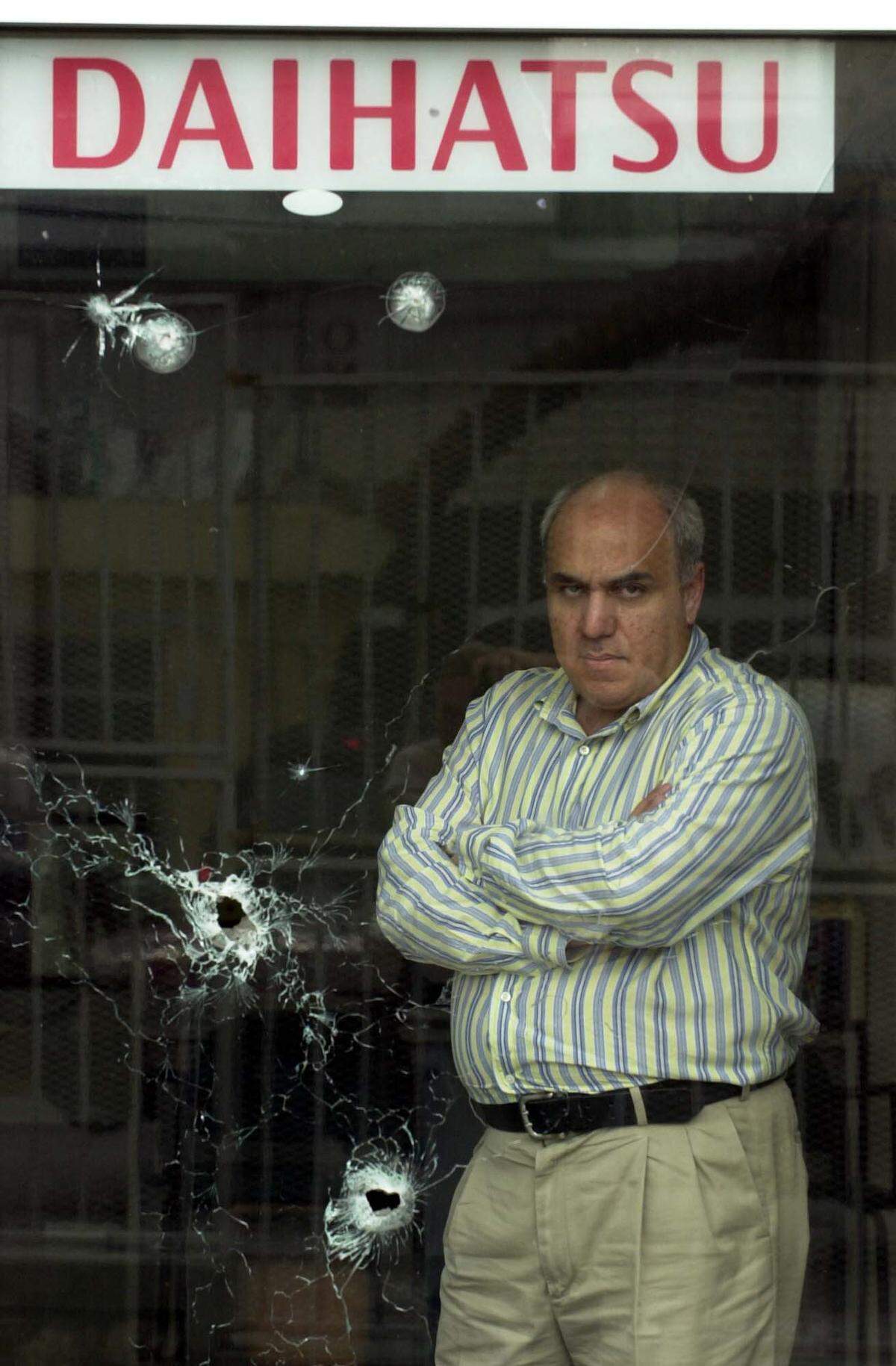
After his wife was kidnapped in 2003, he moved his family to Miami, where he sometimes resided. In 2021, Boulos’ dealership was burned to the ground by members of Viv Ansanm gang, and he is often targeted by its leaders.
Boulos’ arrest by U.S. immigration and Customs Enforcement has rattled Haitian elites, given not just his stature but his reputation as a mover and shaker in Haiti’s foreign and domestic politics — clout that came from his access to top decision makers in the U.S. and the United Nations, his lucrative government contracts and tens of millions worth of investments. in the country.
Born in New York, Boulos attended medical school in Haiti and later earned a master’s degree in public health from Tulane University in New Orleans. However, it is his dealings in business and politics that gave him such notoriety in Haiti, capped by trying to make a bid for the presidency. Because candidates cannot hold citizenship in two countries, he renounced his U.S. citizenship. In 2021, he presented himself as a candidate in the country’s not-yet scheduled elections.
His presidential ambitions were described in a May 2021 filing by a lobbying firm he contracted for $10,000 a month, according to documents submitted under the U.S. Foreign Agents Registration.
“Dr. Reginald Boulos is considering running for the Presidency in the country of Haiti in November 2021,” the Denver-based firm said, describing the businessman as “a respected medical doctor, businessperson and creator of the MTV Ayiti political party.”
“Dr. Boulos is interested in building constructive partnerships with leaders in the United States government and the Haitian-American diaspora community,” the firm added. “Dr. Boulos’ has a vision for rebuilding Haiti the way that he both built a successful medical practice and multiple, successful businesses.”
At the time, Moïse was the target of multiple protests and accusations of trying to be a dictator. Two months later, he was assassinated in his bedroom in the hills above Port-au-Prince, sending Haiti into a spiraling chaos that continues until today. Since then, the country has been in a tailspin with violence escalating by armed gangs, who are accused of being supported by members of the country’s elite and politicians.
The Trump administration has been targeting illegal immigration aggressively since January. Haitians who entered the U.S. under the Biden-era humanitarian parole program and others who have Temporary Protected Status are now being targeted for deportations.
The administration has reversed its position that Haiti is a dangerous place, saying conditions have improved. However, the United Nations and others have said conditions have gotten worse due to the onslaught of armed gangs that are expanding beyond Port-au-Prince, driving displacement and hunger. Gangs have also been targeting members of the country’s elite through kidnappings and ransom demands, the burning of their businesses in recent months.
This story was originally published July 21, 2025 at 1:38 PM.