Colombian President Gustavo Petro arrives in Haiti, second visit this year
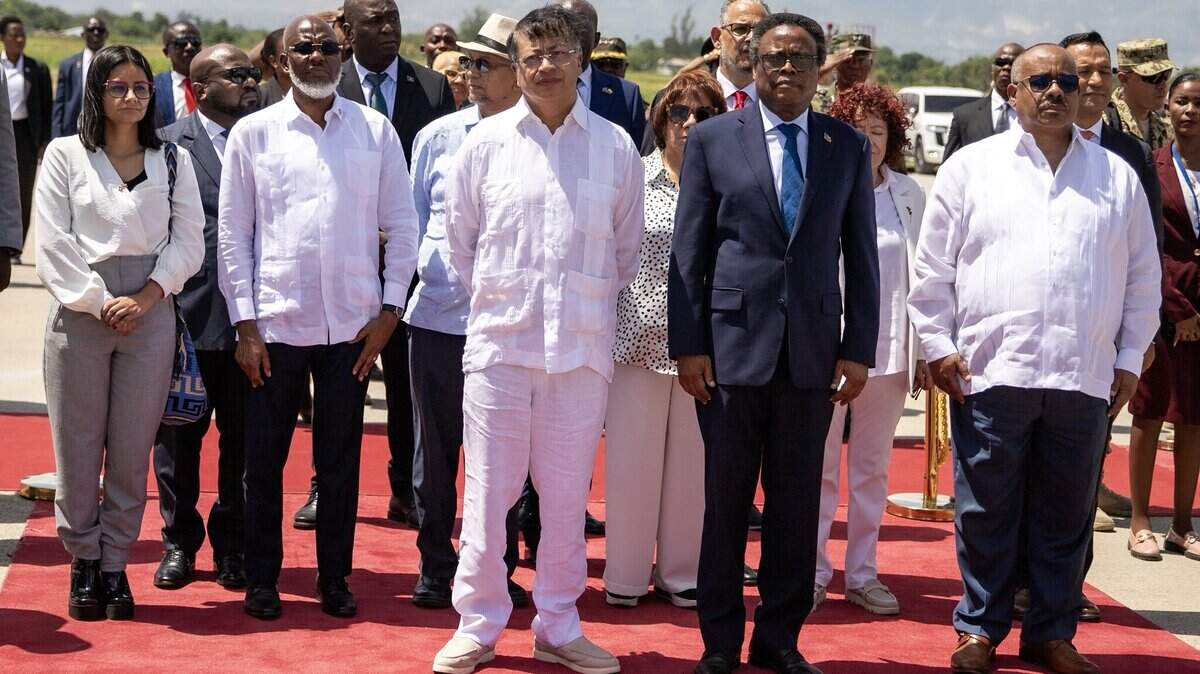
Months after making his first visit to Haiti, Colombian President Gustavo Petro returned Friday — this time landing in a gang-ridden Port-au-Prince accompanied by two of his top ministers in an aircraft stamped Republic of Colombia.
Petro was received by members of Haiti’s embattled Transitional Presidential Council upon his arrival at the Toussaint Louverture International Airport, and later joined them in a cabinet meeting, forgoing a scheduled press conference. He was later joined by council members at a ceremony officially welcoming the opening of Colombia’s new embassy. The visit comes ahead of Colombia’s July 20th Independence Day — a milestone that was facilitated by Haiti, which provided arms and soldiers to help in its liberation and that of Venezuela, Ecuador and Panama from under Spanish rule.
That historical significance is driving a strategic shift by Petro, who amid mounting domestic challenges at home and frayed relations with the Trump administration, is pushing renewed engagement and rapprochement with Haiti, where 17 Colombian mercenaries remain jailed in the 2021 assassination of Haitian President Jovenel Moïse. The still unsolved killing plunged Haiti into a political vacuum and exacerbated its crisis with deadly criminal gangs that have forced more than 1.3 million people to flee their homes.
On Friday, the killing and ensuring chaos continued to fuel tensions as Petro and his entourage moved through the streets under heavy protection.
“These guys are the ones who killed Jovenel,” a Haitian passerby told Bon Nouvel 9’s cameras, mistaking Petro’s heavily armed Colombian security detail at the entrance of the Karibe hotel for mercenaries. “These guys came to make money in the country...We don’t need these guys in the country.”
Frustrated by gangs’ take over of most of Port-au-Prince and their control of all of the major roads leading in and out of the capital, the man pleaded, “give me a road; once you open up a road — there will be a reason to hope.”
With less than 10 months remaining in his presidential term, Petro, a former guerrilla member and leftist president is grappling with allegations of drug addiction by an ex-minister, growing rifts within in his cabinet and the expansion of illegal arms groups throughout the country. Meanwhile, he’s been accused of undermining relations with Colombia’s biggest security and trading partner, the United States, in his frequent clashes with President Trump and Secretary of State Marco Rubio on their foreign policy.
“Petro has burned his bridges in Washington and a trip to Haiti is not going to absolve his past indiscretions nor his eagerness to constantly lambaste the U.S. and its leaders at every turn,” said Eddy Acevedo, a national security and foreign policy expert in Washington, D.C.
Petro’s visit was announced on Thursday by Prime Minister Alix Didier Fils-Aimé, who began the week preparing for a visit by Colombia’s defense minister. That visit was to focus on the military training of about 1,000 Haitians in Colombia and an agreement between the two nations over arms purchases, several sources told the Miami Herald.
But quickly it turned into an official visit by Petro, who wanted to visit Port-au-Prince as far back as last August but nixed the trip after then-Prime Minister Garry Conille informed him Haiti’s stretched police forces could not accommodate his large delegation while also trying to battle gangs.
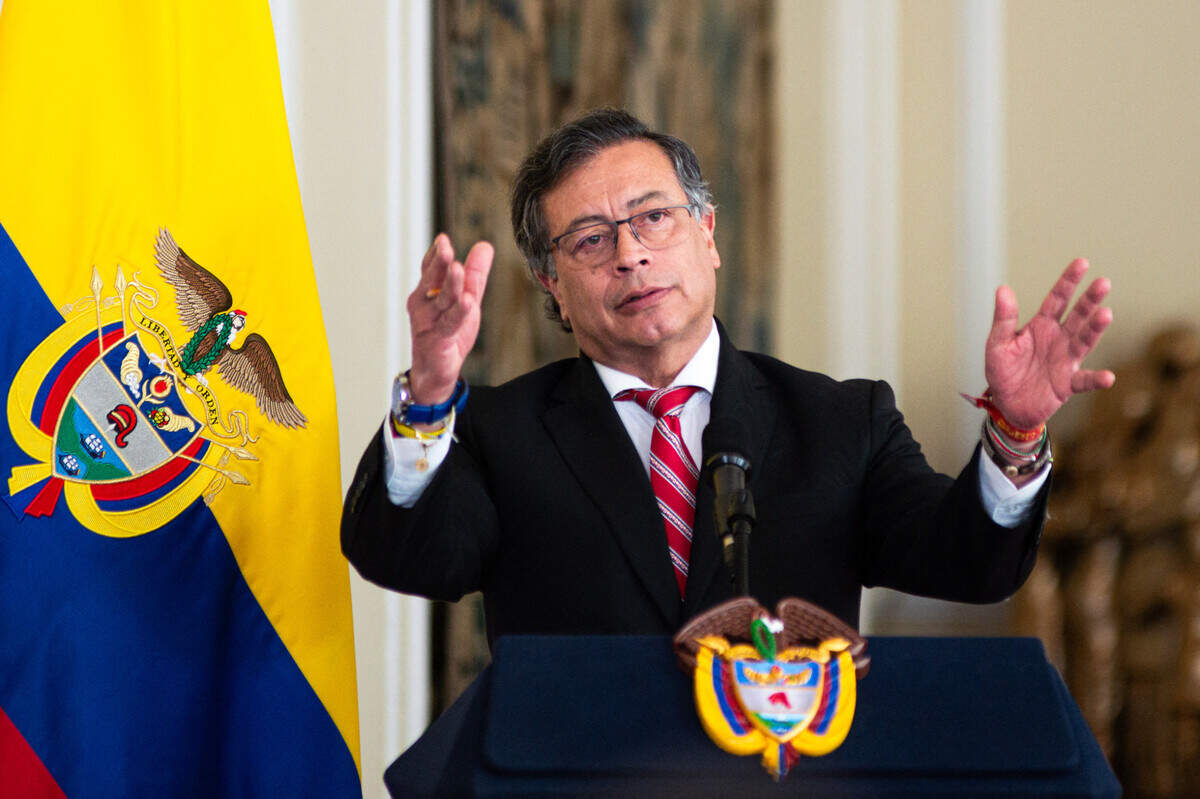
In January, Petro finally got his wish. But instead of flying into the capital, he flew to Jacmel, the southeastern Haitian port city that in 1806 and 1816 launched the freedom movements of Francisco de Miranda and Simón Bolívar as they sough to liberate South America from Spanish rule. During the historic visit the two nations agreed on several areas of cooperation that sources say are supposed to be ironed out during the visit, which includes Petro spending the night in the country at an area hotel.
For Petro, who decided at the last minute to make the trip with his defense and foreign ministers, Haiti has become both a symbolic and strategic opportunity that analysts say, he believes can elevate his international stature as a champion of social justice and potentially improve his strained relationship with Washington.
Since taking office earlier this year, Rubio has repeatedly called for greater regional involvement in Haiti’s ongoing multi-dimensional and complex crises. While he’s steered clear of publicly naming countries, Rubio’s remarks have been interpreted by analysts as a call to Latin American nations, most of which, apart from El Salvador and Guatemala, have yet to contribute troops or funding to the multinational security force supporting Haiti’s embattled police force in its fight against gangs.
Petro is the second head of state to visit Haiti since the transitional government was put in place over a year ago to help lead the country back to stability and democratic order through elections. In September, Kenyan President William Ruto became the first foreign president to visit, stopping in Port-au-Prince while en route to the United Nations General Assembly in New York to assess his troops leading the U.N.-backed multinational security mission.
Unlike Ruto’s visit, there were no public pronouncements on Friday or even an anticipated overnight stay by Petro. The Colombian leader left for the airport after 8 p.m. without as much as a press conference.
This story was originally published July 18, 2025 at 3:45 PM.