Rubio: U.S. will not punish humanitarian-aid groups in Haiti forced to pay gang tolls
The Trump administration has no intention of punishing humanitarian-aid groups that are forced to pay gang-enforced tolls in order to provide aid to Haitians who have been victimized by the ongoing violence, Secretary of State Marco Rubio told Congress on Wednesday.
Earlier this month, the Trump administration designated Haiti’s major gangs as foreign and global terrorists, and warned that anyone providing “material support” risks being penalized and criminally charged. The warning has created and fear in Haiti, where little gets through without going through armed gangs, now in control of up to 90% of metropolitan Port-au-Prince and parts of the Artibonite region and Central Plateau.
“We are concerned that humanitarian groups, in order to distribute humanitarian aid, are often charged, for lack of a better term, ‘tolls.’ You gotta pay the money to let them go,” Rubio said during his testimony before the House Foreign Affairs Committee on Wednesday in response to a question about Haiti. “Will that make them subject to sanctions because they paid somebody money to let them go through? That is not the intent of these sanctions and we don’t intend to punish them.”
READ ME: Haiti gang leader ‘Yonyon’ found guilty of kidnapping 16 U.S. missionaries
Rubio’s first appearance before the committee came a day after he met with senators. In both hearings, he was lauded by Republicans but heavily criticized by Democrats over the administration’s cuts to foreign aid and his revoking of student visas.
Haiti came up only once on Wednesday, and the questions were posed by South Florida U.S. Rep. Sheila Cherfilus-McCormick. After the powerful Viv Ansanm gang coalition and the allied Gran Grif gang in the Artibonite region were designated as as Foreign Terrorist Organizations and Specially Designated Global Terrorists, Cherfilus-McCormick and New York U.S. Rep. Gregory Meeks, the committee’s ranking member, told Rubio they are worried the designation will worsen the humanitarian situation in Haiti, where reports of sexual violence against children are seeing a dramatic rise.
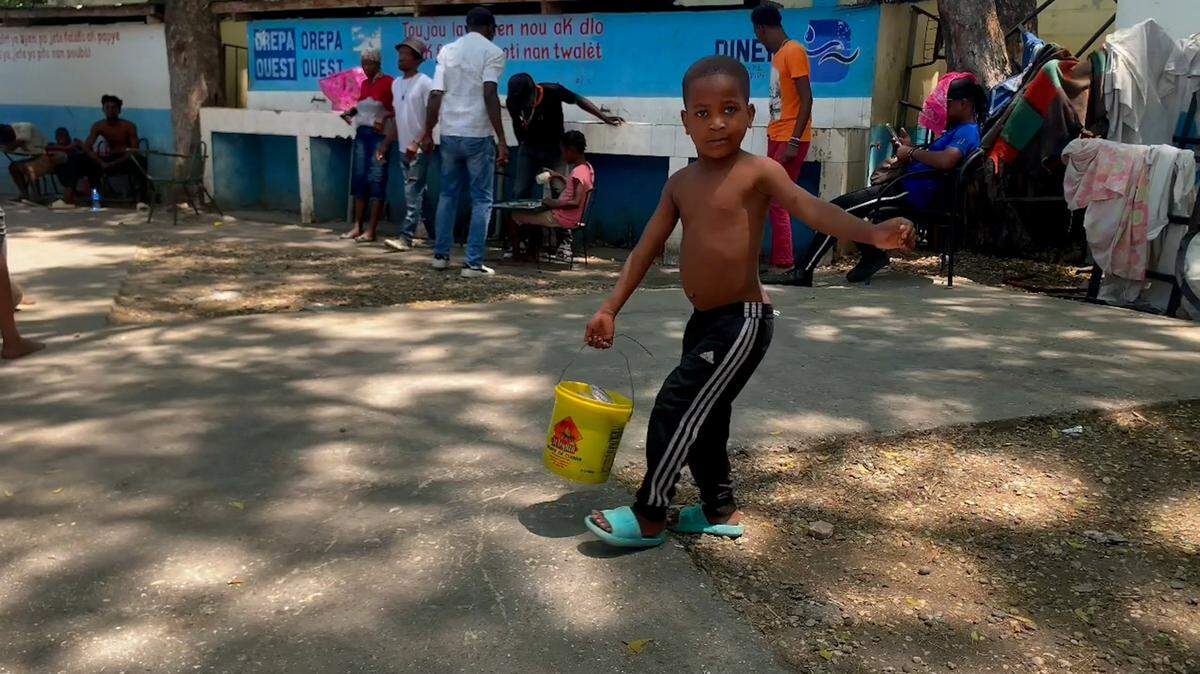
In addition to displacing more than 1 million Haitians, more than half of whom are children, gang violence has resulted in half of the population, 5.7 million people, to go hungry. It has also left Haitians without access to healthcare and led to oil companies last week warning of a collapse of the economy after gangs doubled their extortion fees to use the roads they control.
“We think that designating them was important,” Rubio said, stressing that there are individuals, including those living in Florida, “who are in cahoots with these gangs.”
Rubio said he feels “passionately about” the situation in Haiti, and used Cherfilus-McCormick’s questions as an opportunity to offer the first public insight into his thinking on what the U.S. policy should be, including changing the international armed mission’s current mandate, which requires them to be defensive in posture and limits the abilities of its 1,000 security personnel in taking on the armed gangs.
The gang members “have to be eliminated, put in jail... you’ve got to get rid of them. As long as they’re around, you won’t be able to have stability in the country,” he said. The Kenya force, he added, has “complaints about some of the equipment they’ve been provided. So it’s a combination of not having a force posture, not having the legal authority, and not having the appropriate equipment they claim to be able to conduct some of these missions.”
Rubio also doubled down on the idea that the Organization of American States should take over leadership of effort against the gangs from Kenya’s Multinational Security Support mission.
“We’re going to challenge the OAS to build a mission with regional partners to confront this,” he said. “We’re grateful to the Kenyans, but this is a regional problem, and it should have a regional solution.”
Rubio’s proposition, which he first made public on Tuesday during his appearance before the Senate Foreign Relations Committee, comes with its own sets of challenges. They include whether the OAS charter would allow for such an involvement, whether its members would deploy forces and who would pay for the effort. The Trump administration has made it clear that it can’t continue to carry the lion’s share of the cost of Haiti’s anti-gang efforts.
Rubio’s comments come amid ongoing cuts to foreign aid by the administration and a continued push by some Republican lawmakers for Kenya to focus on fighting terrorists in Africa, and not in Haiti.
Rubio defended himself against accusations by Democrats that he has betrayed the positions on foreign aid that he once held as a senator who once spoke of the importance of U.S. soft power and humanitarian assistance.
It remains unclear where any future funding for the Kenya mission will come from. After Republicans in Congress opposed paying for the Kenya force, the Biden administration used money from the Pentagon and re-directed other funding. Rubio did not provide any specifics on the mission, which is asking for more and better equipment and waiting to see if the U.S. will extend the contract of its base of operations in Port-au-Prince beyond September, when it expires.
“We’re going to continue to be supportive of that mission for two reasons,” Rubio said. “It’s the only mission, and number two, because of the Kenyans; they’ve been very brave.... And number three, because who’s going to join a future mission if the previous mission was abandoned? But we don’t believe the [Kenya-led] mission is going to solve this problem. It could be part of the answer, but it won’t alone be the answer.”
Haiti poses a fundamental challenge in that “none of our existing international mechanisms are built” to tackle the problem of a country controlled by organized crime and threatened by “a coalition of criminal enterprises,” he said.
“It’s basically a very different mission set,” he said. “We’re undertaking, right now, a substantial review... of what options exist to tackle a country that’s being taken over by a mafia, for lack of a better term.”
Haiti’s gang members, whom he estimated to be as many as 45,000, “don’t care about governing the country. They just want to control territory.
“So if there’s no government, it’s like allowing the mafia to take over the five boroughs of New York,” Rubio said.
This story was originally published May 21, 2025 at 3:35 PM.