In midst of tragedy, Dominican Republic takes tougher stand on Haitian migration
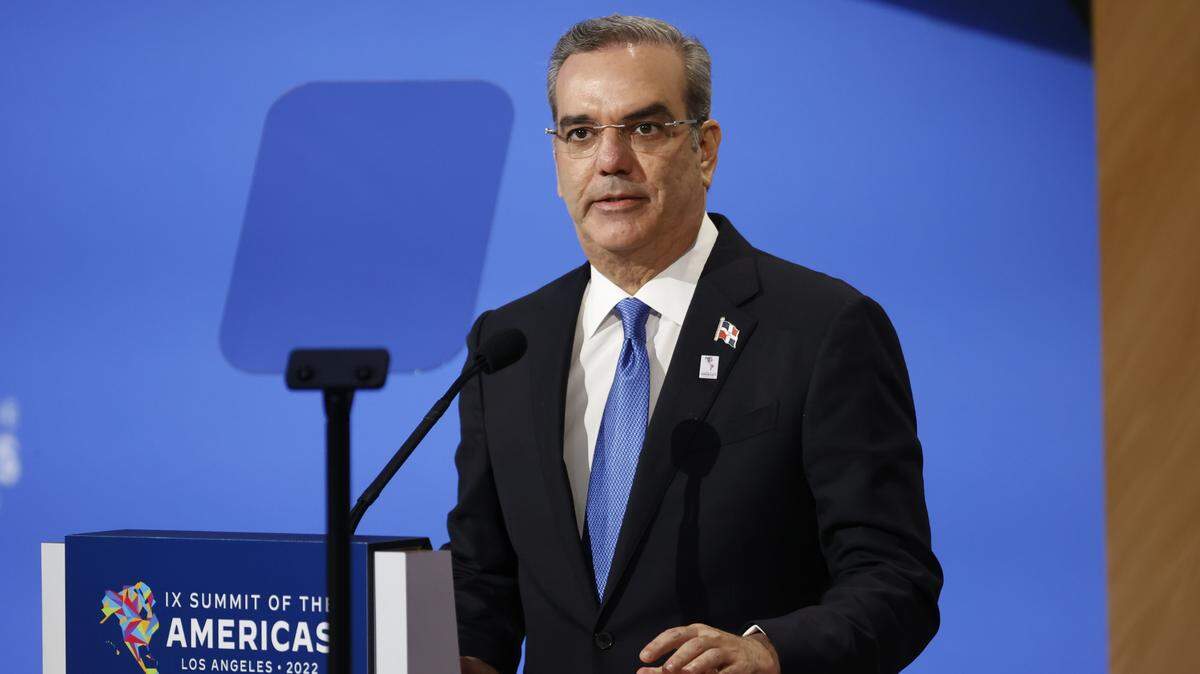
As the Trump administration makes it harder for Haitians to leave their country or remain in the United States, the Dominican Republic is announcing its own tougher immigration directives toward Haitians to discourage them from going over to the next-door neighbor that shares the island of Hispaniola.
Dominican President Luis Abinader has announced 15 measures he says are aimed at protecting his nation while also decreasing the need for Haitian labor in his country. Abinader, who announced the measures before the country was plunged into a frantic search for survivors Tuesday after the roof of a nightclub collapsed and killed at least 66 people, said the measures were “firm” and for some would be “painful.”
“The violence that is destroying Haiti will not cross into the Dominican Republic,” he said during a national address on Sunday.
Abinader has called for the construction an additional eight miles of a border wall between his country and Haiti to be accelerated. The wall’s construction began in 2022, and 34 miles have already been built.
“This measure will strengthen our response capacity to threats that may infiltrate our territory,” he said.
Among the other measures: Haitians trying to flee the surge in gang violence at home and the worsening humanitarian crisis will face stepped up reinforcement of law enforcement when trying to cross the border into the Dominican Republic. An additional 1,500 border agents are being deployed to supplement the more than 9,000 already assigned, said the president, who has imposed an ongoing ban on flights between the two nations. Haitians already in the Dominican Republic will also face greater risk of deportation especially if they go to a hospital and cannot show a legal right to be in the country.
But it is not just Haitians who will face tougher scrutiny. The president is also seeking harsher penalties for government officials and others involved in the trafficking of undocumented migrants, as well as homeowners and others who rent their property to those without legal status to be in the country.
In announcing the measures, Abinader highlighted the various crises engulfing Haiti. In recent weeks, armed groups have escalated their attacks and more territory has fallen into the hands of a powerful gang coalition. The international community, Abinader said, has abandoned Haiti and its “irresponsible attitude... has left Haiti to its own fate.”
“None of these crises were caused by us, but they all have consequences that affect us,” he said.
The crackdown comes amid increased anti-Haitian tensions in the Dominican Republic, where nationalist groups have been leading anti-Haitian protests. Protesters have called for the expulsion of Haitian migrants during incidents that have turned violent. The Jesuit Migrant Service said there has been a resurgence in human rights violations against migrants and people of Haitian descent in the Dominican Republic.
Between February and March 2025, 13,115 migrants were repatriated to the northern border, between Dajabón and Ouanaminthe, the group said in a report.
Abinader’s tough immigration stance comes as the Trump administration seeks to end temporary legal protections for Haitians and other migrants in the United States.
On Tuesday, as rescue crews searched for survivors in the rubble of the popular Jet Set nightclub in Santo Domingo after its roof collapsed the night before, the U.S. Department of Homeland Security told migrants who entered the U.S. using an online scheduling application known as CBP One that their legal protection was ending and they will need to leave the U.S.
More than 900,000 people entered the U.S. at the southern border with Mexico using the CBP One app after it was introduced in January 2023 by the Biden administration to schedule appointments. After being paroled into the U.S., individuals were allowed to apply for work authorization and generally given two years to stay legally.
Recipients were notified of their revoked status but it remained unclear how many people are affected by the decision.
This story was originally published April 8, 2025 at 7:36 PM.