As Haiti teeters on brink of a violent collapse, group warns against elections this year
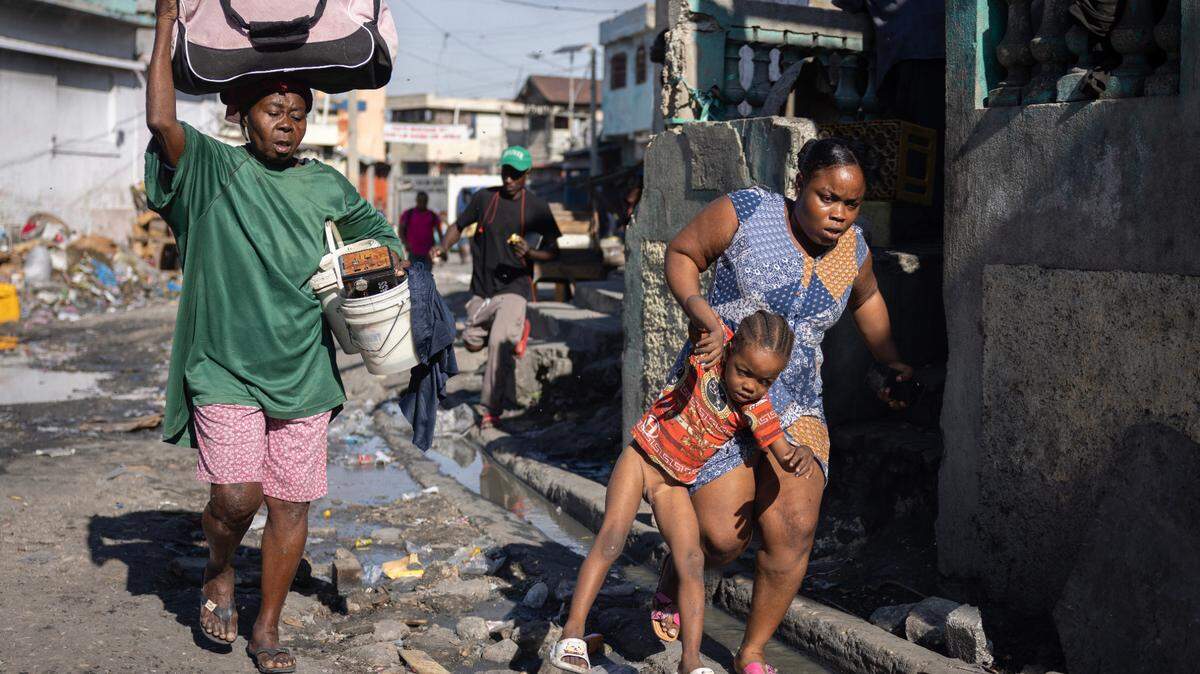
Any elections held under Haiti’s current warlike conditions, where armed gangs are carrying out mass killings and members of the ruling executive are more focused on squabbling than on restoring security, risks plunging the already volatile nation deeper into a crisis, a global crisis organization warns.
Even changing the current political system in such a chaotic environment through a constitutional referendum being planned for May is not advisable, says the non-governmental International Crisis Group, which works to promote peace around the world. The group last month listed Haiti’s criminal gang problem as one of 10 conflicts in the world to watch in 2025.
“Holding elections is without doubt a vital step toward restoring credible, legitimate government in Haiti,” the group says. “But moving ahead before the right conditions are in place risks empowering criminal groups and setting in motion a post-electoral crisis.”
A year after a harrowing security crisis led to the forced resignation of Prime Minister Ariel Henry and foreign governments, including the 15-member Caribbean Community regional bloc known as CARICOM, tried to help Haiti’s disparate leaders create a unity government, the country remains more in shambles than ever.
Despite efforts on the ground by troops from Kenya and the Caribbean region to help the Haitian police loosen the stronghold of armed groups, the hope that a new transitional government would restore peace and democratic institutions remains unfulfilled. Gangs now control up to 90% of the capital and the Kenya-led Multinational Security Support mission, which began deploying in June, remains underfunded, ill-equipped and understaffed.
Now as leaders of CARICOM prepare to meet this week in Barbados, the crisis group has issued an ominous warning.
“Foreign powers should not press Haiti’s transitional government to conduct elections unless a minimum of security for candidates, voters and the process can be guaranteed,” the group says. The ongoing crisis in Haiti is among the topics CARICOM heads of governments are planning to discuss both among themselves and with United Nations Secretary-General António Guterres, who will be in attendance.
Last year, as leaders met in Guyana, they pressured Henry to agree to an election timetable. But as Henry visited Nairobi to negotiate the arrival of the multinational force, Haiti’s most powerful gangs launched coordinated attacks across the capital. In attempting to topple Henry’s government, gangs shuttered the airport and seaport, burned police stations and freed over 4,000 prisoners.
Unable to fly back into Haiti, Henry was forced by the United States and CARICOM to resign.
Now the ruling nine-member Transitional Presidential Council, which has been plagued by a corruption scandal, infighting and the worsening violence has said it plans to hold elections by Nov. 15 and the constitutional referendum in May.
“With almost one in ten people living in Haiti displaced, and almost half the population facing acute food insecurity, humanitarian conditions are desperate,” the crisis group report says. “In such circumstances, the transitional administration’s determination to hold a vote on a new constitution and a new government by the end of 2025 seems unrealistic.”
In December, the transitional council finally completed the composition of the electoral entity responsible for organizing the vote.
But even as foreign governments praised the council’s completion, a series of crises raised doubts about whether polling could occur in time for the council to meet its Feb. 7, 2026, deadline to put a new president in office.
In early December, a gang leader brutally murdered over 200 people, most of them elderly, in the Wharf Jeremie section of Cite Soleil in the capital. That same weekend in the Artibonite region, self-defense groups and gang members carried out attacks against farmers in Petite-Rivière , a rural town. The killings occurred after Haitian police and the Kenya-led security force had moved in to stem a tide of gang violence.
The rampage didn’t stop there. Gangs later burned and pillaged a critical care hospital in Port-au-Prince, and a week later, on Christmas eve, they opened fire on journalists attending the reopening of a section of the the main public hospital, which last week again came under attack.
The lack of progress against the violence, coupled with the firing of one prime minister and the quick hiring of another, and the handling of corruption allegations against three of the council’s seven voting members, led some of the political groups involved in the transition to call on CARICOM to help mediate the crisis.
But two months later, the political tensions and disenchantment with the ruling council persist. Some political groups are now seeking the overhaul of the presidential council as gangs continue to spread violence and mount an offensive in the mountains above Port-au-Prince in an attempt to take the capital by March 7.
“Early hopes that the transitional government would quickly tackle the country’s rampant insecurity have faded,” said Diego Da Rin, Haiti analyst for the Crisis Group. “Enmeshed in power struggles, they have failed to galvanize the fight against gangs, while donors have provided only limited funding to the Kenya-led security mission.”
While there have been some isolated achievements by police and the security mission, gangs still control much of the capital and essential roads to the rest of the country, the report notes. That has raised a key question: How can elections be held in areas where gangs exert territorial control?
“Staggering the voting schedule or placing polling stations outside gang-controlled territory could make balloting possible in some areas,” the report says, pointing out that Haiti also lacks an updated voter registry. “But the result would likely be very low turnout, possibly under the 20 percent witnessed in Haiti’s last polls in 2016. Gangs could also sow fear in places under their sway to ensure that their allies win positions of power.”
Instead of rushing toward elections this year, the Crisis Group is calling for Haiti’s beleaguered transitional government to “focus on the nuts and bolts of responsible governance.” That includes establishing an assembly where political groups represented on the presidential council can resolve their grievances without threatening to upend the government, and quickly appointing a new National Security Council. They should also provide the newly appointed secretary of state for public security with the support required to map a strategy for reducing violence anchored in achievable steps, the report says, adding that “the government should also show it is serious about fighting corruption by ensuring that its members are held accountable.”
Last month, amid tensions inside the Haiti National Police and the lack of progress against gangs, a former police chief and one-time soldier, Mario Andresol, was appointed to serve as secretary of state for public security. However, an effort by Prime Minister Alix Didier Fils-Aimé to broaden Andresol’s powers through an executive order was met with resistance after the document was leaked and some members of the presidential council refused to sign it.
Transition besieged by crisis
Almost from the onset, the transition has been plagued by tensions and attempted power grabs. But the most disruptive have been the allegations over bribery charges. In July, the then-head of a state-owned bank accused three council members of demanding the equivalent of $758,000 in bribes to let him remain in his post. Despite calls for their resignation from even the groups that nominated them, the council members have refused to step down, insisting on their innocence.
“The refusal of the three councilors accused in the National Credit Bank scandal to cooperate with the justice system is seriously tarnishing the entire council’s public standing,” the report’s author says, calling for the members to take decisive steps to regain the public trust and their own credibility. “Should the three councilors continue to hamper the investigation, steps should be taken to replace them.”
Last month, Guterres, the U.N. chief, issued his own a report on the situation in Haiti, telling the Security Council that the transition’s roadmap for installing an elected president by February 2026 was moving too slowly. He highlighted the friction among the warring politicians and the corruption allegations, as well as the firing of Prime Minister Garry Conille, the longtime U.N. civil servant who was often accused by the council of challenging its authority. Conille’s ouster triggered a fresh wave of deadly violence.
“With safe elections looking improbable in the near term, Haiti’s transitional authorities should get past their internal disputes to plot a realistic course to polls and constitutional reform,” said Renata Segura, Latin America and the Caribbean Program Director at the Crisis Group. “At the same time, they should work alongside foreign partners and the U.N. Security Council to explore how security assistance from abroad can be made more sustainable and effective.”
Despite the challenges, the Crisis Groups believe that all is not lost.
“Although far from perfect, the transitional administration has attempted to create a national unity government and managed to include most of the important political forces in Haiti, an achievement that remained elusive during almost three years of negotiations between former Prime Minister Henry and the opposition,” the report says. “Only a harrowing security crisis and a concerted international effort managed to break that deadlock and bring about the current set-up.”
Haitians and the international community should resist calls for an overhaul of the transitional council, the group says. Instead, leaders should focus their efforts on addressing the key issues impeding its effectiveness. They include avoiding political disputes about the distribution of power, which threaten the government’s legitimacy.
“International mediators... as well as local facilitators working behind the scenes should also step up and combine their efforts to repair the strained ties between various politicians and the sectors that appointed them,” the report recommends. “More concerted pressure from Haiti’s international partners to re-establish greater backing for the transitional government’s program would also help make these efforts more fruitful.”
The report notes that clear lines beween the responsibilities of the council and the prime minister’s office should be defined, and process for resolving disputes between them should be established.
“That said, no effort to strengthen the institutional workings of the transitional government is likely to succeed in creating stability as long as Haiti continues to be prey to politicians’ personal interests,” the report says. “At a time when the country teeters at the edge of violent collapse, citizens are dismayed by the relentless squabbling over control of public posts and budgets that appears to absorb much of the time and energy of those in or close to power. Political leadership that responds to the gravity of the crisis will be essential to restoring faith in Haiti’s authorities.”