Canada rep to UN says situation in Haiti is ‘challenging,’ but donors remain committed
Haiti National Police and members of the Kenya-led multinational force were in the hills above Port-au-Prince battling armed gangs, when the billows of black smoke started rising from the city below.
Before everyone knew it, the country’s main public hospital, already shuttered because of gang attacks last year and repeatedly vandalized several times since, was ablaze, its operating rooms, ophthalmology and orthopedic departments inside a temporary structure up in flames.
The attack on State University Hospital of Haiti on Thursday marked the second time in two months that a key health institution in Haiti has come under assault by members of a powerful gang coalition. In December, gangs pillaged and set fire to the Bernard Mevs Hospital, one of the few critical-care facilities in the country. A week later, on Christmas Eve, they opened fire on journalists and police attending the reopening of the State University Hospital of Haiti, also known as the General Hospital. Two journalists and a police officer were killed and several journalists were severely injured.
No casualties were reported on Thursday. But the destruction of the only facility where the poor can get affordable dialysis treatment and the country’s future doctors train has served as yet another reminder of what donors and supporters of the international armed fight to restore security in Haiti acknowledge is “a very challenging” situation.
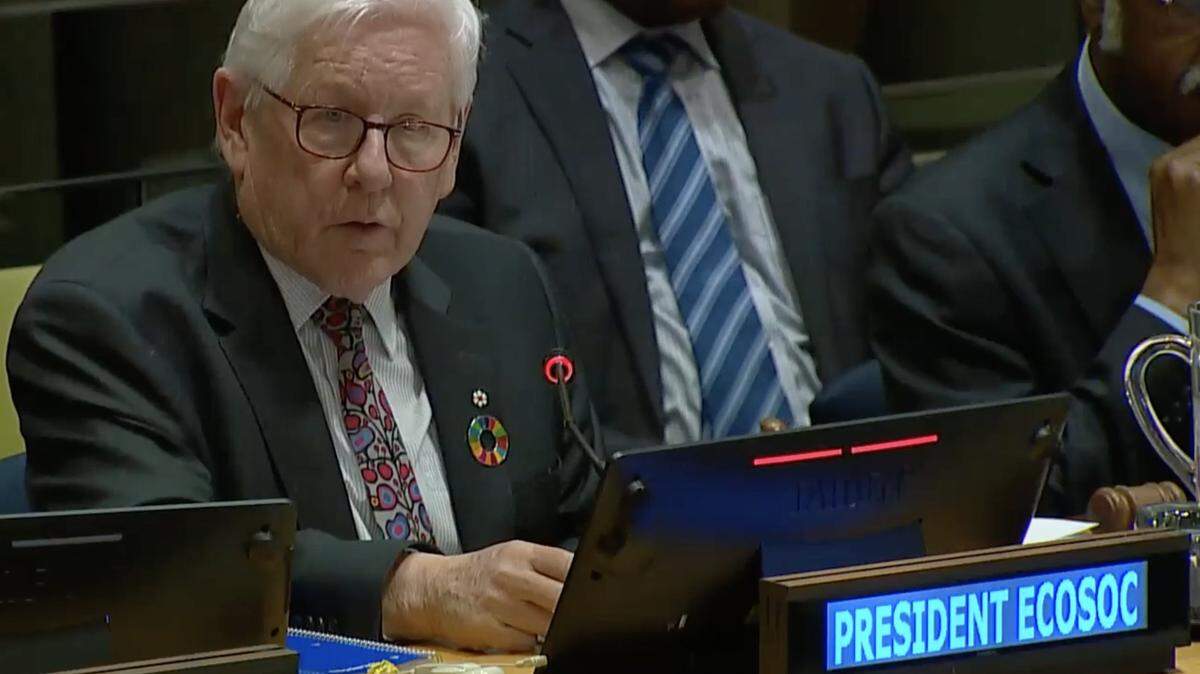
“We know how tough it is, and we know what the challenges are,” Canada’s ambassador to the United Nations, Robert Rae, told the Miami Herald hours before the attack.
Rae, head of the U.N.’s Economic and Social Council, also chairs the Ad Hoc Advisory Group on Haiti. Last week, as gangs were threatening another siege on Port-au-Prince in the mountains above the capital in the areas of Kenscoff and Furcy, Rae led a two-day visit to Washington.
Joined by others from the U.N., including the Secretary-General’s deputy representative in Port-au-Prince, Rae met with representatives of the World Bank and other international financial institutions, the Pan-American Health Organization, the Organization of American States, the Trump administration and representatives of think tanks to discuss the ongoing humanitarian and security crisis in Haiti.
READ MORE: How Haiti gangs shattered peace in a mountainous region, exposed deadly police failings
On the agenda were the level of development assistance to Haiti, where more than 5,600 people were killed last year in gang-related violence and more than a million are now internally displaced; gangs’ continued hold on most of the capital and the future of the Kenya-led Multinational Security Support mission, known as the MSS.
“It was really a very practical and realistic conversation about where we are and what more we have to do,” Rae said. “We know that every element of what is needed, it needs more. We all understand that when we look at the situation.”
There is interest, he said, on the part of everyone to work together.
Since the beginning of the year, the Multinational Security Support mission has more than doubled in size. New contingents from Guatemala, El Salvador and Kenya, including an all-female SWAT team, have deployed to Port-au-Prince. Last week, the State Department’s Bureau of International Narcotics and Law Enforcement Affairs donated armored police vehicles, along with weapons, ammunition and other gear.
Despite briefly pausing programs in Haiti to comply with President Trump’s 90-day freeze on foreign aid, a spokesperson told the Herald that the bureau “supports Haiti’s security efforts.”
The agency, he said, secured $40.7 million in waivers to the foreign aid halt to immediately continue the most urgent foreign assistance including weapons, ammunition and delivery of equipment as well as logistical and medevac services.
“This funding means contractors will continue providing vital advisory support to the” Haiti National Police and the MSS, the spokesperson said.
U.S. funding critical
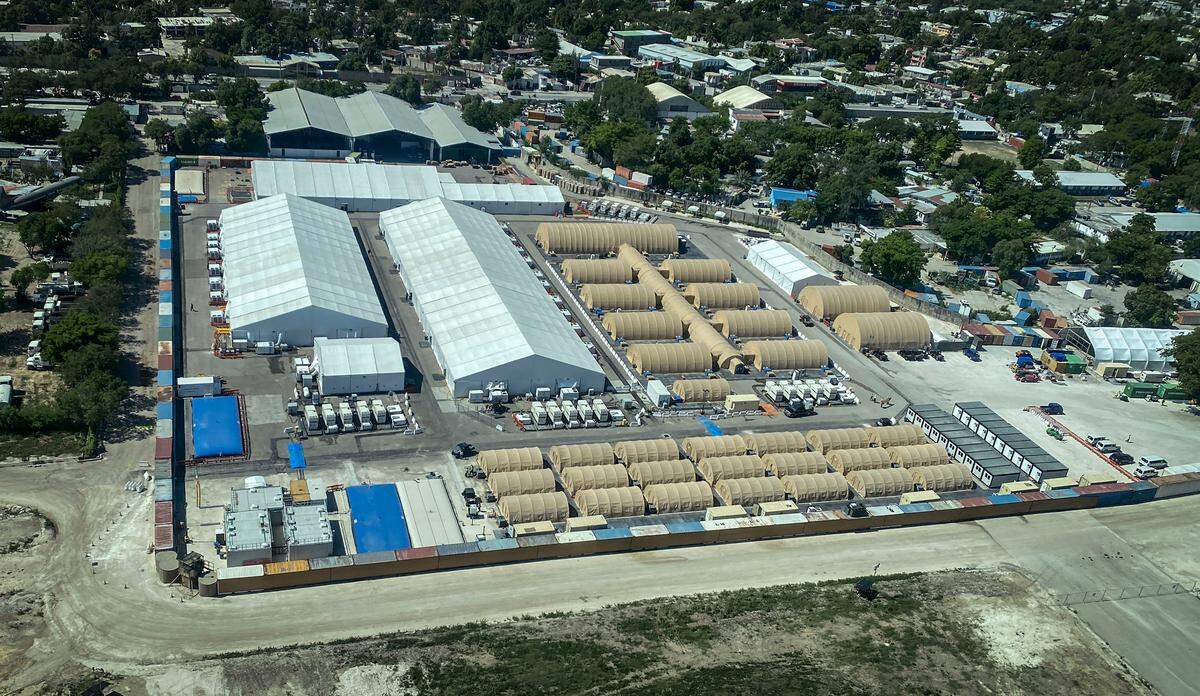
Under the Biden administration, the U.S. provided the lion’s share of the security mission’s funding, financing more than $600 million for the construction of the MSS base near the international airport. The U.S. also provided armored vehicles as well as ammunition, restocking them as the Haiti National Police pushed back an attempt by gangs in March to overthrow the government.
So far, the Trump administration has not said if it will continue the same level of financial support. But Secretary of State Marco Rubio, during a visit to the Dominican Republic earlier this month, said the U.S. is “committed to continue to work” with the mission.
Rae said he and others welcomed Rubio’s comments about U.S. commitment to Haiti.
“We will be actively talking with the administration about what more needs to be done, but also about the need for a strong strategy,” Rae said. “I think we’ve had very strong signals from the administration that they also want the Haiti mission to continue, and they want it to succeed and they want more countries supporting it.”
Canada, which has provided more than $60 million to the U.N.-controlled trust fund for the mission, “is going to do everything we can to make sure that the funding is there to allow the mission to succeed, and that it has the strategic assistance that’s going to make that possible,” said Rae.
Canada is currently the chair of the G7, the Group of Seven nations of industrialized democracies, which met in Munich over the weekend. On Saturday, Rubio joined other foreign ministers attending the security conference in Munich where the situation in Haiti, along with other conflicts around the world, was discussed, according to a statement issued by the U.S. Embassy in Italy.
The statement did not mention any new commitments, however. Despite that, Rae believes that there is enough money to sustain the mission ahead of its renewal in October by the U.N. Security Council, and says that “many governments are looking at the contributions for 2025.”
The Kenya-led mission works alongside Haiti’s National Police, but has struggled to battle the alarming violence. Late last year, the Security Council ordered a review of the mission after China and Russia, which have veto power, balked at the push by the Biden administration to have the MSS transformed into a formal U.N. peacekeeping operation to address funding and resource challenges.
Despite the reluctance, Rae said he believes the discussion on an official peacekeeping mission will continue.
“As long as there’s a crisis in Haiti, the discussion has to continue, because there needs to be an adequate response from the United Nations to what is clearly a threat to the peace and security in the region,” Rae said.
Elections timing
Donors and supporters are clear-eyed, the Canadian ambassador said, about what’s happening in Haiti, where opposition forces continue to call for the dismantling of the nine-member presidential council due to a bank bribery scandal involving three of its members.
The transition government, including the council, recently announced the appointment of several heads of government agencies. Earlier this month, Council President Leslie Voltaire told French journalists that plans are in the works for both general elections and a referendum on the constitution before the end of the year.
Asked if he thinks elections can take place in the current security environment, Rae said: “It’s not for me to say. It’s up to the government to decide when it thinks it could.... It’s their presidency, and it’s their election.”
Still, security remains a challenge even as the Kenya-led mission and police have had some success in quelling the violence in the Lower Artibonite region, just north of the capital, after deploying forces late last year following several brazen attacks.
Gangs in Haiti have torched homes and hospitals, forced the closure of schools, recruited and armed children as young as 8 years old into their ranks and sexually assaulted thousands while carrying out mass killings.
In Port-au-Prince, members of the powerful Viv Ansanm coalition, which attacked the General Hospital, continue to threaten a takeover of Pétion-Ville and other parts of the capital not under their control after moving into the hills of Kenscoff above the capital in late January. In carrying out their attack, gangs have killed at least 150 people, a local human rights group said, and displaced as many as 3,000 residents, mostly farmers.
On Sunday morning around 4 a.m., residents in the capital said they could hear the sounds of automatic gunfire coming from the mountains. For weeks now the security forces have been trying to push back gangs as they attempt to move closer to Pétion-Ville by advancing on Kenscoff and the nearby rural community of Furcy. Over the weekend, the gangs also set their sights on a key antenna installation in the area.
Over the weekend security forces suffered setbacks as specialized forces with the Haitian National Police, the MSS and the Haitian Army carried out operations to stop a gang takeover of the Kenscoff area. At least one Haitian soldier and two police officers were killed and several others injured. There have been an unknown number of gang casualties.
Haitian police lost two armored vehicles after they were seized by gangs that were trying to take control of the Bois d’Avril area of Kenscoff on Sunday. At least one of the vehicles fell in a ditch that had been dug by gang members. Videos posted online showed gang members celebrating and trying to hot-wire one of the armored vehicles. A security update said two specialized Haitian police officers were killed during the operations in the mountain.
Rae said the forthcoming review by the U.N. will provide greater clarity on what the strategy going forward should be, as well as how to strengthen the security response.
“I think we need some guidance from the peacekeeping expertise of the U.N. and others to give us a sense of what more needs to be done. But we take our job seriously in terms of ensuring the success of the mission,” he said.
As for the future of the mission, which comes up for renewal in October, Rae said he believes that the funding will be there.
“I think there is every expectation that the [Kenya-led mission] will continue and has the funding to continue,” he said. “I think we all understand, it’s not a short term operation. It’s one that’s going to take time, and we’ve got to look at it, from the perspective of providing whatever additional assistance is required to make the mission a success.”