As Congress term ends, time’s running out for Haiti garment industry duty-free access
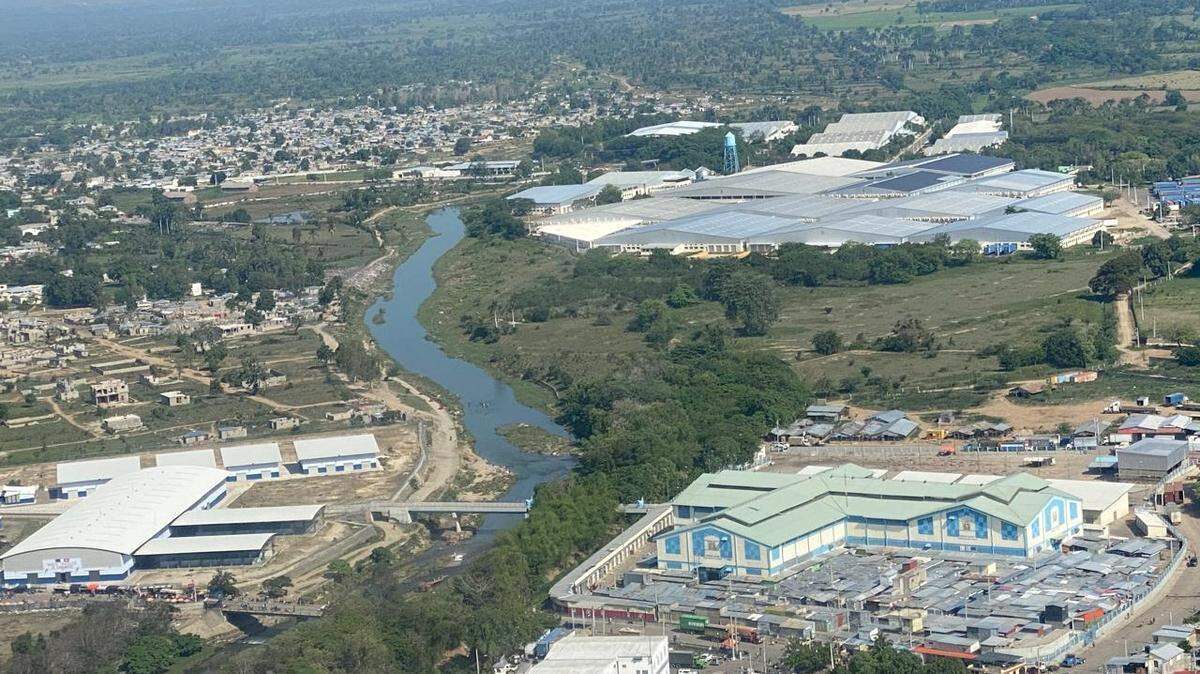
The CODEVI and Caracol industrial parks in northeast Haiti are closer to the Dominican Republic than they are to the gang violence engulfing Port-au-Prince, Haiti’s volatile capital.
But that 100-mile distance over brutal terrain hasn’t stopped either park from getting hit by the effects of the spiraling security crisis and ongoing political instability.
In the last three years, businesses inside the manufacturing parks have lost thousands of jobs as major U.S. buyers cut back on orders and sewing machines in Haiti’s once thriving apparel industry stand empty.
The sector, which employed 62,000 workers in December 2021, has seen the loss of more than 40,000 workers. It has less than 25,000 jobs presently, said Georges Sassine, the former president of the Association of Industries of Haiti, the country’s manufacturing association.
The reasons, say those in the industry, are not just the security crisis, which has led to fuel shortages, closed ports and gang-blocked road, but also uncertainty around Haiti’s competitive advantage, set to expire next September under the Haitian Hemispheric Opportunity through Partnership Encouragement, HOPE, Act, and its supplementary Haiti Economic Lift Program, HELP, Act.
Buyers are not confident that the U.S. Congress will be renewing the HOPE/HELP Act, which gives certain apparel duty-free access to the U.S. market, he said. “When you choose a factory, it’s a whole relationship. It take months and months to develop and the contracts are much longer so they can’t engage with something they know will end in September.”
For three years, Haiti’s textile industry has been trying to get Congress to renew the HOPE/HELP trade preferences. The preferences have the support of the Biden administration, but its extension has been caught up in disagreements between Democrats and Republicans as well as the Office of the United States Trade Representative.
With this session of Congress slated to end Jan. 3, supporters of the legislation, like former head of U.S. Agency for International Development Mark Green and U.S. Rep. Gregory Meeks, have been working to get swift authorization of the legislation. Green, who currently heads the Wilson Center in Washington, wrote in September that the Haitian Hemispheric Opportunity through Partnership Encouragement Act, HOPE, and its supplementary Haiti Economic Lift Program Act allowed Haiti to quadruple its apparel exports to the U.S. from $231 million in 2001 to $994 million in 2021.
In a comment on X this week, Meeks, a New York Democrat who has been leading the fight for passage in Congress, said authorization “is critical to Haiti’s stability and economy.”
“The situation in Haiti is dire, and every investment counts,” he said.
Earlier this week, supporters of the extension got a bit of a good news. Even though some members of Congress would like to see labor provisions, the Speaker of the House signed off on a clean extension of the bill to be included in the continuing resolution legislation. That would require legislation with no changes or updates. But on Friday, supporters got hit with another setback as Democrats and Republicans continued to disagree about whether Haiti’s re-authorization should be for five or 10 years, as Haitians would prefer. Meanwhile, other lawmakers are seeking to also add General Trade Preferences legislation to the rider, which would also include re-authorization of the African Growth and Opportunity Act trade preference program benefiting sub-Saharan Africa.
“If this isn’t done by next week, we are dead,” Sassine said of the extension’s inclusion, citing the coming end of the current congressional session.
Haiti’s security climate has not been kind to the garment sector. But even still, Sassine said, the industry needs a way to survive and to find “a way to get some of those jobs back,” which HOPE/HELP renewal allows.
“We have to have at least something to build on and HOPE/HELP is one of them,” he said.
Fernando Capellan, the owner of the CODEVI industrial park, said it’s not just factory jobs at stake in an area of the country where Haitians rely on remittances from abroad to survive. He believes that without the jobs, the country’s pension and health plans that employees contribute to will take a huge hit. Park of his park sits in Haiti, the other in the Dominican Republic.
Capellan said companies need to be able to plan for the long-term and that includes assurances that their products will enjoy duty free access to the U.S. market. His industrial park, which employs Haiti workers, has lost about 6,000 jobs since the crisis began.
He could see the loss of another 6,000 of his current 15,000 employees inside the park without the renewal. Capellan has been pushing for passage of the extension and at this point is ready to support the move for a clean bill with a 10-year extension.
If this doesn’t happen, the Dominican businessman says Haiti’s manufacturing sector will be faced with “imminent collapse,” as companies take their orders elsewhere, including China.
“This ecosystem built over the last 22 years will be lost,” he said.
The company has 11 tenants manufacturing for 15 different brands. The investment has led to education, childcare and the installation of 240 street lamps in Ouanaminthe. Elsewhere in neighborhoods closer to Caracol Industrial Park, residents have access to 24-hour electricity and also enjoy improvements in quality of life because of the factory jobs.
Still, Haiti’s security climate has not been kind to the garment sector.
The Caracol Industrial Park, for example, was once the beacon of the U.S. government’s commitment after the 2010 earthquake. commitment. But instead of the 60,000 jobs once envisioned, it is now down to 2,900 and just one major tenant, Korean textile company Sae-A Trading Co., which operates as S&H Global in Haiti, said Sassine.
The loss of companies and downsizing inside Caracol can be blamed on several factors. But the fuel shortages, political tensions with the neighboring Dominican Republic, which often leads to a blocked border, and the United States’ owned failed promises have not helped.
As the park was being built after the earthquake, promises were made to either build a new port in the region or rehabilitate the nearby Cap-Haitien seaport and add a flyover so containers carrying factory goods could move easily. Neither happened, which forced tenants to ship out of the Dominican Republic when possible.
Also affecting the country’s garment sector has been Haiti’s negative publicity, Sassine and others concede. U.S. buyers don’t care if gangs aren’t running amok in the north when they voice concerns about branding and having T-shirts made in Haiti. The branding image, however, issue isn’t isolated to T-shirts and other duty-free garments.
Earlier this year when armed gangs launched attacks in Port-au-Prince, forcing a near three months closure of the airport, Royal Caribbean Cruise Lines suspended its private destination on Haiti’s northern coast, Labadee, even though the area was still relatively safe and had no issues.
This story was originally published December 14, 2024 at 5:30 AM.