French medical charity resumes health services in Haiti amid ongoing gang violence
Access to medical services is being partially restored in some parts of Haiti’s gang-ridden capital, which is still reeling from the latest massacre after a gang leader over the weekend targeted and killed over 100 elderly people he blamed for his 6-year-old son’s illness and subsequent death.
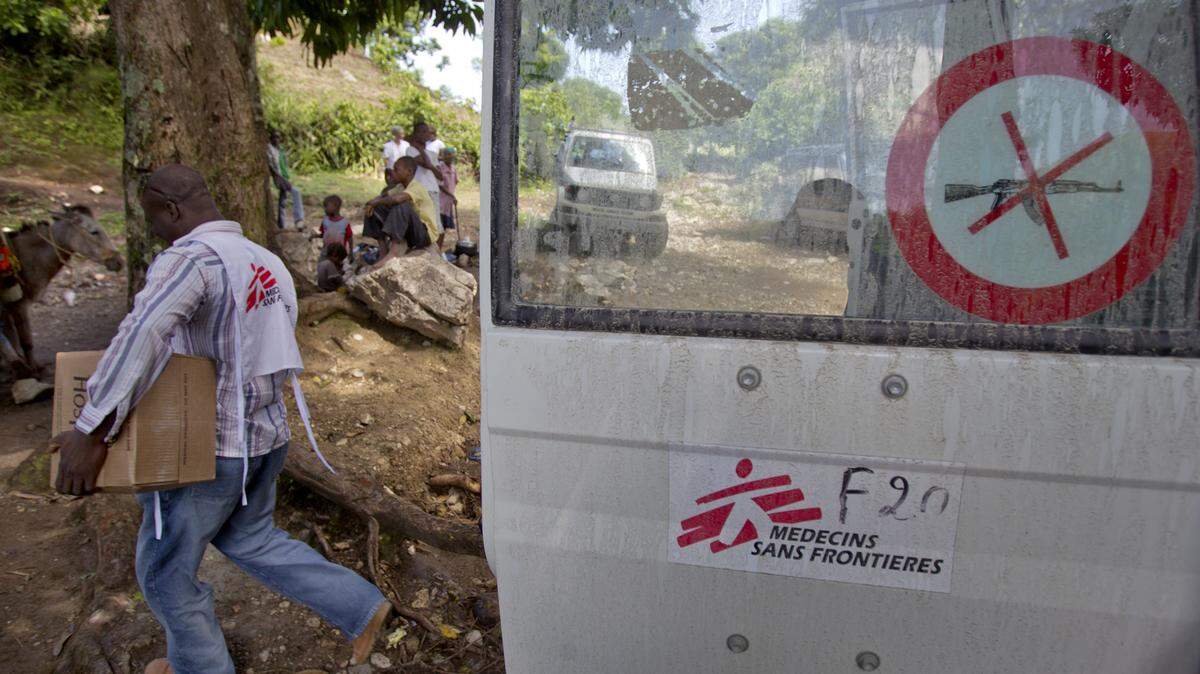
On Wednesday, the French medical charity Médecins Sans Frontières/Doctors Without Borders announced a partial resumption of medical activities in the Port-au-Prince metropolitan area after a 22-day suspension caused by repeated threats and violence against its staff and patients by members of the Haiti National Police. The charity had accused police officers of carrying out an extrajudicial killings of two patients with the help of a citizens’ vigilante group.
“These past three weeks have been especially painful,” said Jean-Marc Biquet, the charity’s head of mission in Haiti. “We had to suspend admissions of new patients, fully aware that many were unable to access the care they desperately needed. We are continuing our efforts to ensure that it is safe enough to fully resume our activities. Despite the commitments made by the authorities, the risks remain high, and our ability to continue our work in Haiti is uncertain as we move ahead. We call on all parties to respect our medical and humanitarian mission so that we can respond to medical needs to the full extent of our capacity.”
Haiti’s ongoing political instability and gang violence have greatly affected access to medical care. The country’s largest public hospital, the Hospital of the State University of Haiti remains closed despite declarations by the government and the Kenya-led Multinational Security Support mission that they had taken back control of the facility from armed gangs. Other medical centers and hospitals have also suspended operations, making affordable or free health care difficult to come by as hunger and malnutrition deepen and more than 700,000 people remain homeless.
Last week, the country’s new health minister announced the reopening of the outpatient clinic at the Isaïe Jeanty maternity hospital. The facility, in the capital’s Cité Soleil slum, was forced to close three months ago due to gang violence. A recently arrived non-governmental organization, ALIMA, which has been in the country for nine months, has supported the hospital. The organization has been providing essential health care, critical maternal and mental health care to internally displaced Haitians, as well as reproductive care to victims of gender-based violence.
Doctors Without Borders said that the decision to suspend its medical services, even temporarily, was extremely difficult because medical needs in the capital “are immense.”
“Thousands of people are seeking basic health care, while the health system is weakened by violence and mass displacement. The few remaining public and private facilities are overwhelmed by the growing needs, leaving many people without any option for care,” the mission said in a statement.
After initially getting no response from the police or Haitian government after the attacks on its patients, the charity said it has finally been able to establish a “constructive dialogue” with Haitian authorities.
“Nevertheless, the risk for our teams and patients remains high, particularly in ambulances. As a result, our transportation of patients remains suspended for now, and Turgeau Hospital remains closed because it can only operate when we can safely transfer patients to other facilities when needed,” the charity’s statement said.
The centers that will reopen are located in Tabarre, Carrefour, and Cité Soleil hospitals and the Pran Men’m clinic. The services include trauma mental health support, emergency and trauma surgery and rape treatment.