Police, residents kill dozens of Haitian gang members after attack in Pétion-Ville
More than two dozen Haiti gang members were killed by police and members of the public after residents in the country’s Pétion-Ville neighborhood woke up Tuesday to panic and armed bandits in their midst.
The attempted attack on the tony residential suburb of Port-au-Prince, which has tried to shield itself from the capital’s murderous gangs, unleashed a response from residents not seen since April of last year when people from the Canapé-Vert neighborhood of Port-au-Prince hunted down and set fire to suspected gang members trying to invade their community.
At least 28 suspected gang members have been killed, police spokesman Lionel Lazarre told the Miami Herald, as residents sheltered in place and all of Pétion-Ville remained on lockdown.
“For the moment, the police are continuing to carry out operations,” he said.
Lazarre said he did not know yet where the gang members, who for days had been threatening to invade the community, were from. They were intercepted in the neighborhoods of Canapé-Vert, Lalue and Bourdon while en route. Police and members of the Kenya-led multinational security mission had been on heightened alert now for days amid the threats and constant gun battles around Port-au-Prince.
At least 10 gang members were killed by police and “by the residents who gave themselves justice” after a truck the gang members were traveling in, came across a police checkpoint near the Oasis Hotel on Panamerican Avenue, he said. “There was an exchange of gunfire and the gang members fled,” Lazarre said.
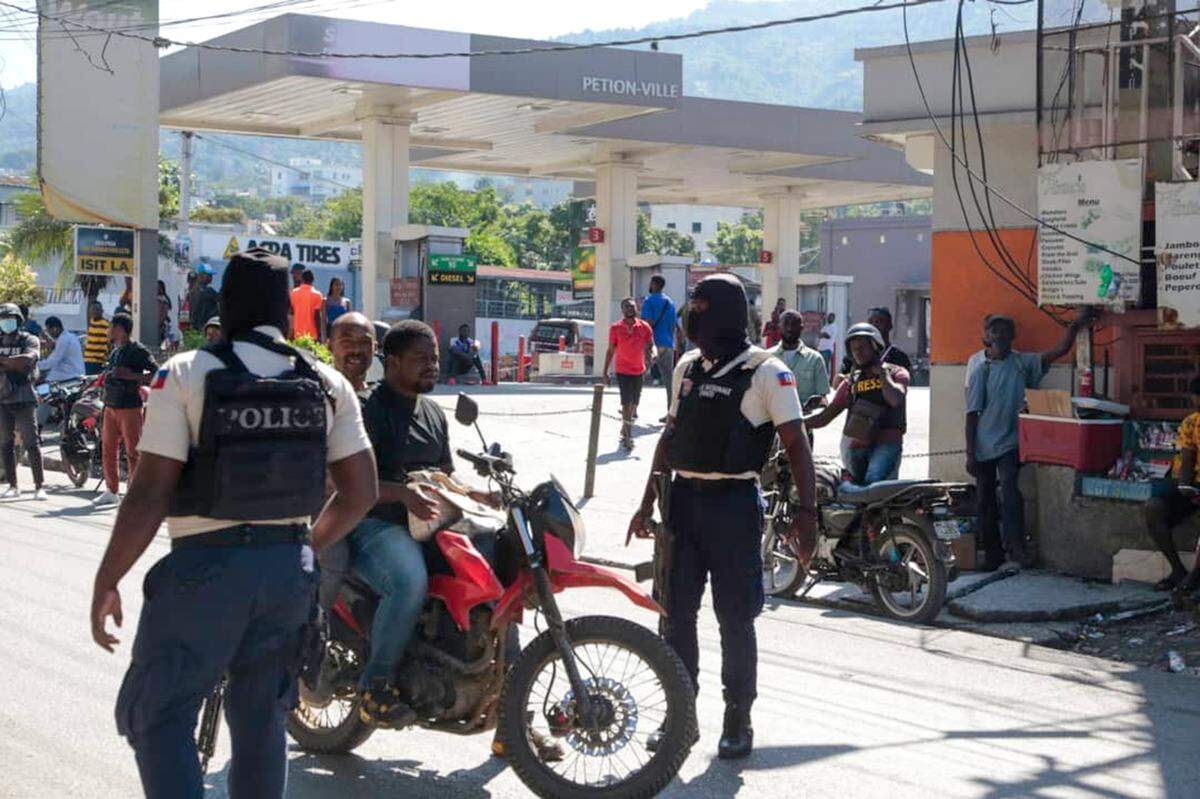
Corpses, cut apart with machetes and set on fire, were strewn on the road. In the Valley of Bourdon, not far from the residence of the U.S. ambassador to Haiti and the prime minister’s office, more charred bodies littered the roadway. At Ruelle Rivière, where a well-known clinic was set on fire, residents also lynched several suspected gang members in what is known in Haiti as “Bwa Kale,” the name given to the citizens’ self-defense brigade movement.
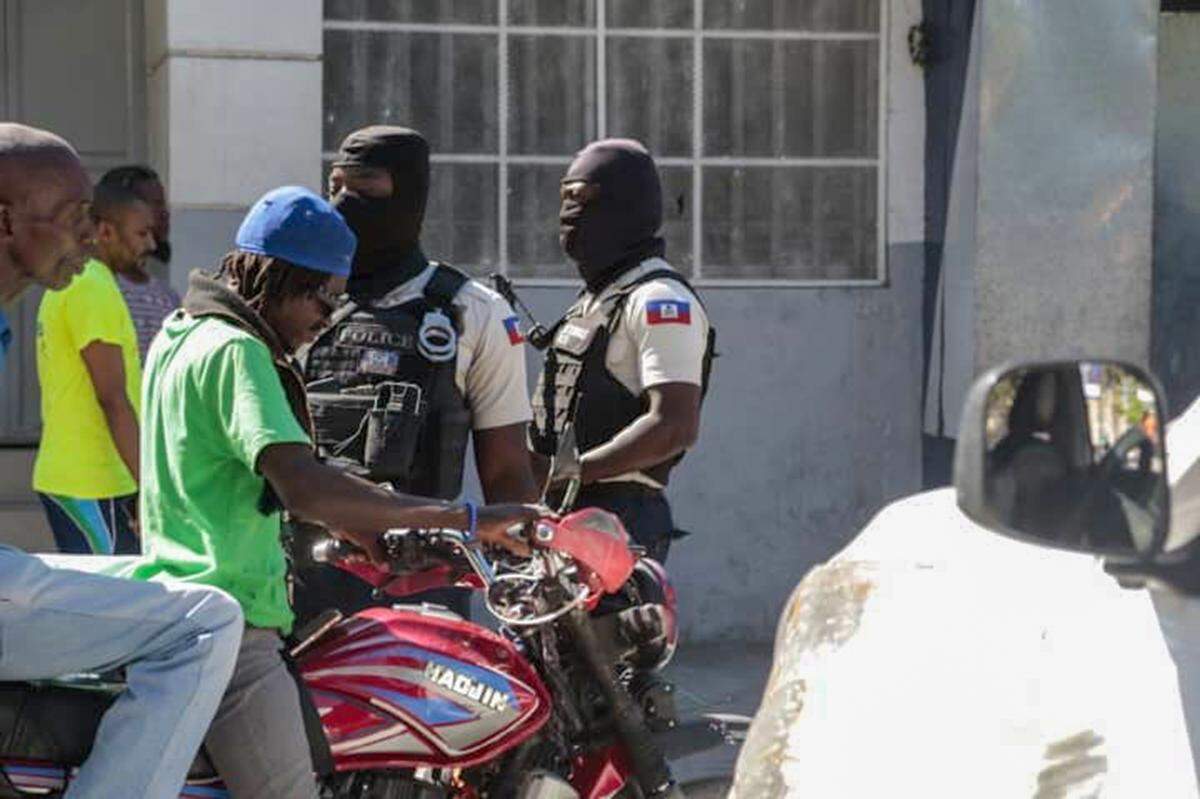
Throughout the areas under siege, residents blocked roads with vehicles and joined police in setting up checkpoints to keep out gang members.
United Nations Secretary-General António Guterres said Tuesday through his spokesman that he “is alarmed by the escalating violence.”
With gangs gaining ground in the capital, Guterres “reiterates his pressing call to ensure that the [Multinational Security Support] mission receives the financial and logistical support it needs to successfully implement its mandate,” spokesman Stéphane Dujarric said in a statement. “He also emphasizes the importance of urgent progress in the political transition.”
Lazarre said events began unfolding around 2 a.m. when police intercepted both the truck and a minibus headed up the hill into the neighborhood. Both vehicles were carrying members of armed groups, which after days of battling police and members of the multinational police mission in the Solino and Nazon neighborhoods of the capital had openly declared war and said Pétion-Ville and neighboring Delmas would be next.
In addition to the gang members who were in the truck, other armed gang members, he said, were killed after the minibus was stopped in the Poste-Marchand neighborhood of the capital.
READ MORE: French medical charity suspends services in Haiti; cites death threats, attacks by police
Hundreds of rounds of ammunition were seized from the gangs along with a drone and at least two AK47s automatic rifles, Lazarre said, adding that police were continuing to carry out operations in the Bourdon area of the capital “where a lot of these guys are hiding.”
The attempt by armed gangs to attack Pétion-Ville, home to luxury hotels and some of the country wealthiest people, came amid heightened tensions in Haiti.
On Tuesday afternoon, gang leader Jimmy Chérizier, who is known as “Barbecue” and serves as spokesman for the “Viv Ansanm” gang coalition, targeted hotels in the capital, saying that those harboring politicians will pay.
“A hotel that is hiding politicians, if we can’t take the hotel, if I can’t find the owner of the hotel then the employees of the hotel can pay,” he said in video clip shared on social media.
In separate video clips Chérizier also targeted the ruling Transitional Presidential Council, demanding its resignation.
“What are we waiting for from the CPT? We are waiting for its full resignation,” he said, referring to the council by its French acronym. “We are not into the CPT... In this battle, Viv Ansanm will use all of its force and everyone who stands in front of Viv Ansanm is in for trouble.”
The coalition, he has declared, “will use all of its means to achieve the departure” of the council.
The gang leader’s demands and targeting of Pétion-Ville come after a recent failed operation to capture one of the gang coalition’s leaders and a wave of attacks in metropolitan Port-au-Prince. Banks have been fired upon, private homes not far from the U.S. Embassy in Tabarre have been set ablaze, and fear of being killed is fueling a shortage in gasoline and diesel because truck drivers, afraid of being shot, refuse to deliver supplies.
“This is Ukraine, this is the front lines,” said a prominent businessman explaining the new level of fear gripping the capital. “People are afraid to get out of their house because they may get a bullet.”
On Monday, gang members disrupted a commemoration ceremony of the 221st anniversary of the Battle of Vertières in Tabarre. The ceremony, which commemorates the last battle Haiti fought against the French before winning its independence, was attended by council President Leslie Voltaire and the new prime minister, Alix Didier Fils Aimé, who along with new members of the government were inaugurating a new military base in the area.
Last week, the nine-member Transitional Presidential Council that leads Haiti, ousted the prime minister, Garry Conille, and installed Fils-Aimé., an entrepreneur as the new head of government.
At his swearing in ceremony, Fils-Aimé said restoring security and organizing elections are his top priorities. However, both are tall orders as armed gangs become more emboldened and more neighborhoods fall under their control despite the presence of the armed international police mission led by Kenya, with officers from the Bahamas, Jamaica and Belize.
Last week, after three U.S. airlines jets were hit by gang gunfire while either landing or leaving Port-au-Prince, the airport authority shut down the international and domestic airports in the capital and the Federal Aviation Administration issued a 30-day ban on all U.S. flights to Haiti. The FAA’s decision also temporarily affected U.N. humanitarian flights as well as a leased helicopter that Taiwan is funding for the Haiti National Police to transport cops to hot zones.
The attacks were accompanied by a surge in violence in the metropolitan Port-au-Prince area that in the past week that has displaced an additional 20,000 people, including more than 10,000 children, the United Nations has said. They join the more than 700,000 Haitians who have already had to flee their homes.
“Children in Haiti are once again bearing the brunt of relentless violence by armed groups that has upended their lives, casting a dark cloud over their futures,” Geeta Narayan, country director for the U.N.’s leading child welfare agency, UNICEF, said on Monday. “Children are not only enduring the trauma of violence in neighborhoods like Solino and Tabarre but also facing the compounded impacts of malnutrition, cholera outbreaks, severe psychological distress, and all too often, tragic loss of life.”
On Wednesday, the U.N. Security Council will discuss the situation in Haiti in a meeting called by Russia and China. The two countries, which have veto power in the council, remain opposed to a push by the U.S. to transform the multinational security mission into a formal U.N. peacekeeping operation. Such a move would guarantee funding for the under-resourced security effort, and also expand the number of foreign cops and military on the ground in Haiti to help in the fight against the gangs.
This story was originally published November 19, 2024 at 10:27 AM.