Trump’s rhetoric on race, immigrants ‘keeps us distracted,’ South Florida Black leaders say
Donald Trump’s comments on Kamala Harris’ race and his false statements about Haitian immigrants eating their neighbors’ pets in Springfield, Ohio are being used to avoid talking about the issues that are affecting voters, panelists said at an event to discuss combating anti-immigrant rhetoric at The African American Research Library and Cultural Center in Fort Lauderdale on Thursday night.
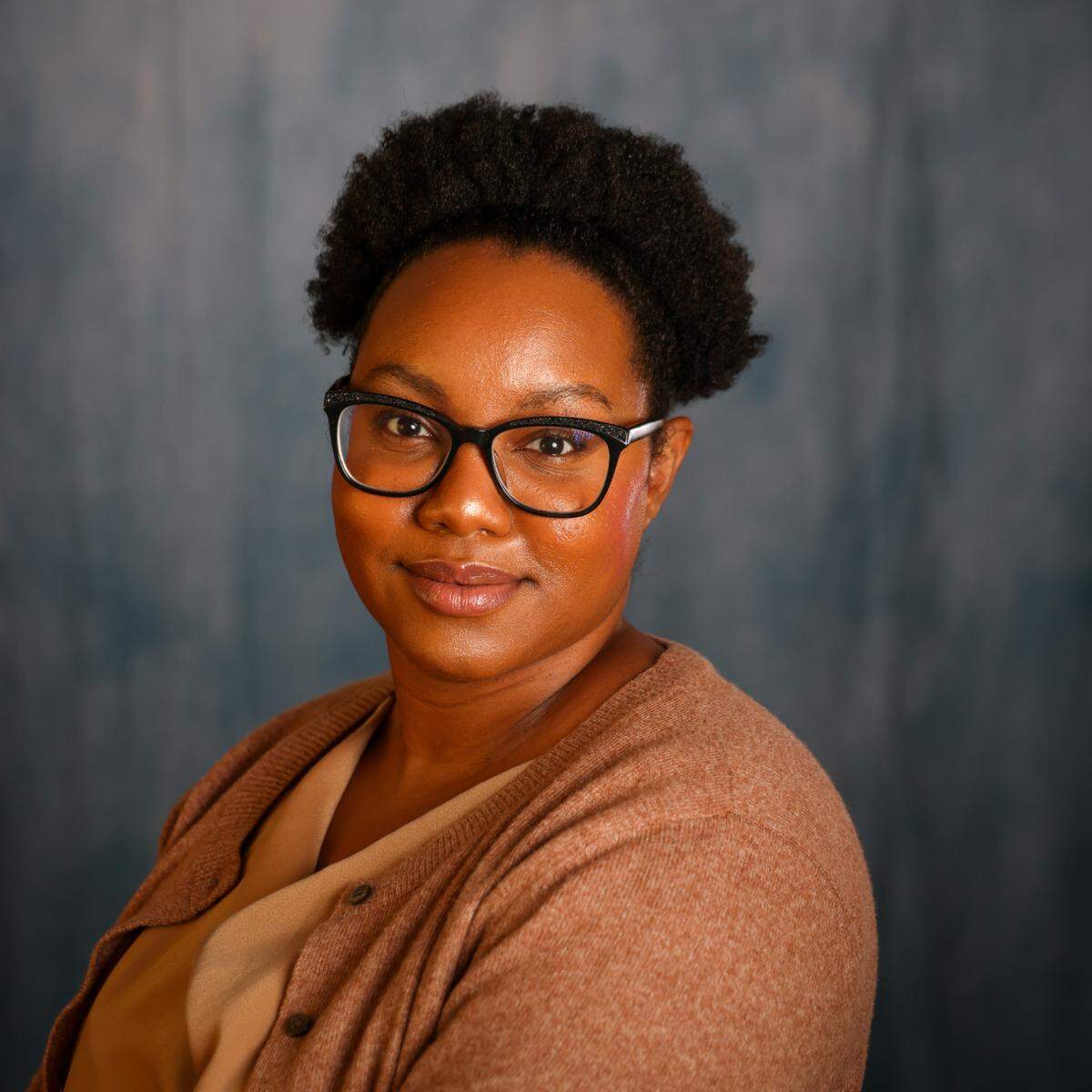
The panel featured Coral Springs Commissioner Nancy Metayer Bowen; Shaheewa Jarrett Gelin, president of the Broward County Black Chamber of Commerce; ACLU Florida executive director Bacardi Jackson and Djenane Gourgue, president of the Haitian American Chamber of Commerce. The event was hosted by Tameka Bradley Hobbs of South Florida People of Color, a nonprofit that aims to urge dialogue across cultural and racial lines. About a dozen people attended the event.
READ:‘A community in crisis.’ Florida Haitians feel attacked by Trump, overlooked by Harris
The purpose of the panel was to discuss the challenges Black immigrants have faced in the wake of Trump’s comments about Haitians and the intersection between anti-immigrant and anti-Black rhetoric.
Since Trump made the false statements about Haitian immigrants eating their neighbors’ pets in Springfield, Ohio, in his debate with Vice President Kamala Harris, he has continued to amplify this misinformation. Speaking at a forum for Latino voters in Doral on Wednesday, Trump claimed that he was only saying what had been “reported,” but did not specify which news outlet made the claim.
Trump also questioned Harris’ race before a panel at the National Association of Black Journalists’ annual convention in the summer and on Thursday, the former president again brought up the issue on the Fort Lauderdale-based current events podcast PBD Podcast. “They have a woman who is Black, although you would say she’s Indian, but she is Black,” he told the host Patrick Bet-David. “A lot people didn’t know, which is true.” Harris has a Jamaican father and Indian mother.
South Floridian Black leaders have been particularly frustrated with Trump’s statements because they find them divisive and a distraction from the real issues Black communities face. Florida is home to the largest Haitian American population with 424,934 residents, according to the U.S. Census, with the bulk living in South Florida. And more than 200,000 Jamaican Americans live in the state.
‘He’s talking about Black people’
During the discussion, Jackson said Trump’s comments are rooted in white supremacy and noted that using immigrants as a scapegoat is a “ploy to stoke fear and find a reason for people’s impoverished conditions” rather than holding politicians accountable.
“We have to really understand that there is no distinction,” she said. “He’s not just talking about Haitian people, he’s talking about Black people. And when vigilantes start attacking people for these incredible, horrific narratives they’re not going to ask you for your citizenship.”
RELATED: ‘It’s a disaster.’ In Miami, Trump leans into pet-eating falsehoods about Haitians
Coral Springs Commissioner Nancy Metayer Bowen agreed that Trump’s comments are a distraction from tackling the issues residents face and Black people are being used as a scapegoat to avoid political accountability. “I think this rhetoric is being echoed throughout the country because people are trying to find solutions,” she said, adding there are a litany of issues that voters are facing, including inflation and lack of affordable housing, that are already a priority for them.
“If it keeps us distracted and divided, which is not a unique situation, that means that he can continue to push his narratives,” Bowen said of the former president’s comments.
RELATED: Trump says he will deport Haitians if he wins. It would not be his first attempt
Gourgue said Trump’s comments are hurtful, but said she doesn’t care what he says – she cares what he does.
“If you tell me I’m ugly or whatever, I can take it, but if you are choking me, if you’re putting me in a state of terror, (and) if my mental health is messed up because of what you do, I’m more worried,” she said. Trump recently said he plans to revoke the Temporary Protected Status, a protection provided to immigrants from Haiti and other countries in turmoil that allows them to live and work in the U.S. temporarily.
Gourgue also questioned how much of the attacks against Harris were rooted in sexism, not just her race. “What does it matter if Kamala is Black, Jamaican or Irish? This is a job. The job description does not require you to say your race,” she said, adding she’s seeing this play out with the attempts to fire Haiti’s female foreign minister, Dominique Dupuy. “Is it that we don’t want women or we just don’t want competence?”
Jarrett Gelin, of the Broward County Black Chamber of Commerce, emphasized that Jamaica is filled with diverse cultures, including those of African descent.
“Most of us have a little bit of this and that, but that doesn’t negate the strong pride we have in our Africans,” said Gelin, who is Jamaican American. “It’s funny for people to question if she’s Black, when you know her father has that bloodline going through him.”
For many at the panel, the rhetoric wasn’t new, it just stings more coming from the mouth of a presidential candidate with the power to amplify hurtful narratives. Gourgue said she’s experienced anti-Haitian sentiments from African Americans. One attendee, Francis Francois, agreed and said the former president’s statements aren’t surprising. He recounted times when he was bullied for being Haitian in elementary school by other Black children.
“The treatment of Haitians has been a long time coming, but it’s nothing new,” he said.
Valencie Exceus, another attendee, echoed those sentiments, but said African American classmates bullying her is very different from the former president of the United States targeting Haitians, emphasizing that Trump, if reelected, has the power to enact laws that affect Haitian residents.
“I want to make sure that we’re not equating it, even though we experience the trauma,” she said. “I think it’s very important to understand the gravity of what took place and what’s taking place.”
This story was originally published October 18, 2024 at 1:42 PM.