How U.S. citizen became a victim of Dominican official when trying to cross into Haiti
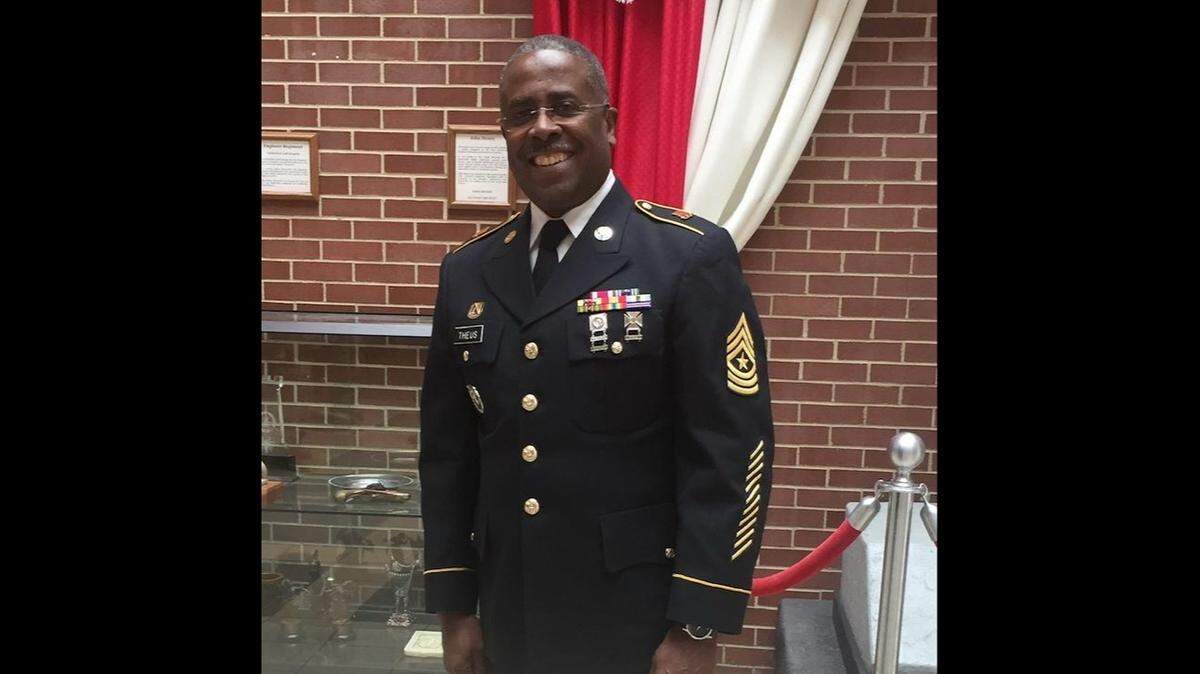
Retired U.S. Army sergeant major Guy Theus knows that trying to cross into Haiti from the neighboring Dominican Republic can be a chaotic venture as motorists, motorcyclists and pedestrians all compete at once for passage through wrought-iron gates.
But what he was unaware of is that trying to cross the border on the island of Hispaniola, which the two nations share, could also leave him with a bruised right temple after a Dominican official assumed he was because is he Black he is Haitian — and that he could do anything to him and get away with it.
Theus, 63, says he was physically assaulted Tuesday morning while trying to cross into northern Haiti from the Dominican town of Dajabón, where a request to see his passport at an immigration and customs checkpoint turned into a verbal altercation, than a punch to the face and a slap from a Dominican government employee working the border. The incident happened in the presence of several people, including two Americans Theus was also trying to help after they were reportedly told that U.S. citizens could not cross the land border into Haiti.
On Wednesday, with the help of Mariot Noel from the Haitian Consulate in Dajabón, Theus filed a legal complaint against the accused officer. He was given a 10 a.m. Tuesday court hearing, Noel said, explaining that because of his injuries the court gave Theus several days to recover before hearing the complaint.
Because he was told by both Dominican and U.S. embassy officials he’s not allowed to cross into Haiti, Theus said he was forced to book a ticket to Miami in order to fly to Cap-Haïtien in order to drive to the northeastern border town of Ouanaminthe, where his wife was waiting on him at the time of the incident. Marie-Paule Dupiton said what’s happened to her husband is “difficult to swallow.”
“It’s mind boggling,” Dupiton said. “If a U.S. Army retired sergeant major of 34 years can be assaulted at the border, who else will not be?”
READ MORE: American missionary in Haiti: ‘I feel like a sitting duck ready to be shot’
A New York pediatrician, Dupiton has been running a summer camp in Ouanaminthe with her husband for the past eight years. Several years ago, the couple bought a condo in the Dominican city of Santiago, which is where Dupiton left her husband on Sunday when she crossed over into Haiti with the help of a pastor’s wife to prepare for his arrival with camp supplies.
Theus says he was at the customs office on the Dominican side of the border trying to get permission to cross Tuesday morning when the incident with the officer happened.
“He arrogantly told me, ‘Get the passport, don’t let me ask you again for the second time,’ ” Theus said, recalling the exchange between him and the Dominican officer who spoke broken Haitian Creole.
After the two engaged in a brief argument, Theus said, things got physical.
“The guy then threw a punch, hitting my right temple and my eyes,” Theus said.
“It’s when I collected myself I realized the guy just punched me. I walked after him and said, ‘You just punched me.’ He turned around and then slapped me,” Theus added. After Theus walked into a building to ask to see a supervisor, the officer, Theus said, turned around again and then grabbed the back of his pants and physically removed him.
Moments later, another officer approached Theus and the two other U.S. citizens whom he was with. When he finally handed over his passport, which had been in his parked car, Theus said the officer let out an expletive. It was an American passport, not Haitian.
“I guess he assumed I’m Haitian and he can do anything he wants to me,” Theus said of the first officer.
Dominican Foreign Minister Roberto Alvarez confirmed to the Miami Herald that there was “indeed an incident” at the border where Theus “was handled improperly” and it is currently being investigated. It is unclear, Alvarez said, if the accused is an immigration officer or worked for another agency at the border, which has come under tighter restrictions since armed gangs tried to overthrow Haiti’s government earlier this year.
Tensions along the border
Tensions along the island’s border crossings are not unheard of and a State Department official confirmed the agency is “aware of reports of incidents involving U.S. citizens encountering challenges with Dominican officials at border crossings.”
The State Department declined to go into details, citing privacy concerns. However, earlier this year several Black U.S. Peace Corps volunteers were detained in the country, which led to concerns among both U.S. embassy and Biden administration personnel.
In its 2023 state of human rights report for the Dominican Republic, the State Department said there was “evidence of racial prejudice and discrimination by the security forces and other government offices against persons of darker complexion, in particular Haitians, Dominicans of Haitian descent, or those perceived to be Haitian.”
Those concerns in 2022 led to diplomatic spar between the country and the United States after the State Department took the unusual step of issuing a travel warning for darker-skin U.S. citizens and those of African descent traveling to the Dominican Republic. Black travelers were warned that they could be detained due to their complexion and an increase in immigration enforcement actions against Haitian.
Theus, who contacted both the Haitian consulate and U.S. embassies about the altercation, says he is in the process of filing a complaint against the officer. Late Tuesday, he was told he needed to go see a government-approved physician to document his injury before taking legal action.
The airspace between Haiti and the Dominican Republic has been closed for several months, however, reports have been mixed about whether the land border is also closed. While some U.S. citizens have told the Herald that they are not allowed to cross, others reported crossing without problems.
Theus said during a call with the U.S. Embassy in Santo Domingo to report what had happened, he was informed that U.S. citizens are not allowed to cross the border into Haiti. A spokesperson for the State Department said no such directive exists.
However, Haiti is currently under a Level 4 Do Not Travel Warning and if U.S. citizens travel there — even to northern Haiti, which doesn’t have the gang problems plaguing Port-au-Prince —at their own risk.
“We do not make specific requests of foreign governments to limit the movement of U.S. citizens,” the spokesperson said. “The U.S. Department of State has no higher priority than the safety and security of all U.S. citizens overseas, including working to ensure that they are treated fairly and equitably while traveling, regardless of their race, ethnicity and skin color.”
This story was originally published August 7, 2024 at 7:04 PM.