Tampa man sentenced for shipping body armor before assassination of Haiti’s president
Before Frederick Bergmann joined a South Florida plot to overthrow Haiti’s president, he was a prosperous business owner and family man by all accounts.
Bergmann, who graduated from the University of Florida with honors and became a CPA, founded a diagnostic imaging business and a laboratory testing company.
With his success, he started donating money to charitable causes in Haiti and came to know Christian Emmanuel Sanon, a Haitian physician who asked Bergmann to ship some bullet-proof vests to a security team that was protecting Sanon in his quest to become Haiti’s next president.
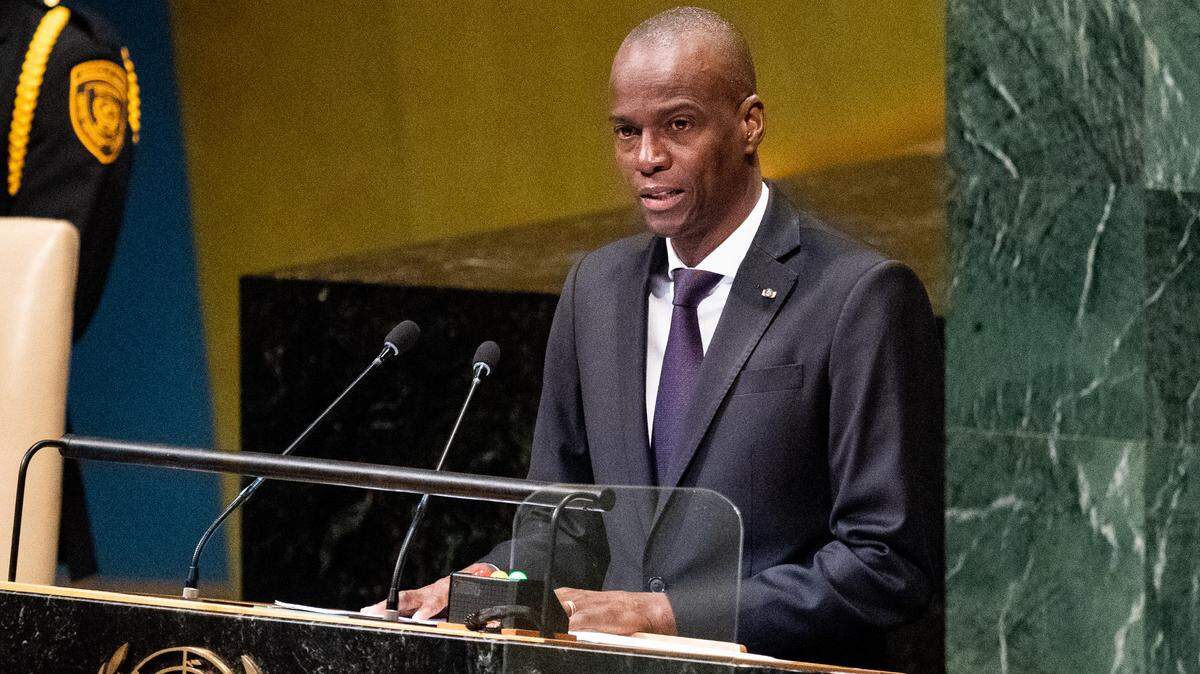
By doing the favor for his friend, Bergmann was sentenced Tuesday to nine years in prison for breaking federal laws meant to keep the U.S. out of overseas conflict. A Miami federal judge overseeing the assassination case of Haiti’s president, Jovenel Moïse, sentenced Bergmann to a year less than the maximum sentence. Moïse was killed on July 7, 2021, at his hillside home outside Port-au-Prince by Colombian commandos wearing the ballistic vests that Bergmann had shipped to Haiti one month before the deadly assault.
Bergmann, 65, had no idea the vests were going to be used in the conspiracy to kill Haiti’s president, according to federal prosecutors and his defense attorney. That’s why he wasn’t charged with the murder conspiracy and sentenced to life in prison like five other defendants who have pleaded guilty to that higher offense in Miami federal court. Five other defendants, including Sanon, now face trial on the charge of conspiring to kill Haiti’s president and related counts next January.
Instead, Bergmann pleaded guilty to two lower conspiracy charges: backing a “military expedition against a friendly nation” and violating export laws by smuggling 20 ballistic vests in a shipment to the Colombian security team in Haiti. Bergmann falsified the shipping labels by saying the contents were “medical x-ray vests and school supplies.”
Just before his sentencing, Bergman apologized to the judge, the people of Haiti and his family, lamenting the “stupid sequence of events” and his “poor judgment.”
“I wish I could roll the clock back,” said Bergmann, who faced up to 10 years for the two conspiracy offenses under federal sentencing guidelines.
MADE IN MIAMI: Read the Miami Herald investigation into the assassination of Jovenel Moïse
U.S. District Judge Jose Martinez gave him a small break after Bergmann’s attorney, Henry Bell, argued that his client was a “minor” player who had devoted his life to caring for his wife and family in the Tampa area while doing charitable acts for his employees and the poor in Haiti. Bell also pointed out that Bergmann and other family members have a history of mental health illnesses.
“He spent a lot of time and money doing good things in Haiti” in the areas of healthcare and education, Bell said, citing several letters of support for Bergmann. “I think there’s a record for leniency in this case.”
Bell argued for a sentence in the range of six to eight years.
Martinez said he believed that Bergmann had already received a “substantial benefit” when he was only charged with the Neutrality Act and export violations, suggesting he deserved the maximum 10 years for both offenses. Federal prosecutors recommended that he receive the maximum.
But then, without explanation, Martinez decided to give Bergmann the nine-year sentence and allowed him to surrender to prison authorities in August. He remains free on bond.
Martinez, known as a tough sentencing judge, had already given out five life terms to five prior defendants in the Haiti assassination case, which is now at a crossroads.
The remaining five defendants are charged with conspiring in South Florida to kill Haiti’s leader and related charges, including a local security firm accused of recruiting the Colombian commandos to carry out the deadly attack. The conspiracy charge carries up to life in prison.
The defendants facing trial are: Antonio Intriago, the head of a Miami-area security firm, CTU; Arcangel Pretel Ortiz, a former FBI informant who joined Intriago at CTU; Walter Veintemilla, a Broward County financier; James Solages, a Haitian American; and Sanon, the Haitian physician who was initially seen by the group as a successor to Moïse as Haiti’s president.
In February, Sanon was charged with the others for the first time with conspiring to kill Haiti’s leader, after first being accused of trying to carry out a military expedition against a foreign country. It was the fifth superseding indictment filed by prosecutors Andrea Goldbarg, Monica Castro and Frank Russo.
This story was originally published May 21, 2024 at 5:21 PM.