Under constant attack by gangs, Haiti’s cops will get $10 million in guns, ammo from U.S.
With a coalition of deadly Haitian gangs intensifying their attacks and the deployment of a Kenya-led multinational security force still on hold, the Biden administration is trying to get more weapons, ammunition and protective gear into the hands of Haiti’s beleaguered police force.
President Biden authorized Secretary of State Antony Blinken on Tuesday to provide up to $10 million worth of weapons, ammunition, bullet-proof vests and helmets from a Department of Homeland Security stockpile to the Haiti National Police.
The assistance package will help Haitian security forces protect civilians and critical infrastructure against organized and targeted gang attacks, White House Press Secretary Karine Jean-Pierre said.
“Our support is intended to help Haitians restore security, order and the rule of law and protect civilians, while at the same time remaining committed to supporting Haitian-led effort for a peaceful transition of power,” she said.
The police force is struggling to stave off an insurrection by heavily armed gangs. The coordinated violence, which has been going on for a month, has paralyzed Haiti’s capital, now teetering on the brink of a humanitarian catastrophe.
Heavy gunfire is blocking delivery of food and medicine and forcing the closure of hospitals and schools. The main seaport and airports in the capital remain closed while armed groups continue to loot and burn.
The decision from Biden comes as Haitian political leaders continue to disagree about the formation of a transitional presidential council, delaying its installation, and as congressional Republicans block a State Department request for $40 million for security assistance toward the deployment of a Multinational Security Support mission to be led by Kenya. The East African nation had agreed to send 1,000 of its police officers as the backbone of an international force to help Haiti police battle gangs, but has said that it will not deploy the cops without the money.
The United States, which supports the deployment and is the largest financial backer of the Haiti National Police, has struggled to raise the money. A United Nations Trust Fund for the mission’s deployment only has $10.8 million and the Biden administration, facing questions about the viability of the plan from skeptical members of Congress, has only been able to access $10 million of the $100 million the State Department has pledged for the mission. The money is subject to approval from the Senate Foreign Relations Committee and the House Foreign Affairs Committee. The Pentagon has pledged another $200 million.
The additional equipment for the Haitian police “is good news,” said Lionel Lazarre, general coordinator of the National Syndicate of Haitian Police union. “We’ve been saying that the police need more means and more equipment.”
Since the latest wave of violence, U.S. officials have been trying to help the country’s understaffed and ill-equipped police officers, who have been trying to repel the attacks by heavily armed gangs.
Lazarre said Haitian cops “are trying to hold on” as long as possible, but it isn’t easy. Officers have been run out of their homes by armed gangs and forced to sleep at their police stations, which are increasingly being targeted by gangs.
Several police officers engaged in the fight told the Miami Herald they have not had a full night’s sleep since the attacks started on Feb. 29, and spend both day and night with their hands on their trigger and boots on in order to move at a moment’s notice.
“It’s not an ideal working situation,” said Lazarre, who last week sounded the alarm after officers were unable to cash their government-issued checks.
Among the dozen police officers killed this year, at least eight have been slain by armed groups. The latest death happened on Monday when Joveny Duplan, an agent in the specialized Intervention Corps for Maintaining Order was killed when the vehicle he was traveling in with other officers was targeted. The incident occurred east of metropolitan Port-au-Prince, not far from the U.S. embassy.
In addition to targeting cops, armed groups have carried out coordinated attacks against police substations as well as Haiti’s main seaport, airports and prisons, releasing thousands of prisoners, who remain at large. In recent days, the gangs looted and burned schools, hospitals and businesses as they launched simultaneous attacks in different parts of the capital aimed at challenging police and drawing them away from protected targets.
In its latest report on the escalating violence, the United Nations’ lead child welfare agency, UNICEF, said PPort-au-Prince’s descent into chaos has led to the closure of hundreds of schools and left “countless families and children without essential support and facilities.”
Among the 362,000 people now internally displaced throughout the country due to kidnapping and gang attacks, more than 15,000 were forced to flee their homes over the last three weeks and more than 33,000 have left the capital, relocating mainly to the southern region, the U.N. said.
Meanwhile, embassies including those of the United States, Canada and France have continued to evacuate both their staff and their country’s citizens via government-chartered helicopter flights from Port-au-Prince.
On Wednesday, the French embassy said more than 170 of its and nearly 70 other European and third-country nationals have been evacuated by French Army helicopters. The evacuees were taken to a French Navy vessel off the coast of Haiti to be transported to Fort-de-France in the Caribbean island of Martinique.
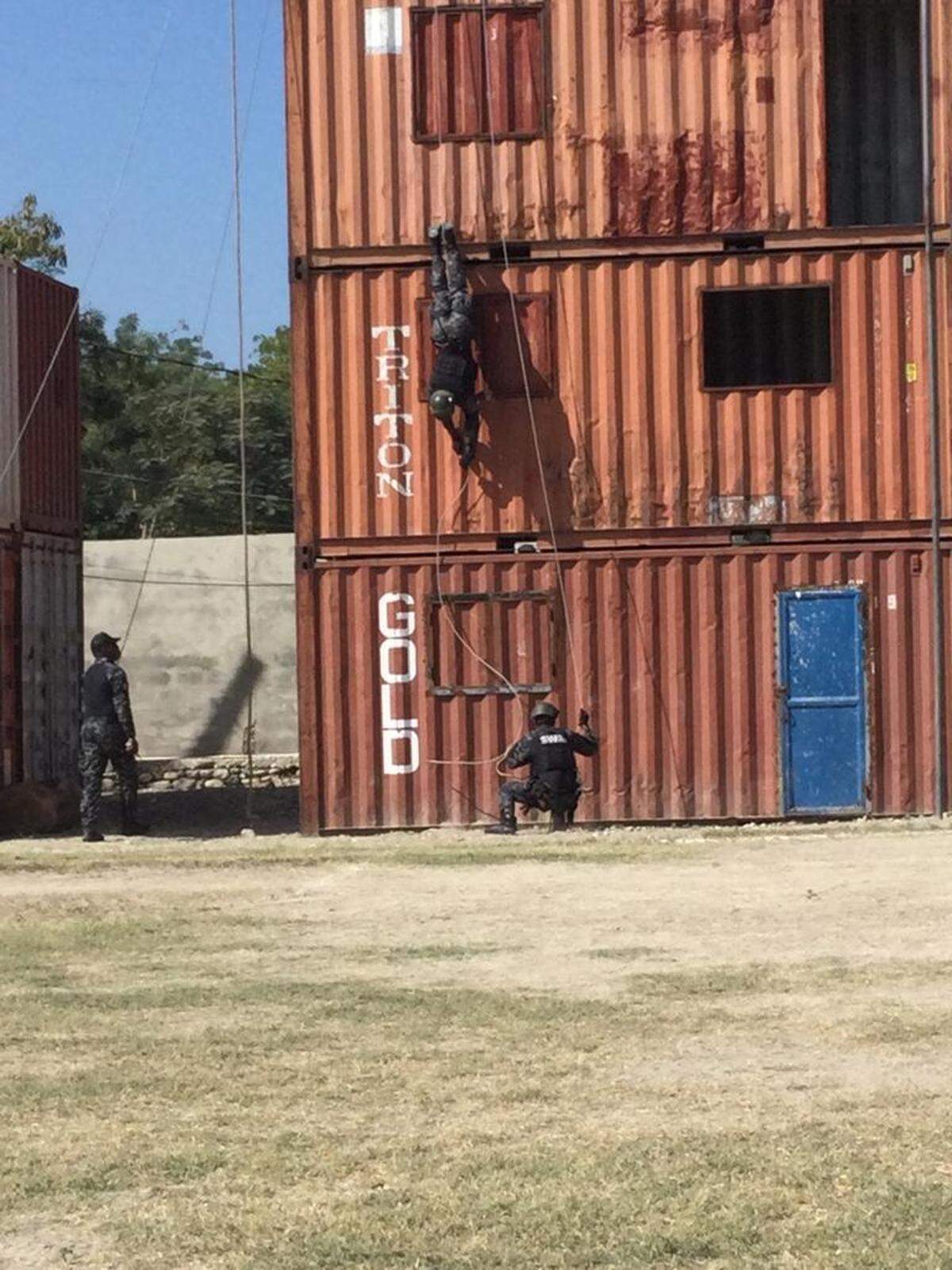
The ongoing violence continues to test Haiti’s police force, which last week welcomed 876 new graduates, some of whom are being given additional training to join the specialized police units leading the battle against the gangs.
While seemingly overwhelmed, police so far have managed to repel attempts by armed groups to overtake the National Palace, the central bank and the seaport, which has come under repeated attacks.
In an effort to support and encourage the police, ordinary Haitians have mounted a campaign on the WhatsApp social media platform, saluting officers’ bravery and courage. The Creole-languabe campaiogn thanks members of the Haiti National Police for their courage in confronting the gangs and for their sacrifices.
Haiti police said this week that since the month-old explosion in violence, 17 suspected gang members, including two notorious gang leaders, Ernst Julmé, alias “Ti Grèg” and Makandal, were killed during operations by specialized units.
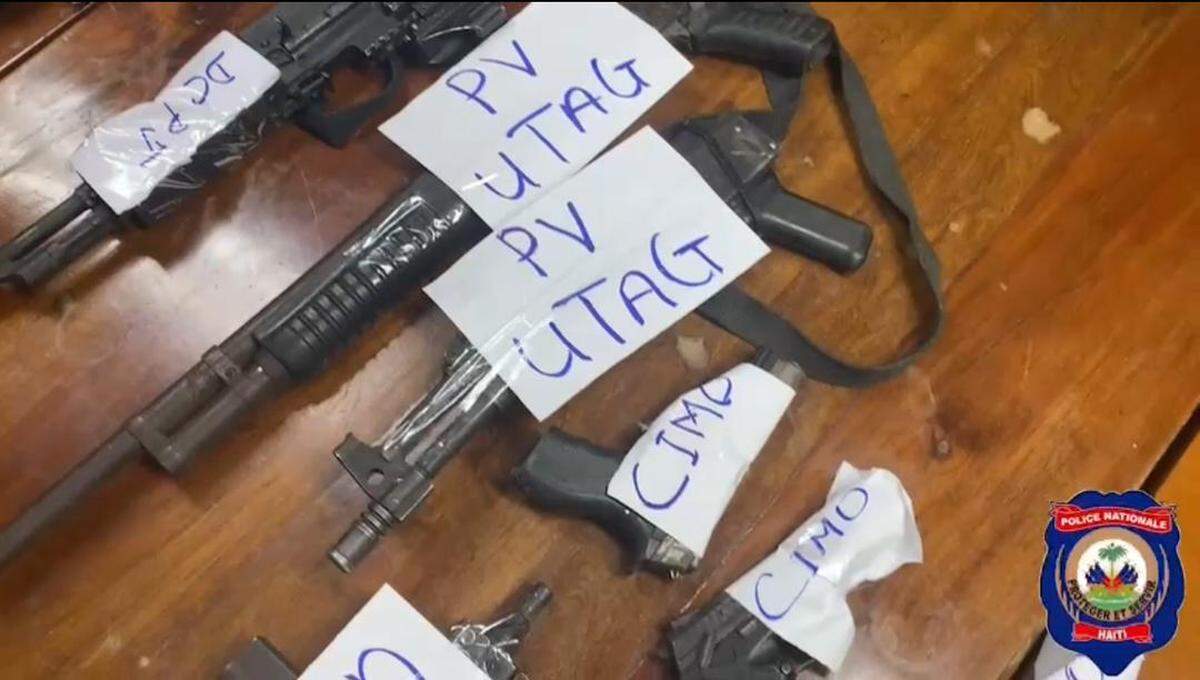
Police also seized several weapons, including rifles and handguns.
Haiti National Police Director Frantz Elbé, who had his personal residence set on fire by gang members earlier this month, has given formal instructions to the heads of the specialized units of force to “intensify operations.”
McClatchy Washington bureau correspondent Michael Wilner contributed to this story.
This story was originally published March 27, 2024 at 5:36 PM.