Another suspect in the assassination of Haiti’s president set to plead guilty in Miami
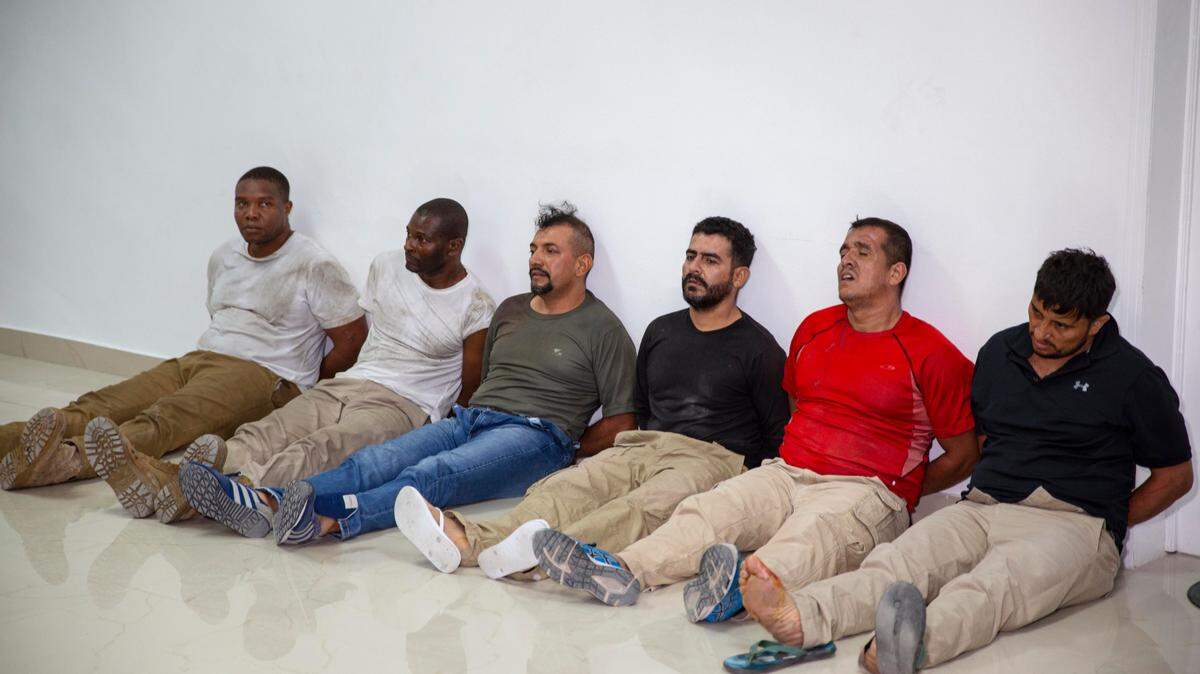
A former confidential informant for the Drug Enforcement Administration who participated in meetings both in South Florida and Port-au-Prince in the conspiracy to assassinate Haitian President Jovenel Moïse is expected to plead guilty.
Joseph Vincent, who lived in South Florida before traveling to Haiti, where he found himself entangled in the deadly plot, would become the fourth defendant out of 11 currently charged in Miami federal court in the killing, if his change of plea goes as planned on Dec. 5. He would face life in prison if he pleads guilty to the main charge of conspiring to provide and providing material support, and conspiring to kidnap and kill Moïse.
As with the other three defendants who have pleaded guilty to the same counts, Vincent could eventually see his life sentence reduced if he supplies credible evidence about other defendants charged in the case or other suspects still in Haiti. The other defendants who pleaded guilty to the July 2021 assassination conspiracy are: Germán Alejandro Rivera Garcia, aka “Colonel Mike,” 45, a retired Colombian army officer; Rodolphe Jaar, a previously convicted drug trafficker in the United States who was sentenced in June to life in prison, and former Haitian Sen. Joseph Joël John, who was detained in Jamaica before being extradited to Miami last year.
Vincent’s decision to change his plea is significant because of the role he allegedly played in the plot to unseat Moïse, who was first the target of a kidnapping before the plan turned to an assassination.
Known as “Blanco,” or Mr. White, Vincent was close to both jailed Haitian-American suspects James Solages and Christian Emmanuel Sanon, the pastor and South Florida resident whose ambition to replace Moïse as president led to the assassination, according to prosecutors.
READ MORE: who was involved in killing of Haiti president Jovenel Moise?
On the night of July 6, 2021, Vincent joined Solages outside Moïse’s residence in the hills above Port-au-Prince in the moments before the assassination, as Solages falsely announced over a bullhorn that the attack was a “DEA Operation.” After the two men turned themselves in to Haitian police after the slaying, Vincent maintained his innocence and told a Haitian judge that he was a translator for the Colombian soldiers accused of storming the president’s residence and killing him. He also told a judge that hours before the killing, he received a call from a former government official, Joseph Félix Badio, informing him that Moïse was home watching a soccer match.
After more than two years on the lam, Badio was arrested last month after he was spotted in a grocery store by a Haitian police officer. The officer, the Herald has learned, was tipped off by an informant in the store about the presence of Badio, who regularly bought groceries there while wanted by Haitian police.
In late January, Vincent, Solages, Sanon and Rivera were transferred from Haiti to Miami. Prior to their arrival, Solages told the Herald he and Vincent were together often, including in the hours before the July 7th killing. Currently awaiting trial in South Florida, Solages continues to profess his innocence.
According to a Haiti National Police investigative report, Vincent said the attack against Moïse was launched from the home of Jaar, who has admitted to providing weapons, lodging and money in the conspiracy.
The report, and cell phone records obtained by the Herald, show that Vincent was in touch with several main suspects leading up to the assassination.
After the killing, Vincent phoned his old DEA handler and was then put in touch with the agency’s director for Haiti, who convinced him to turn himself in. Despite the phone call to the DEA, U.S. officials said Vincent was no longer involved with the agency.
During questioning by Haiti police, Vincent and Solages accused Dimitri Hérard , the imprisoned head of Moïse’s presidential guards, of helping with the planning.
Moïse’s assassination launched separate Haitian, Colombian and U.S. investigations. Moïse was shot 12 times and his wife, Martine, was wounded.
More than 40 people have been jailed in Haiti, including 18 Colombians, as well as members of the Haitian presidential guard accused of taking bribes to stand down or not show up to work on the day Moïse was killed. The investigation has picked up momentum in Haiti, where the arrest of Badio has raised new questions.
The deadly plot revolved around suspects collaborating in South Florida, Haiti and Colombia to kidnap and then kill Moïse, with the goal of replacing him with a new president and obtaining Haitian government contracts, according to authorities. So far, however, no one has been identified as the mastermind of the plot.
This story was originally published November 8, 2023 at 3:32 PM.